Model Library
Browse and deploy state-of-the-art AI models through the DEVUP Gateway.
Loading models...
Model Library
Browse and deploy state-of-the-art AI models through the DEVUP Gateway.
Browse and deploy state-of-the-art AI models through the DEVUP Gateway.


Optimized specifically for multimodal agent scenarios. It features enhanced agent capabilities, upgraded multimodal comprehension, and more flexible context management.

Bring any idea to life with state-of-the-art reasoning to help you learn, build, and plan anything. Best for complex tasks and bringing creative concepts to life.
Gemini 3.5 Flash delivers near-Pro intelligence at Flash-tier cost and speed: Pro-level coding proficiency, parallel agentic execution, all at a much lower price.
Bring any idea to life with state-of-the-art reasoning to help you learn, build, and plan anything. Best for high-volume tasks that need efficiency and intelligence.

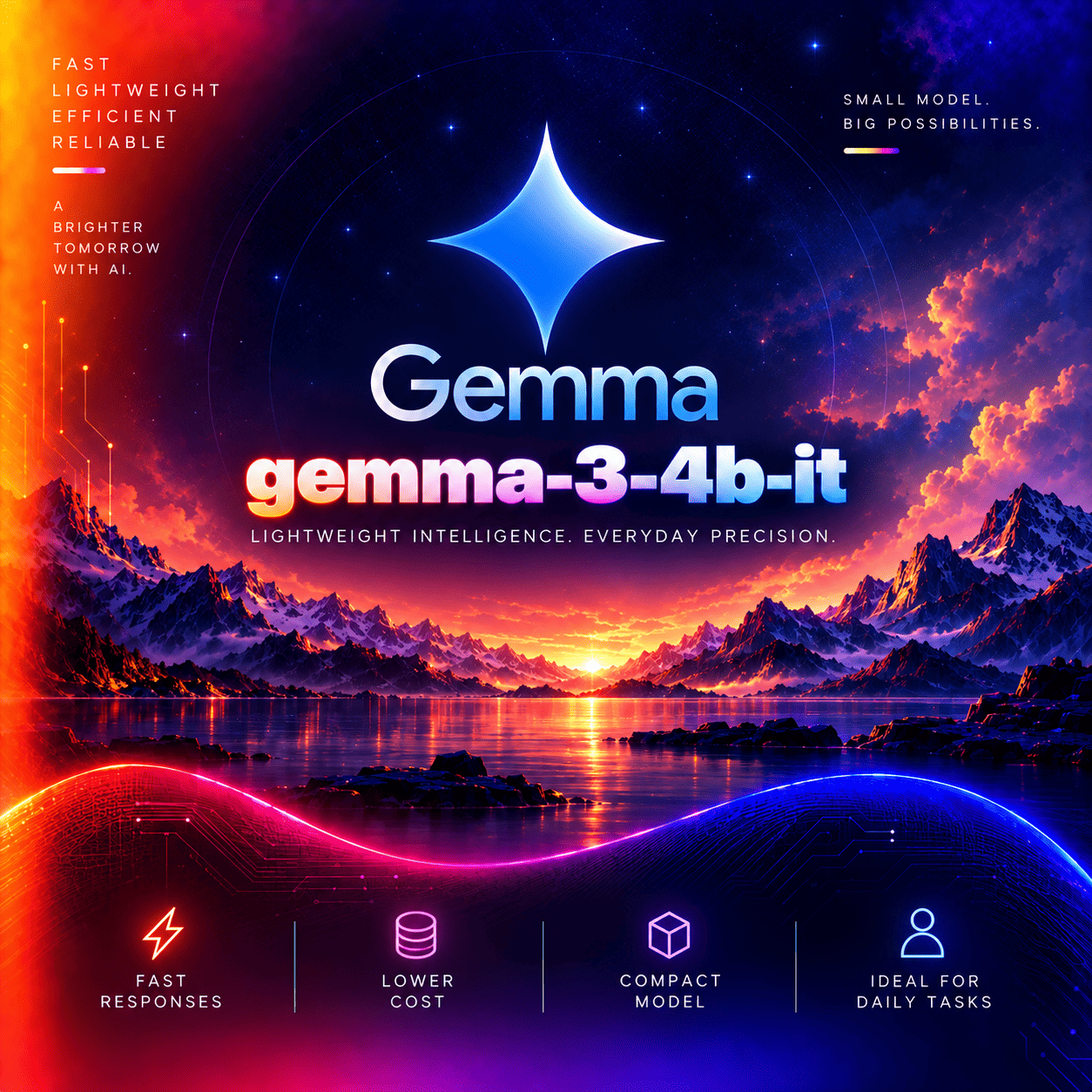
Gemma 3 4B fits in 2.6 gigabytes at int4 and carries the same vision encoder as the 27-billion-parameter model at the top of its family — frozen and shared across sizes, so perception does not shrink with the model. It reads text and images across a 128K context window on hardware where that combination is normally impossible: a phone, a single-board computer, an integrated GPU. Google describe it as competitive with the previous generation's 27B flagship. What it costs you is measurable and concentrated in hard reasoning, where the gap to the larger siblings is real.
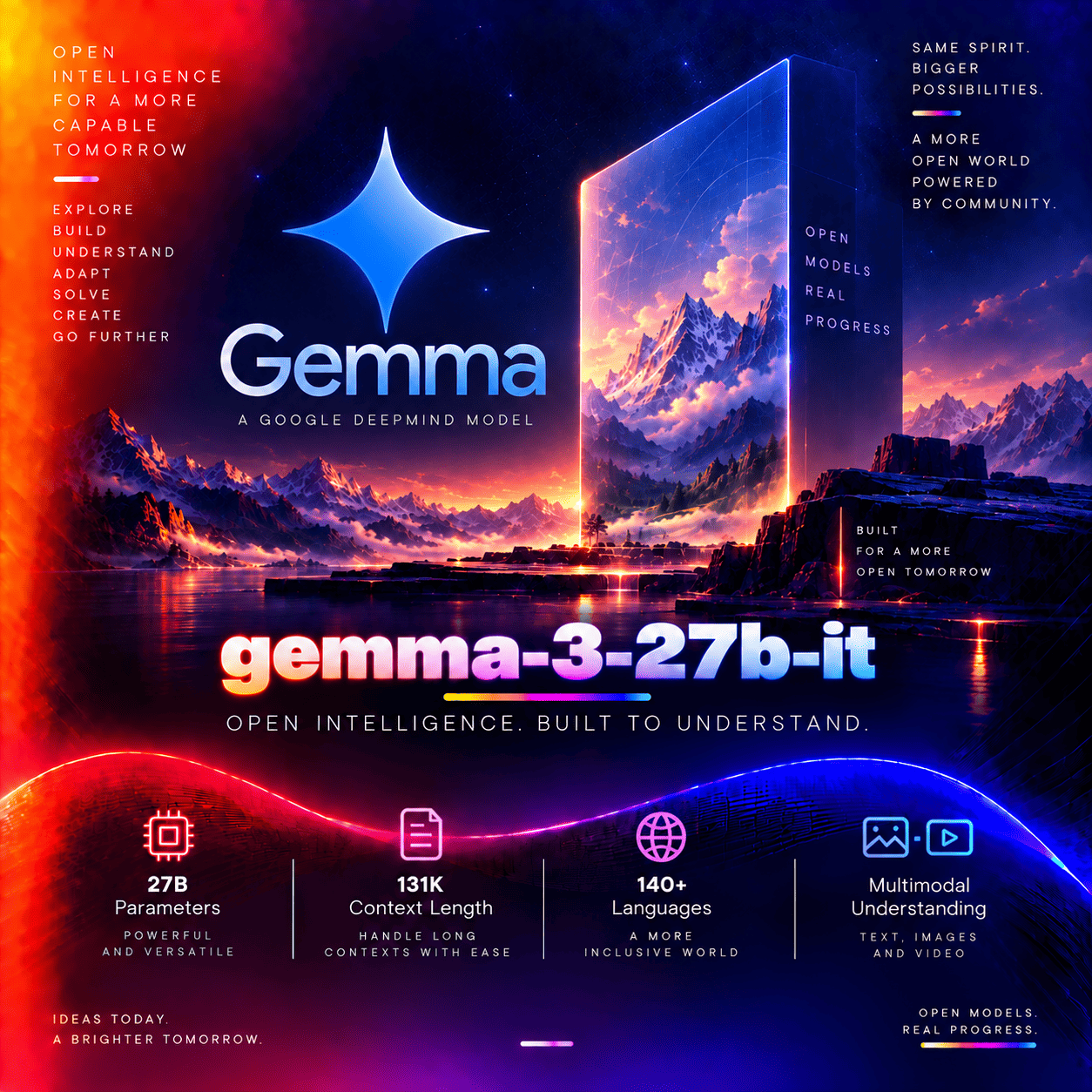
Gemma 3 27B was built to be the most capable model you can run on one GPU, and the quantisation numbers make that literal: 54 GB at bfloat16 drops to 14.1 GB at int4, which fits a desktop RTX 3090. The saving comes from quantisation-aware training rather than a conversion applied afterwards, so quality stays close to full precision. Its 128K context rests on a 5:1 ratio of local to global attention layers — a design Google measured as cutting KV-cache overhead from sixty percent to under fifteen. It reads text and images across 140 languages, with an 8,192-token output ceiling.

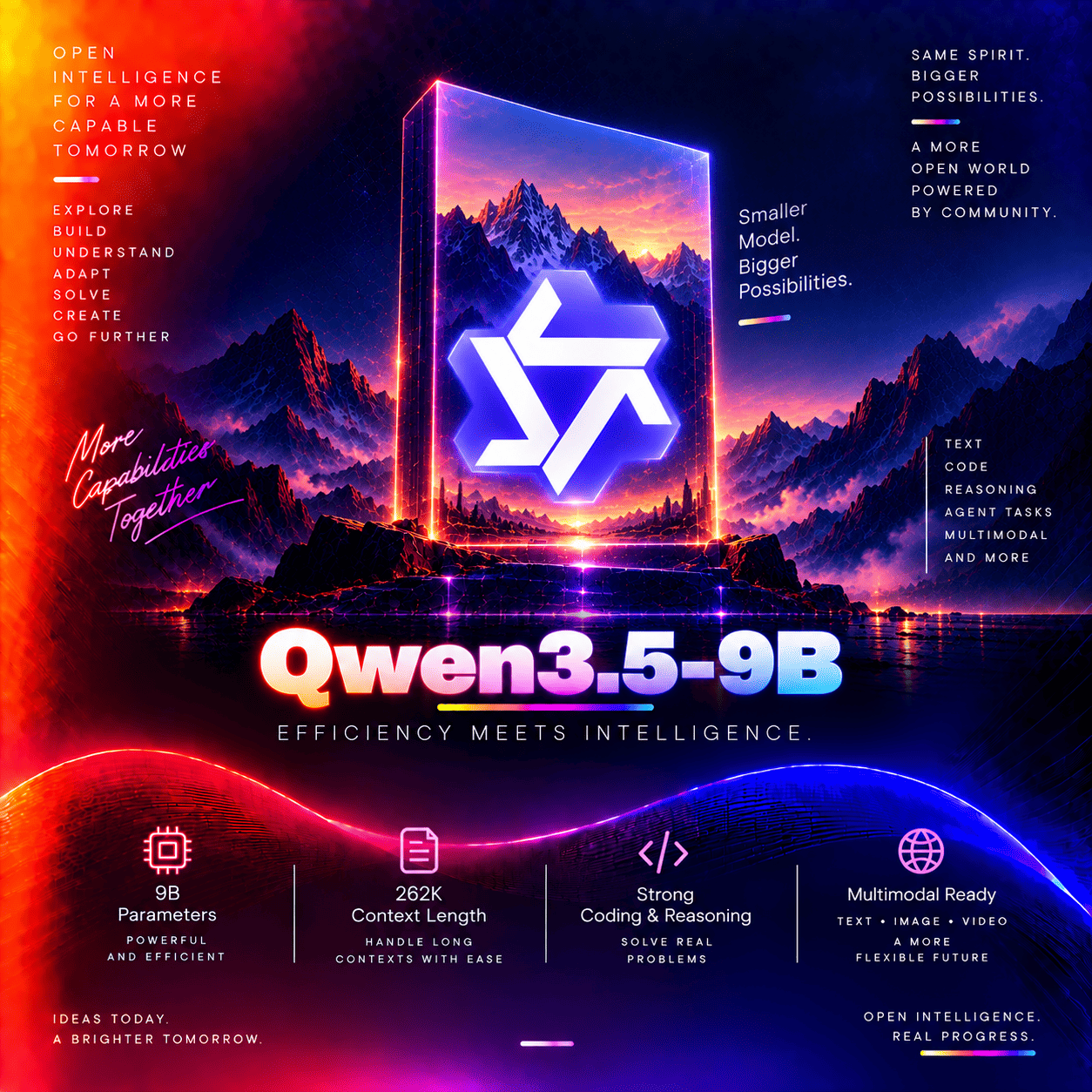
Qwen3.5-9B fits a 262,144-token window and a vision encoder onto a single 24 GB card. Thirty-two layers, twenty-four of them linear attention carrying sequence state at constant cost, with full attention on every fourth — a layout the configuration publishes explicitly as a per-layer list rather than leaving implicit. The vision tower is the same twenty-seven-block encoder its much larger siblings use, which means perception does not shrink with the model. It is the smallest dense member of its family that keeps reasoning and tool calling intact, across 201 languages under Apache 2.0.
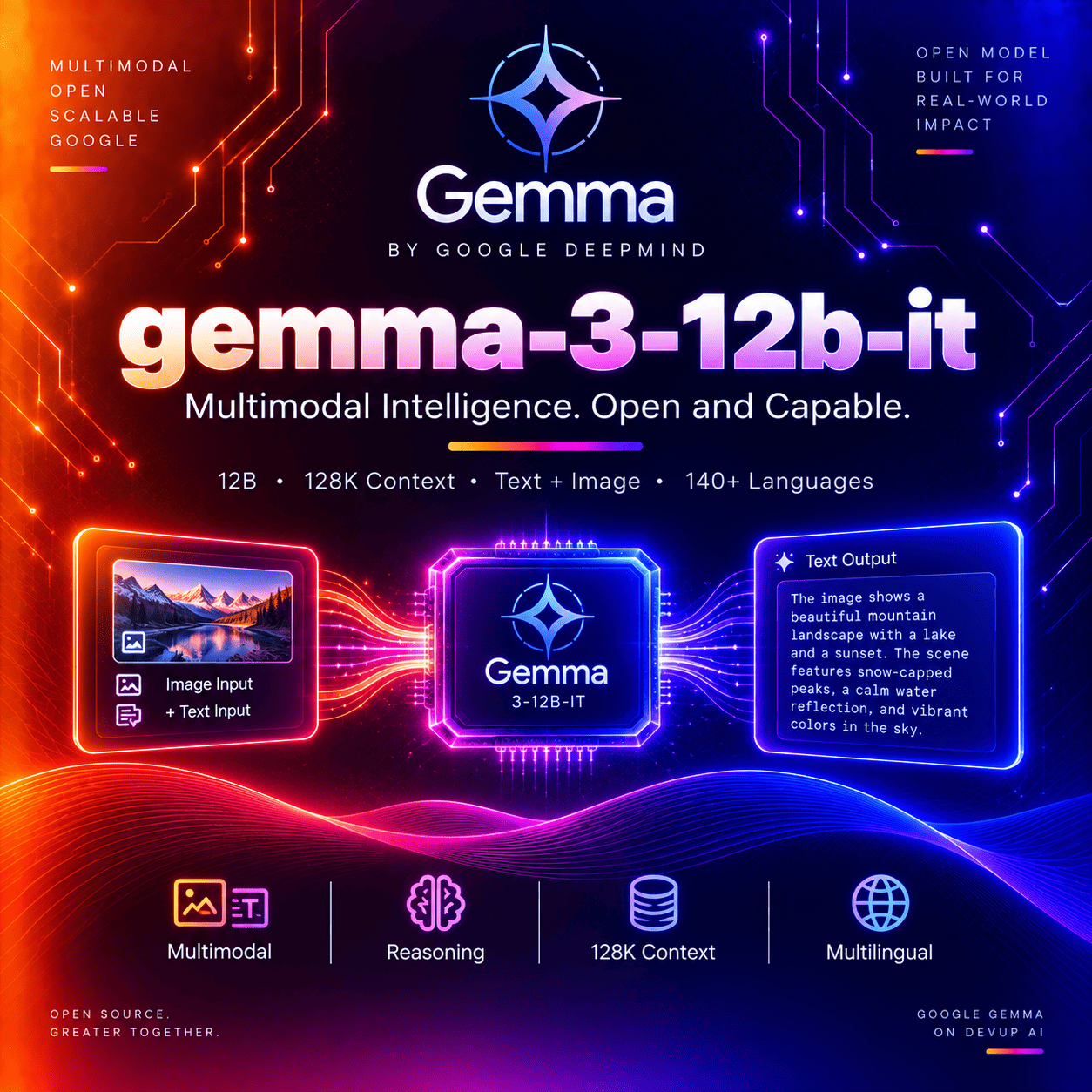
Gemma 3 12B reads images the way a person does when the print is small: it looks at the whole thing, then looks closer at the parts. Its vision encoder compresses every image into exactly 256 tokens at 896×896 — efficient, and destructive on a wide screenshot or a tall document. Pan & Scan solves that at inference time by cutting the image into non-overlapping crops and processing each separately, worth a measured 8 to 17 percent on tasks that require reading text from images. The 128K context comes from interleaving five local attention layers per global one, so only one layer in six carries a large cache, at a perplexity cost under five percent.
Qwen3.6-27B is a dense 27-billion-parameter model that outperforms the previous generation's 397-billion-parameter flagship on every major coding benchmark — including an eighteen-point margin on SkillsBench. It is dense by choice: no expert routing, no MoE complexity, a stack that deploys straightforwardly across llama.cpp, SGLang, and vLLM. Sixty-four layers, three quarters of them linear attention. And it introduces thinking preservation, an option to retain reasoning traces across conversation turns rather than discarding them — which on a multi-turn coding session means the model stops re-deriving what it already worked out.
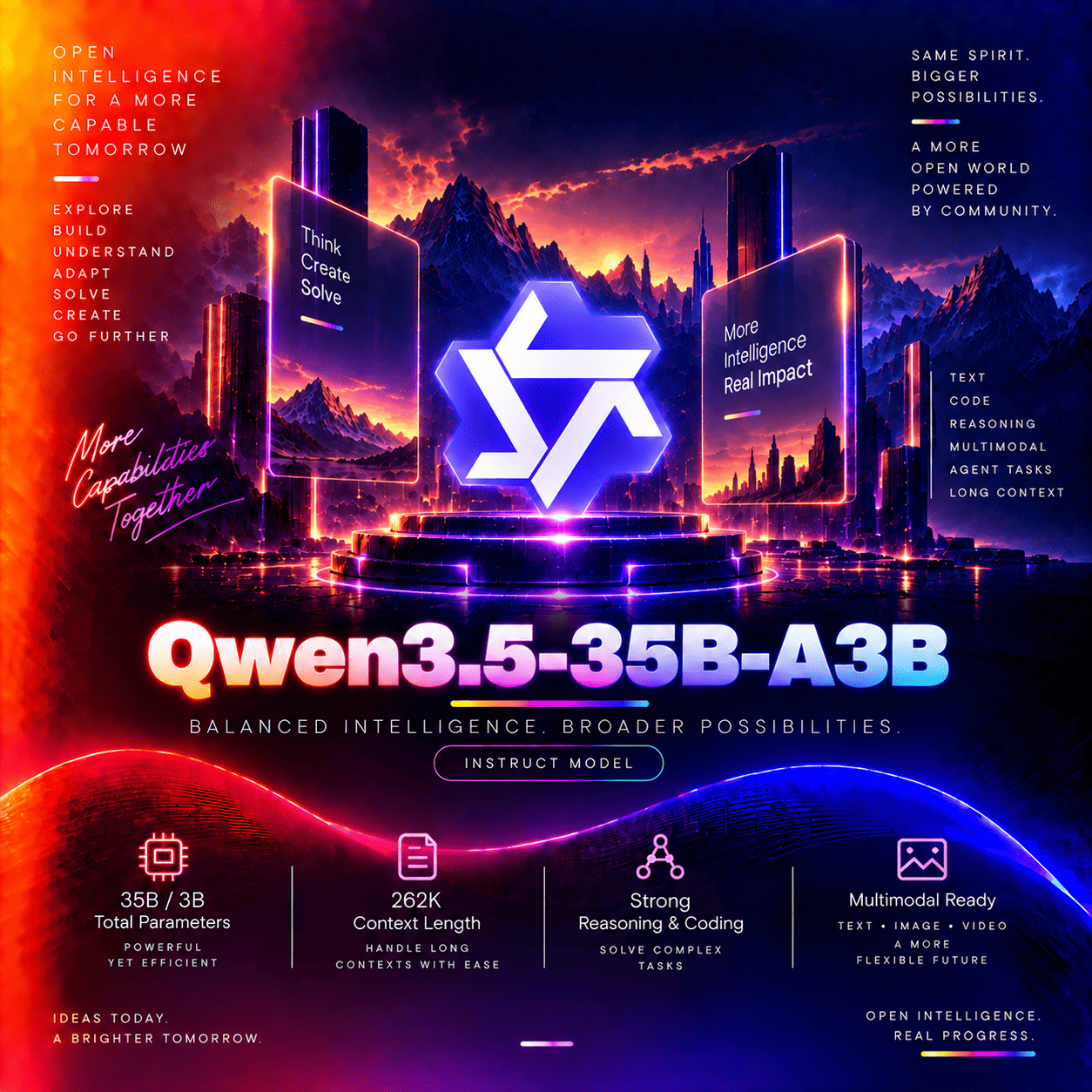
Qwen3.5-35B-A3B holds thirty-five billion parameters and works three per token, across forty layers where three quarters carry sequence state at constant cost and one quarter does exact retrieval. Two hundred and fifty-six experts, nine active. A twenty-seven-block vision encoder handles images and video in the same stack, trained by early fusion rather than attached afterwards. The result is a natively multimodal model with a 262,144-token window that runs at a small model's compute — released February 2026 under Apache 2.0, across 201 languages.
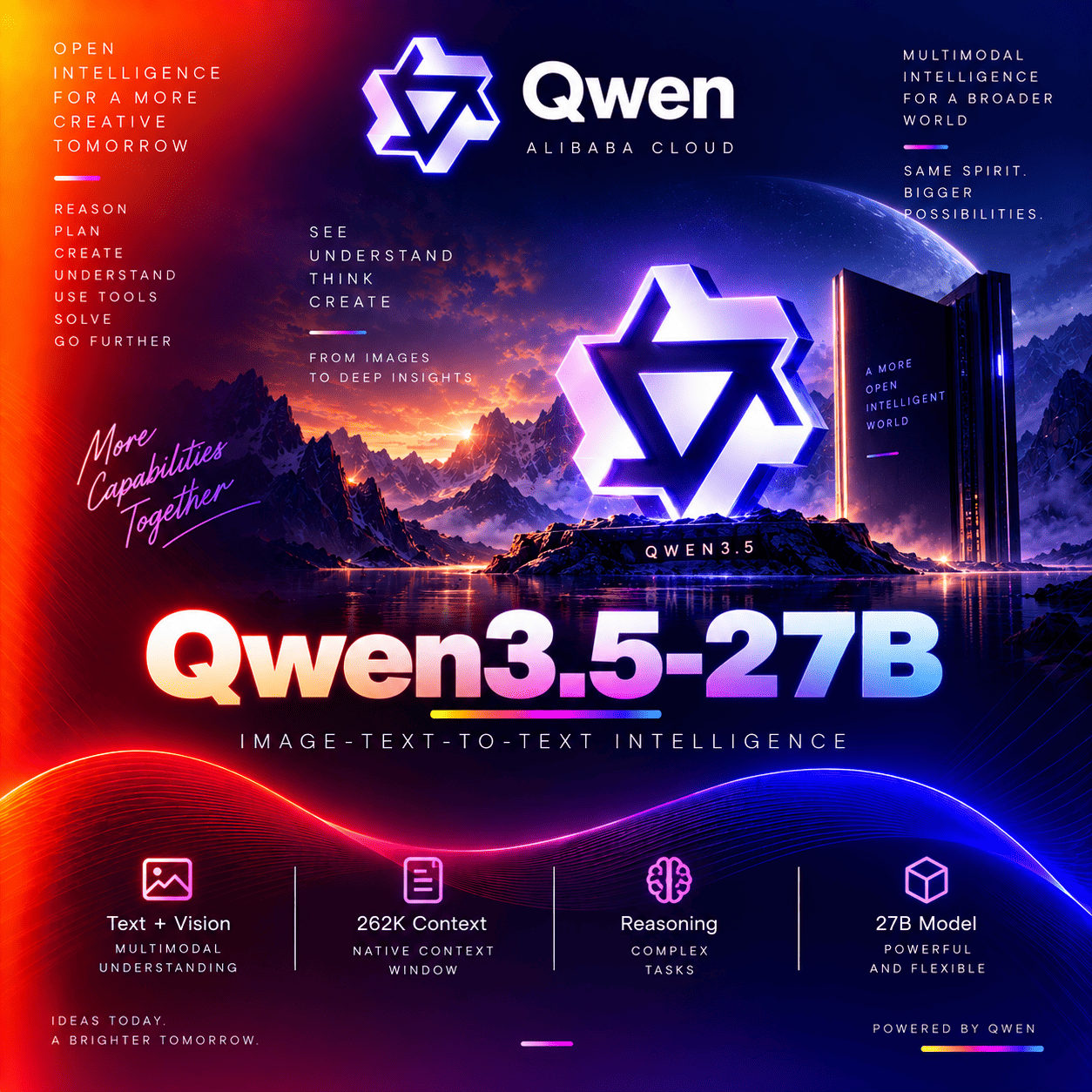
Qwen3.5-27B runs Gated DeltaNet as its primary attention mechanism across three quarters of its layers, paired with sparse mixture-of-experts — which is how a model at this scale holds a 262,144-token window without the memory cost that usually implies. Its reinforcement learning was scaled across million-agent environments with progressively harder task distributions, aimed at behaviour that transfers to real workloads rather than to benchmarks. It fits on a single 80GB card at FP8, extends past a million tokens with positional scaling, and ships under Apache 2.0.
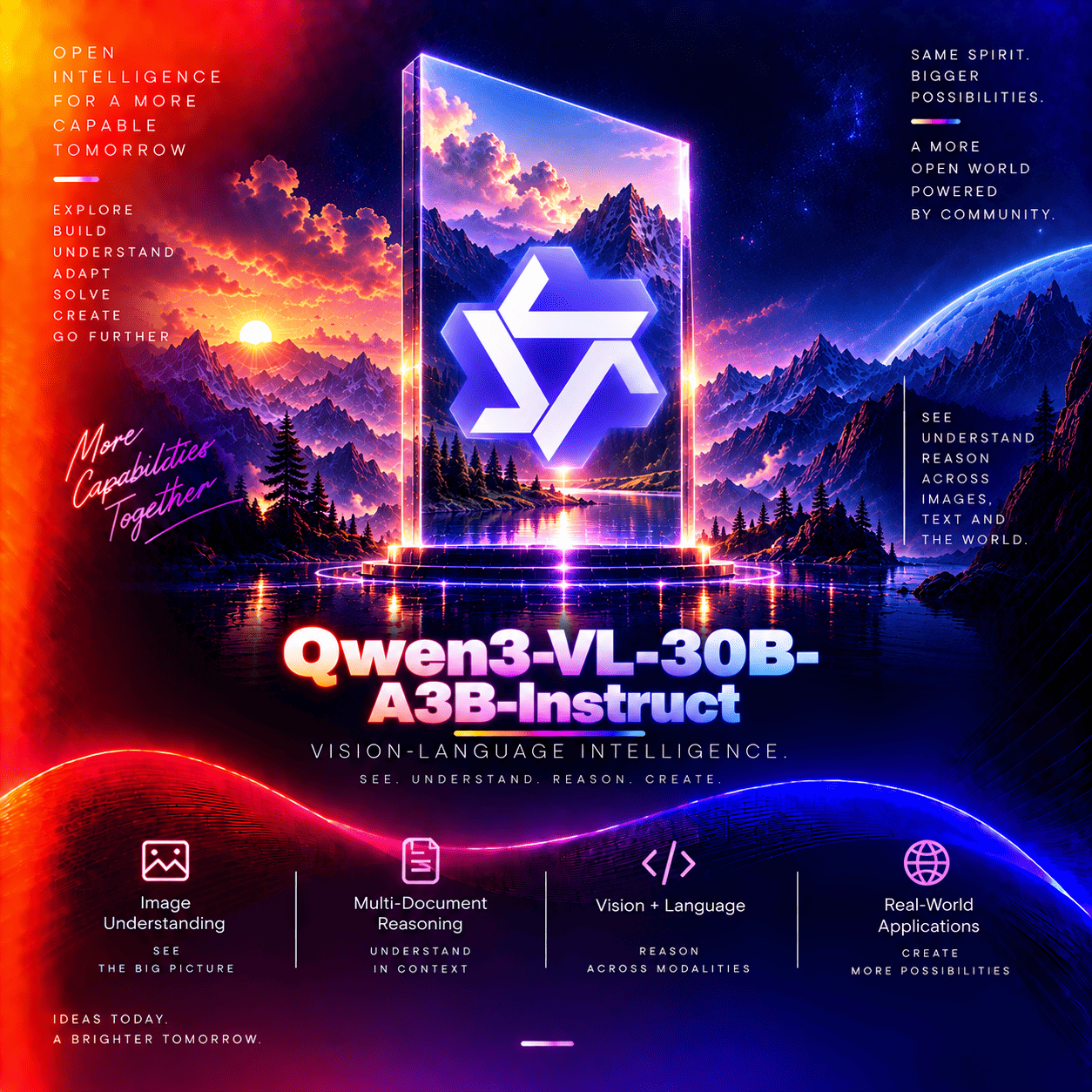
Qwen3-VL-30B-A3B-Instruct runs the same vision stack as the flagship of its series on roughly three billion active parameters. DeepStack, interleaved multi-axis positional encoding, timestamp-grounded event localisation, and OCR across 32 languages — all present, none reduced. What scales down is the language reasoning over what it sees, not the seeing itself. That combination is unusual and it decides the workload: document archives, receipt pipelines, video indexing at volume, where per-page cost determines whether the corpus gets processed at all rather than how well.
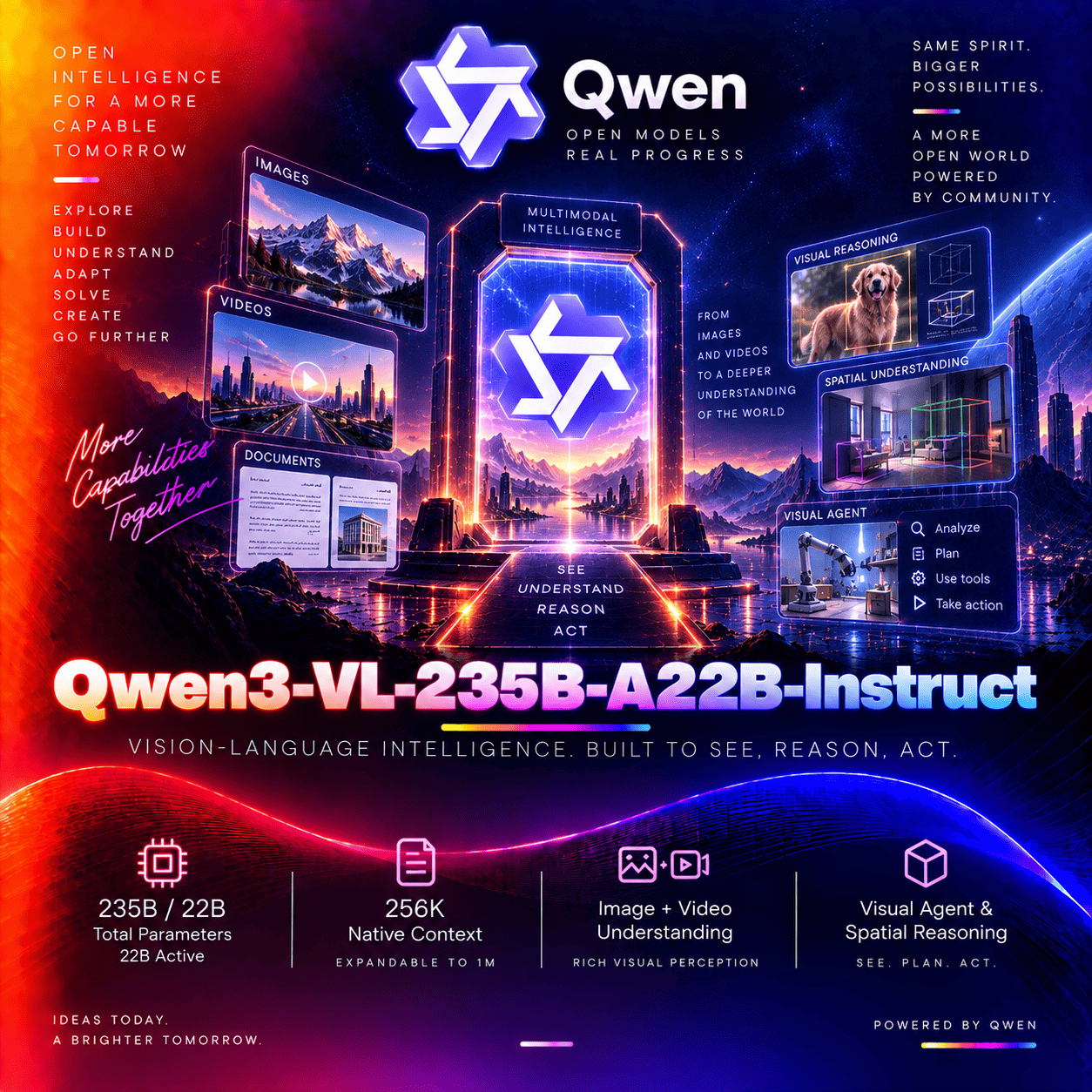
Qwen3-VL-235B-A22B-Instruct is the vision-language flagship of its series, and three named mechanisms explain what it does differently. DeepStack fuses features from multiple levels of the vision encoder rather than reading only its final layer, which is where fine detail survives. Interleaved-MRoPE allocates positional frequency across time, width, and height together for long-horizon video. And text–timestamp alignment grounds events to the second rather than to the clip. Its OCR covers 32 languages and is built for low light, blur, and tilt — real photographs rather than clean scans. It answers directly, with no reasoning blocks.
Mistral Small 3.2 is a minor update that fixes three specific things, and the most valuable of them is measured: infinite generations — where a model repeats itself until it hits the token ceiling — were halved on long, repetitive prompts. Instruction following tightened, and the function-calling template was rebuilt to be more robust. Everything else matches or slightly improves on the release before it. It reads text and images across a 128,000-token window, covers twenty-four languages, and ships under Apache 2.0 with a recommended temperature of 0.15 — unusually low, and directly connected to the repetition fix.

Claude Opus 4.8 answers directly unless asked to think — the opposite default from the generation that replaced it, and the reason some integrations still prefer it. A plain request returns text immediately, with no reasoning blocks ahead of the answer and no deliberation budget to account for. Adaptive thinking is available per request when a task needs it, and switching it off works at any effort level rather than only below a threshold. It carries a million-token context window with a 128,000-token output ceiling, reads text and images, and offers a fast mode that runs at roughly two and a half times normal speed through a research preview.
Gemma 4 31B is the largest dense model in Google DeepMind's open family, and it is built to read as much as it reasons. A 256,000-token context window takes entire codebases or large sets of images in one prompt, with a vision encoder that accepts variable aspect ratios rather than forcing everything into a square — which is why it handles UI screenshots, charts, and handwriting recognition rather than approximating them. Thinking is configurable rather than fixed, function calling is native, and the model was pre-trained on more than 140 languages with 35 supported out of the box. Apache 2.0, and it fits on a workstation.

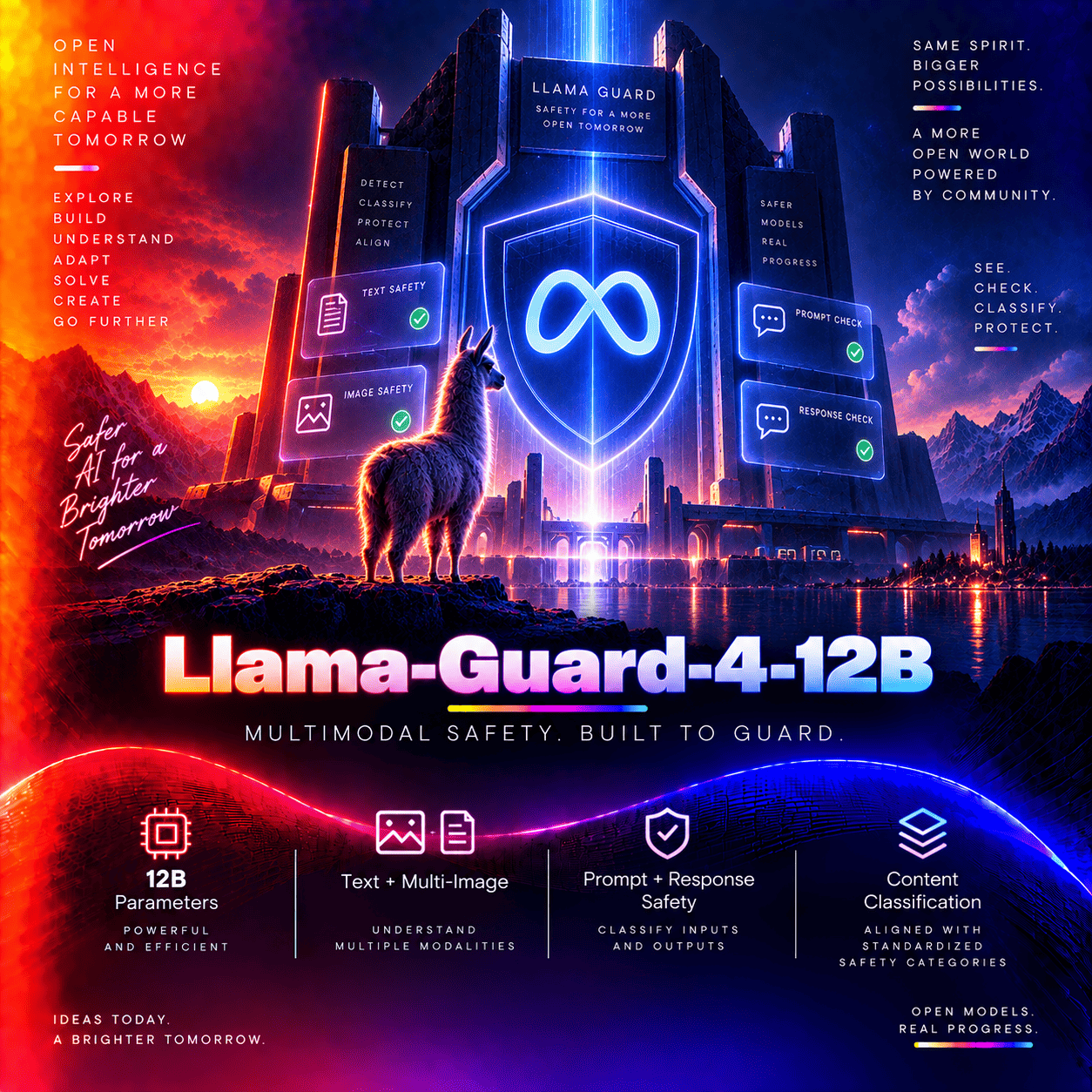
Llama Guard 4 is a safety classifier that happens to be a language model. Give it a prompt or a response — text, images, or both — and it answers in two lines: safe or unsafe, and if unsafe, which categories were violated. Nothing else. It was built by pruning Llama 4 Scout's mixture-of-experts architecture down to its shared expert alone, producing a dense twelve-billion-parameter model with no additional pre-training. It replaces two earlier models, one for text and one for vision, with a single classifier aligned to the MLCommons hazard taxonomy — and it runs on one 24 GB card.
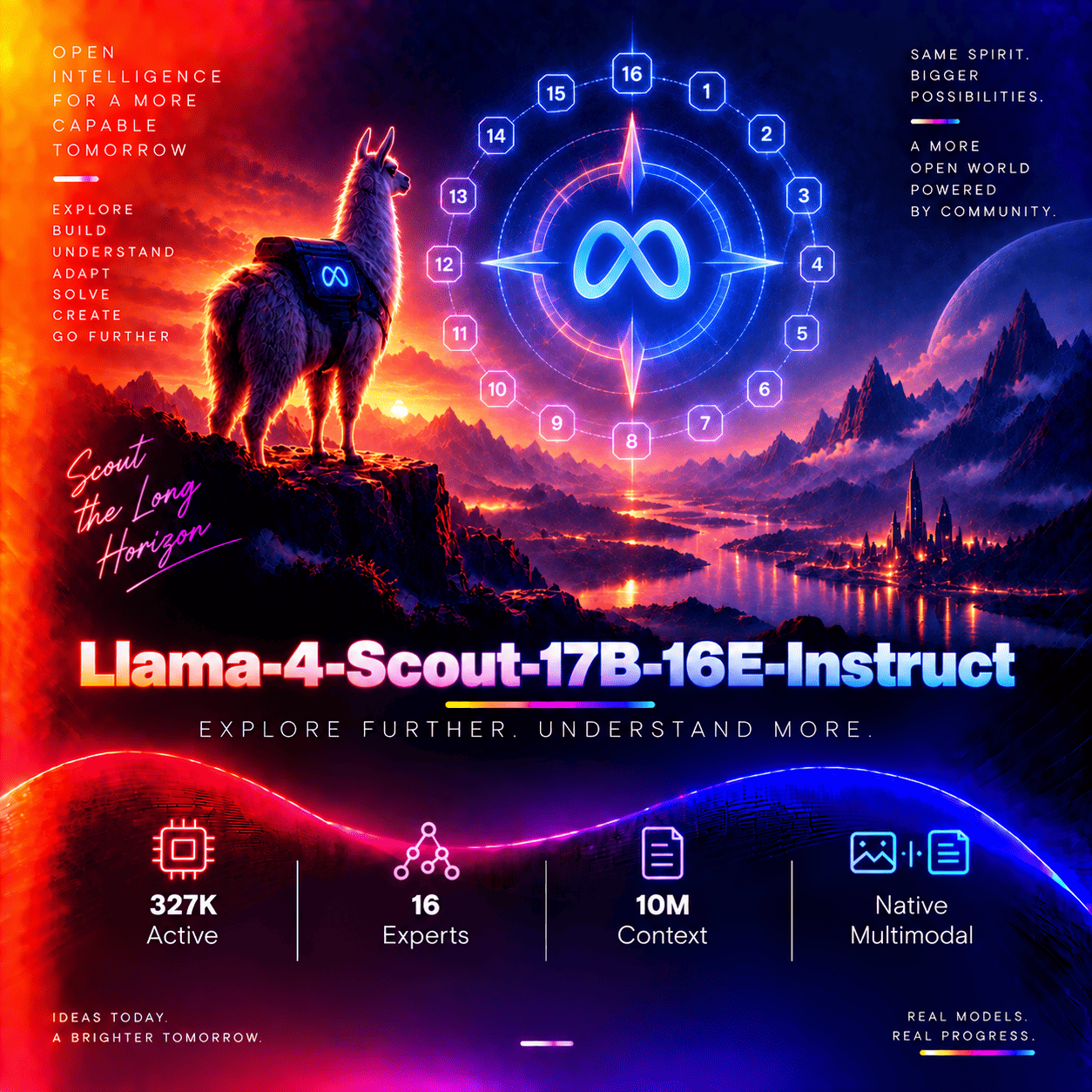
Llama 4 Scout activates the same seventeen billion parameters as its larger sibling from sixteen experts rather than a hundred and twenty-eight — and that difference reverses where you would expect. Lighter weights leave more memory for context, so Scout reaches a full million tokens on eight H100s where the larger model stops around 430,000, and a documented configuration pushes it past three and a half million. Its long-context design removes positional encoding from the global attention layers entirely, eliminating the distance decay that normally caps reach. Native multimodality through early fusion, twelve languages, and it fits on a single H100 quantised.
Gemini 2.5 Pro is Google's frontier-level multimodal model, engineered for highly complex reasoning, advanced coding, and massive-scale data analysis. Featuring an unprecedented 2M context window and hybrid thinking capabilities, it excels at solving the most demanding enterprise and scientific tasks.
Gemini 2.5 Flash is Google's latest thinking model, designed to tackle increasingly complex problems. It's capable of reasoning through their thoughts before responding, resulting in enhanced performance and improved accuracy. Gemini 2.5 Flash: best for balancing reasoning and speed.
Claude Haiku 4.5 is the fastest model in the Claude family and the first Haiku to support extended thinking. It reaches near-frontier quality at a fraction of the latency, which is what makes it the right engine for work measured in volume rather than difficulty — classification, extraction, routing, and the mechanical steps inside a larger agent. Its reasoning control is manual rather than automatic: you set an explicit token budget for thinking, on the requests that warrant one, and leave it off everywhere else. It reads text and images across a 200,000-token context window, tracks its own token consumption as that window fills, and returns up to 64,000 tokens per response.
Claude Sonnet 4.6 is the generation where the Sonnet line reached a million-token context window and started keeping its reasoning across turns rather than discarding it. Both changes matter in practice: the window holds a codebase or a document set whole, and preserved thinking makes long multi-turn sessions consistent instead of rebuilding their analysis from nothing each time. It supports adaptive thinking with five effort levels and remains strong with thinking switched off entirely, which is unusual — most reasoning models degrade sharply without it. Context compaction summarises older turns automatically as a conversation approaches its limit, extending how far a session can run.
Claude Opus 4.7 is the first Claude model to accept high-resolution images, raising the ceiling to 2576 pixels and 3.75 megapixels from a previous limit under a third that size. The practical effect goes beyond sharper reading: the model's coordinates now map one to one with actual pixels, so pointing at something in a screenshot no longer requires a scale-factor conversion. That makes it markedly better at computer use, document understanding, and any workflow where it must visually check its own output — redlining a document, editing slide layouts, transcribing figures from a chart. It carries a million-token context window with adaptive thinking and a 128,000-token output ceiling.


