Model Library
Browse and deploy state-of-the-art AI models through the DEVUP Gateway.
Loading models...
Model Library
Browse and deploy state-of-the-art AI models through the DEVUP Gateway.
Browse and deploy state-of-the-art AI models through the DEVUP Gateway.

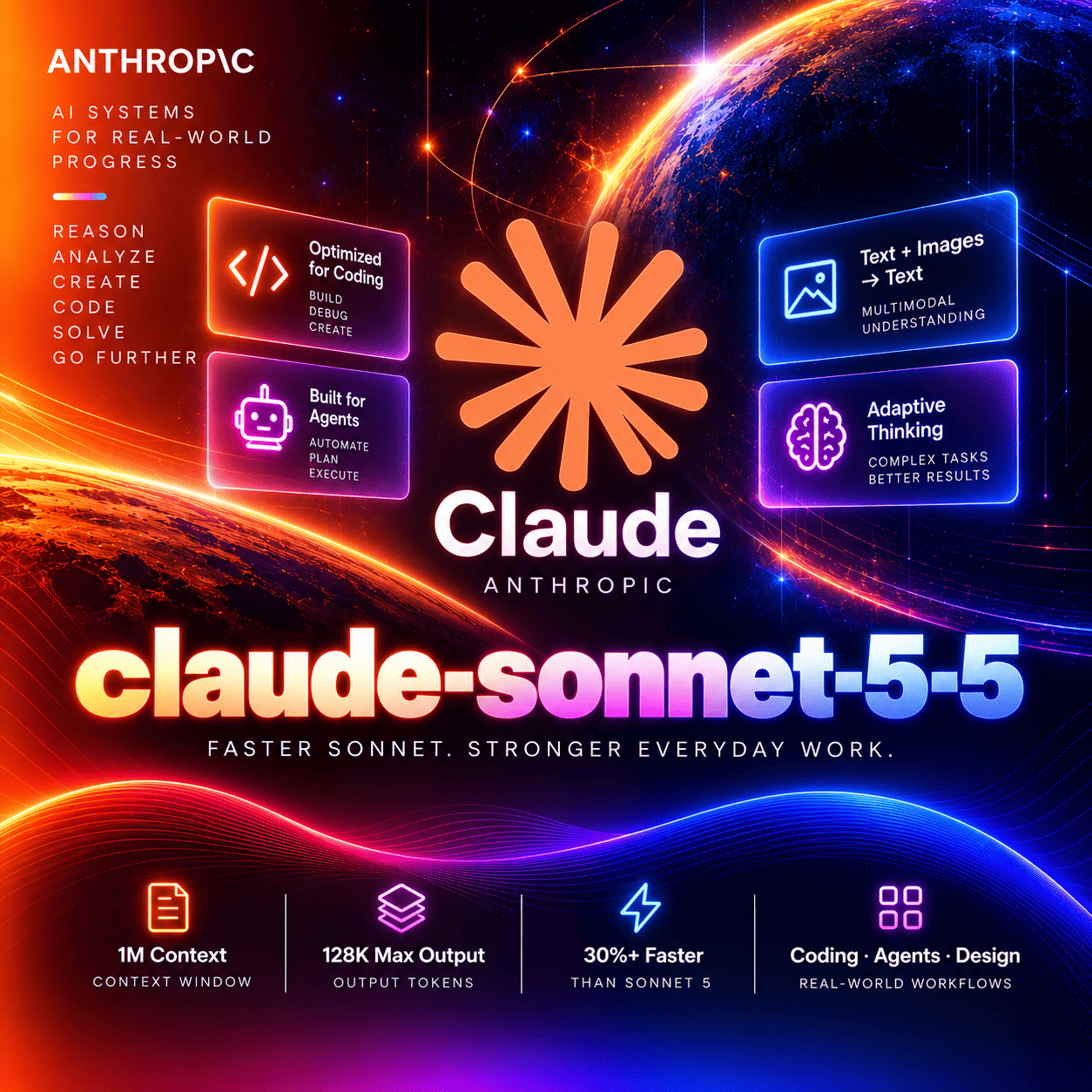
Claude Sonnet 5.5 is Anthropic's model for well-scoped everyday work — building features, fixing bugs, and the tasks that make up most of a working day. It carries the same one-million-token window and 128,000-token output ceiling as the tier above it, reads images as well as text, and runs at Anthropic's Fast latency rating. Its adaptive thinking defaults to high effort, which is a level above what the larger model defaults to. And it drops a feature its predecessor had: it no longer receives the injected tags that let earlier Sonnet models track their own remaining context.

GPT-6.1 Sol adds two things to the tier below OpenAI's flagship, and takes one away. It reads images, which the model it replaces did not. Its knowledge runs ten days later. And it no longer accepts the lowest reasoning settings — none and minimal are rejected, which makes deliberation mandatory and breaks any integration written against its predecessor's full range. A 1,050,000-token window with 922,000 available for input and 128,000 for output, five effort levels from low to max, and OpenAI's own documentation telling you to compare it against the flagship on your own tasks rather than take the positioning on trust.
GPT-6 Astra is OpenAI's most capable model and the one its documentation recommends by default: built for the hardest end-to-end work rather than for any single task. It carries the newest knowledge of anything in OpenAI's catalogue, against a context window slightly beyond a million tokens and a 128,000-token output ceiling. Reasoning runs across four effort levels — and unlike the generation below it, deliberation cannot be switched off, which is a deliberate signal about what this model is for. It accepts text and images, calls functions, and returns structured output. On DEVUP AI it is reachable through the standard OpenAI-compatible endpoint, billed in Algerian Dinar.

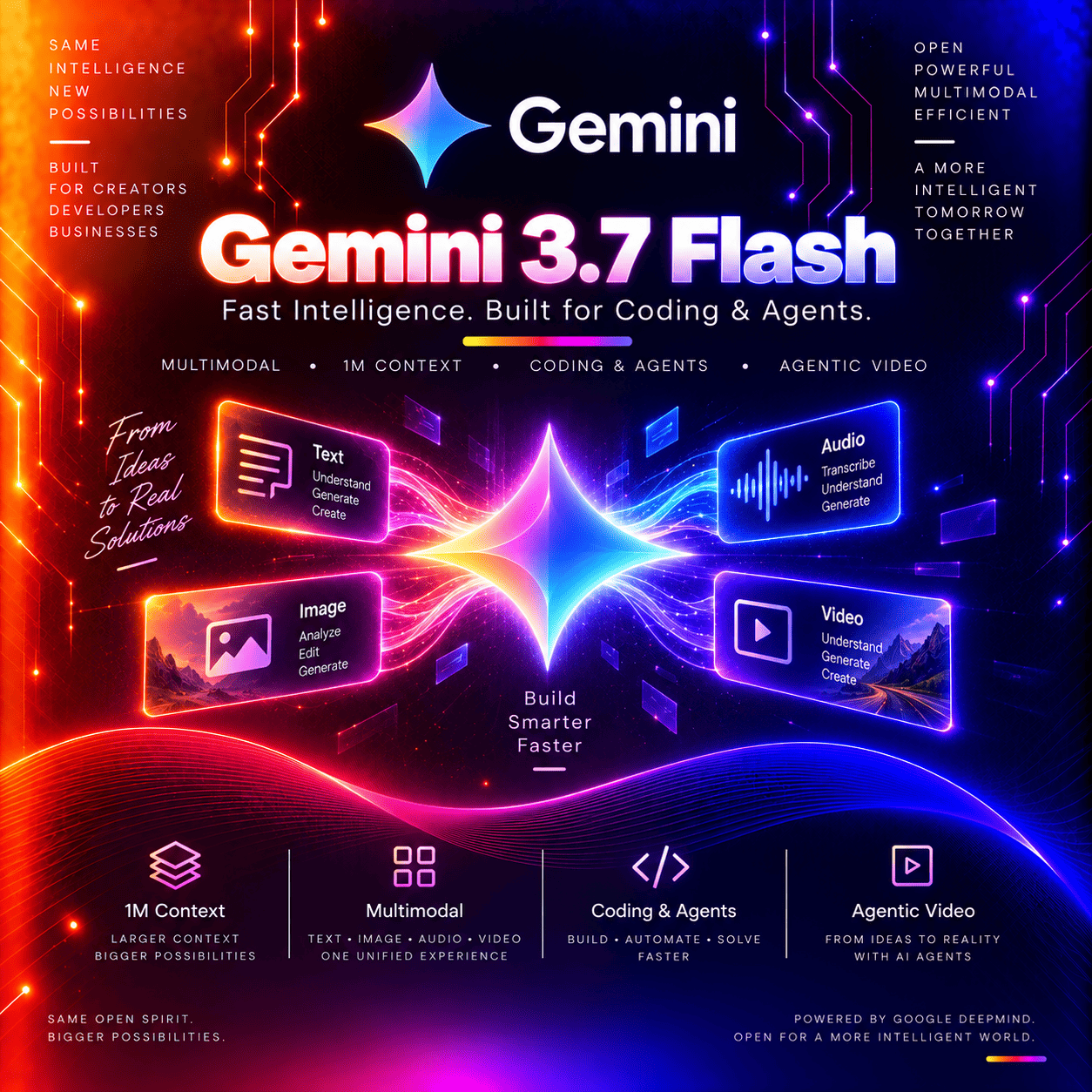
Gemini 3.7 Flash is Google's most capable Flash-tier model, built for coding and agentic work rather than for chat alone. It is natively multimodal in the widest sense available: text, images, video, audio, and PDFs all go in directly, against a one-million-token context window, with no separate extraction step in front of it. Thinking depth is a request-level setting with three levels, letting the same model serve a latency-critical pipeline and a long multi-step agent run. Google reports large gains over the previous Flash generation on issue resolution, production-ready code generation, complex document processing, and real-world business automation. On DEVUP AI it is the natural choice when your input is not plain text and your workflow has more than one step.

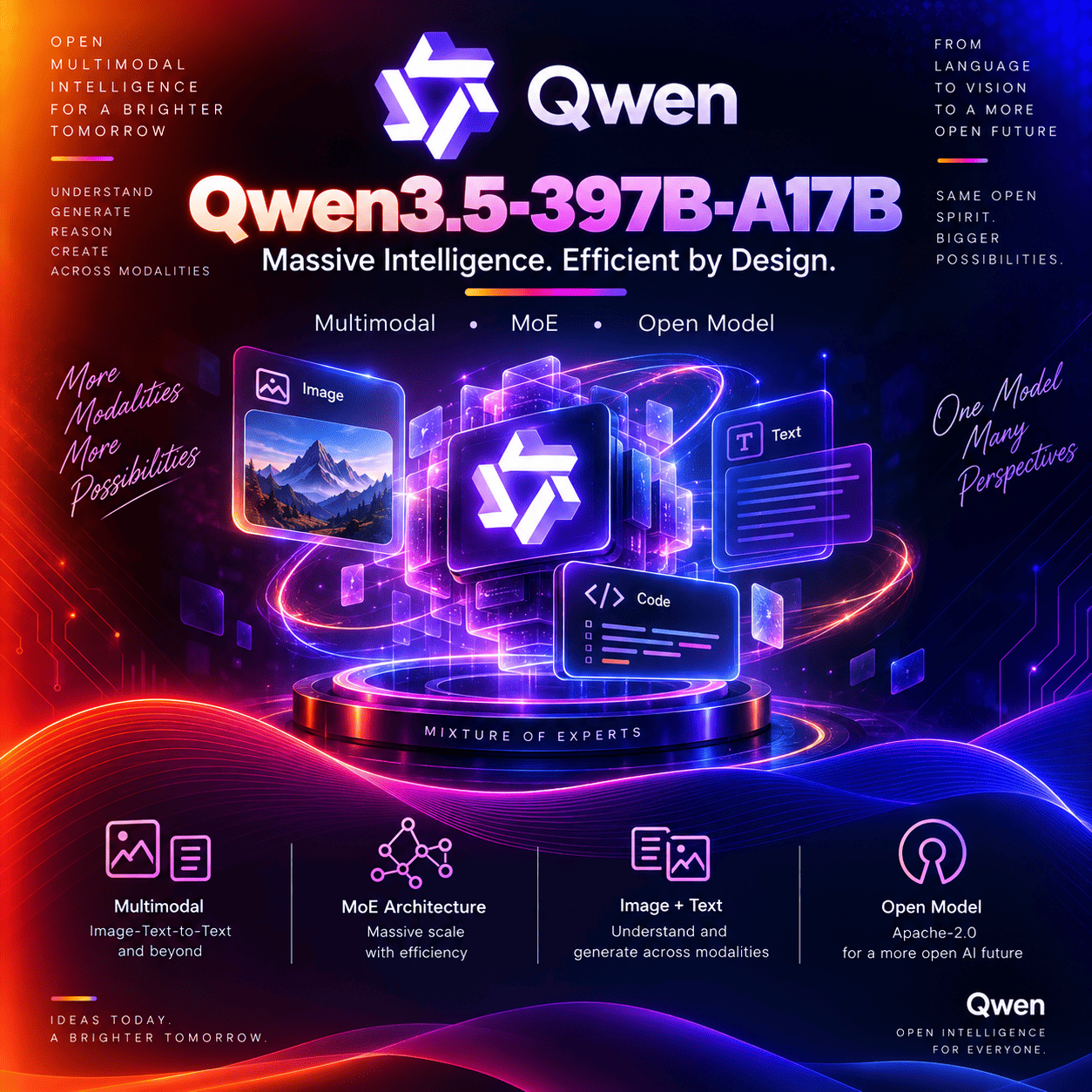
Qwen3.5-397B-A17B activates seventeen billion parameters out of 397, across 512 experts of which eleven work on any token. Its attention is hybrid rather than uniform — Gated DeltaNet layers interleaved with full attention, so linear-cost layers carry the depth and exact attention appears where retrieval demands it. Vision was trained in from the start through early fusion on multimodal tokens rather than attached afterwards, and Qwen report it outperforming their own dedicated vision-language models on reasoning, coding, and agents. Native context runs to 262,144 tokens, it covers 201 languages, and it ships under Apache 2.0.
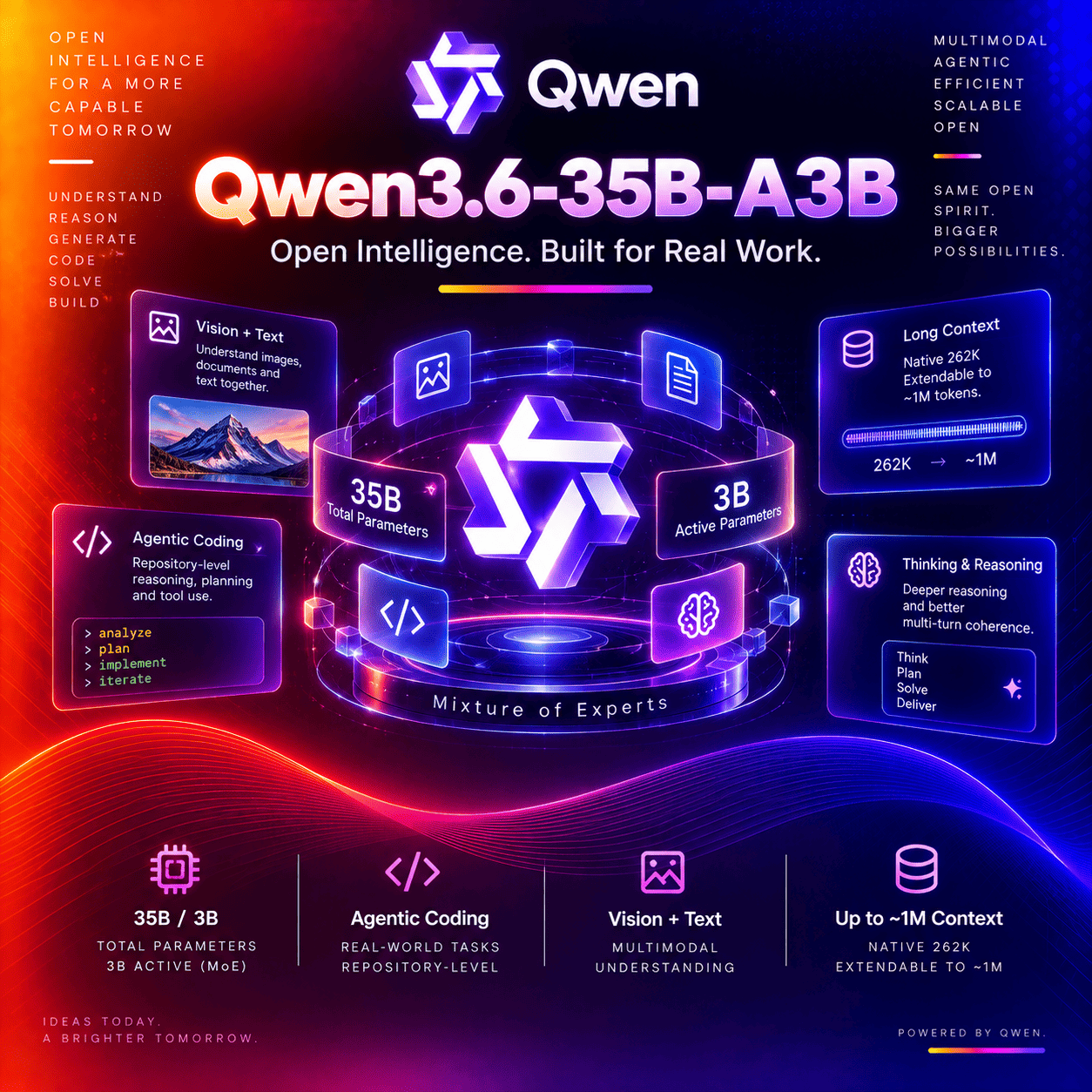
Qwen3.6-35B-A3B runs 35 billion parameters and activates three, across 256 experts of which nine work on any token. Its layer layout is published exactly: three linear-attention blocks followed by one full-attention block, repeated ten times — so only ten of forty layers pay quadratic cost, which is what makes a 262,144-token window affordable on a model this size. Grouped-query attention with two key-value heads against sixteen query heads cuts the cache by a further eight times. It carries a vision encoder, covers 201 languages, extends past a million tokens with positional scaling, and ships under Apache 2.0.

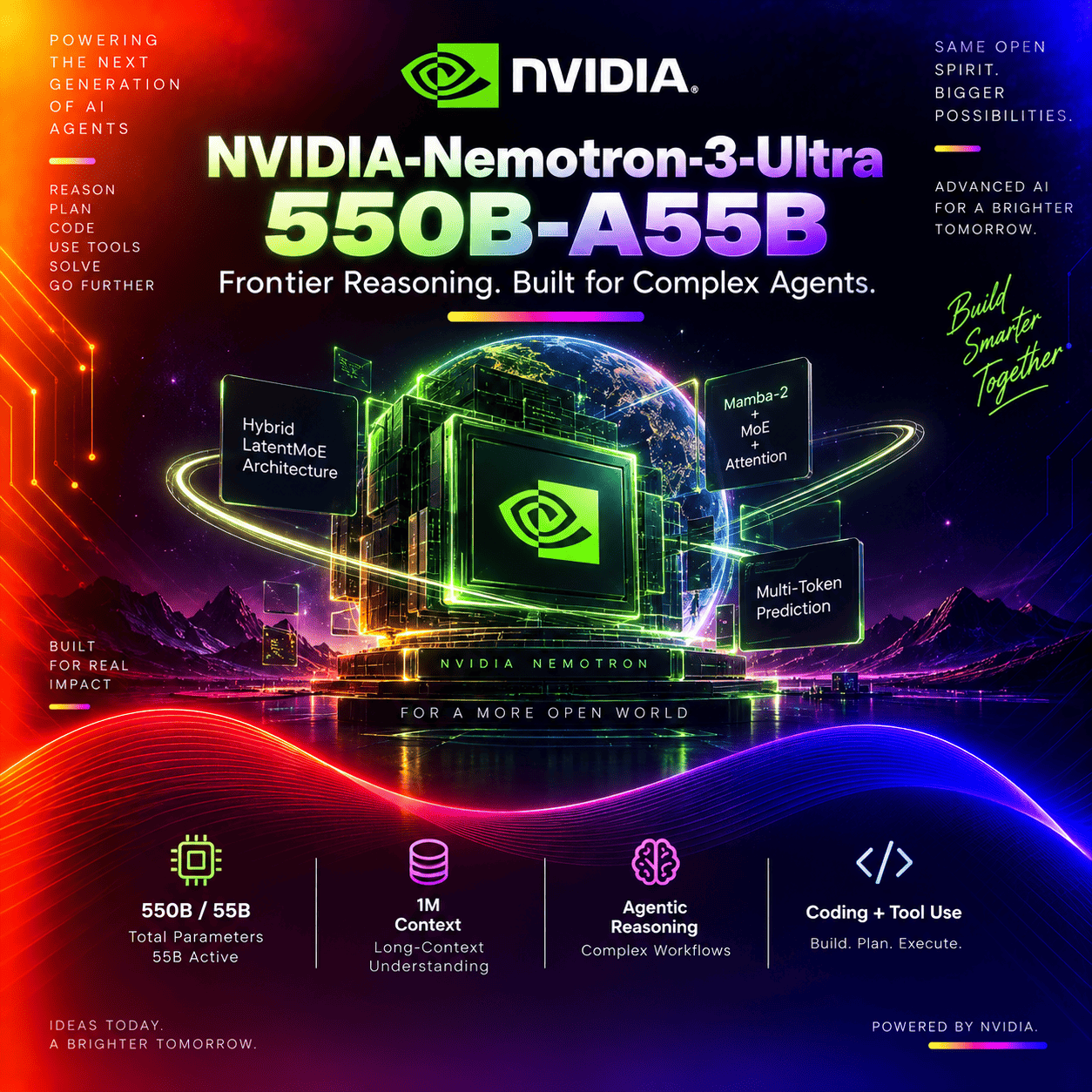
Nemotron 3 Ultra is the frontier model in NVIDIA's open family — 550 billion parameters, 55 active, 262,144 tokens of context, and Mamba-2 interleaved with mixture-of-experts layers so that long inputs cost a recurrent model's price rather than a transformer's. What sets it apart from almost every model at this scale is what NVIDIA published alongside it: the training data, the recipe, a reproducible evaluation path, and the reward model actually used in its reinforcement learning. That last one lets you inspect the standard the model was trained toward, not only the model that resulted.

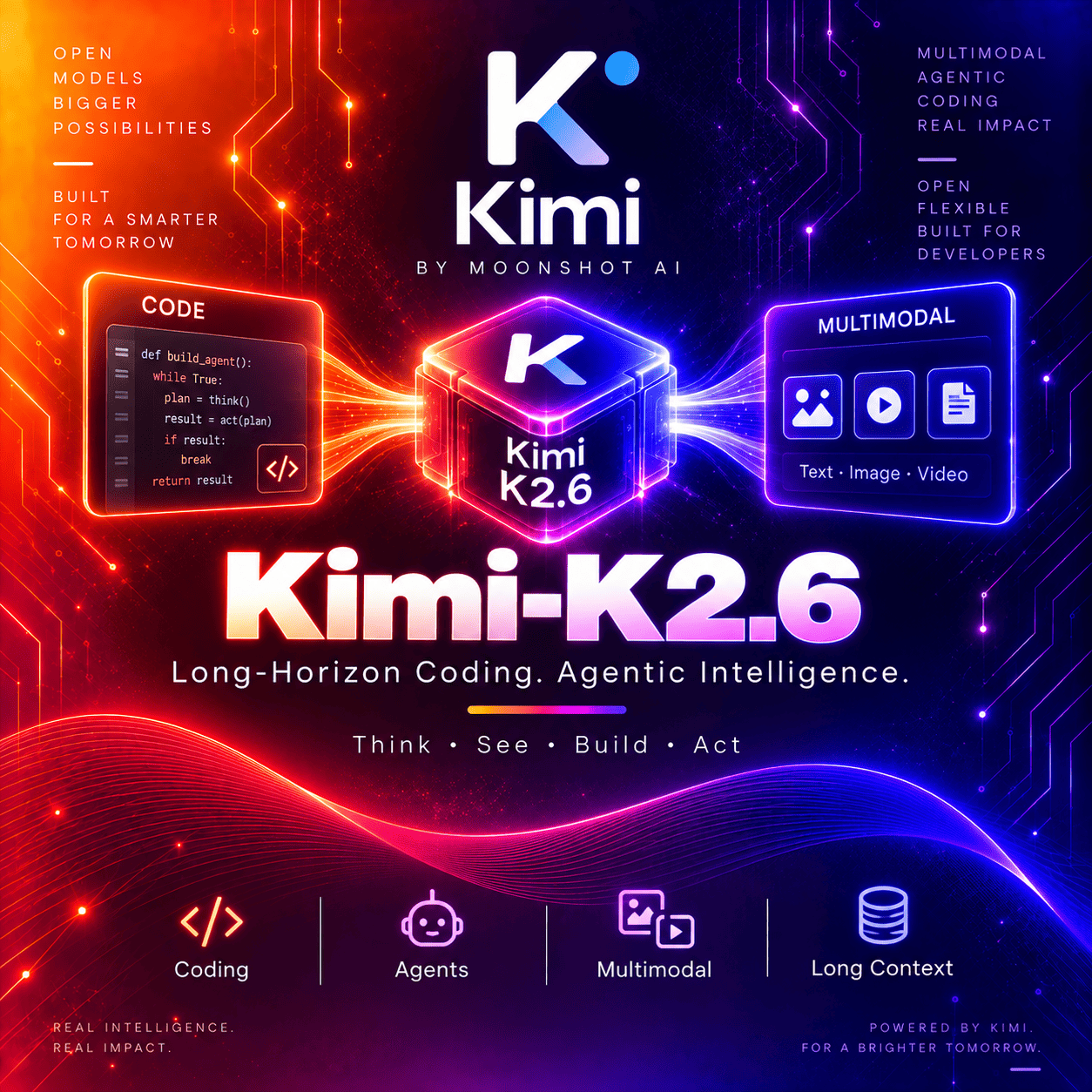
Kimi K2.6 is a trillion-parameter multimodal agent that activates thirty-two billion per token, built by continuing the training of an existing base on roughly fifteen trillion mixed visual and text tokens. It ships with two reasoning modes — Thinking on by default, Instant for speed — each with its own recommended temperature, and an optional preserve-thinking mode that carries full reasoning across turns and measurably improves coding-agent work. Native INT4 quantisation is applied during post-training rather than after, so the released weights are the evaluated ones. Moonshot also publishes a verifier for checking that a third-party deployment matches their reference behaviour.

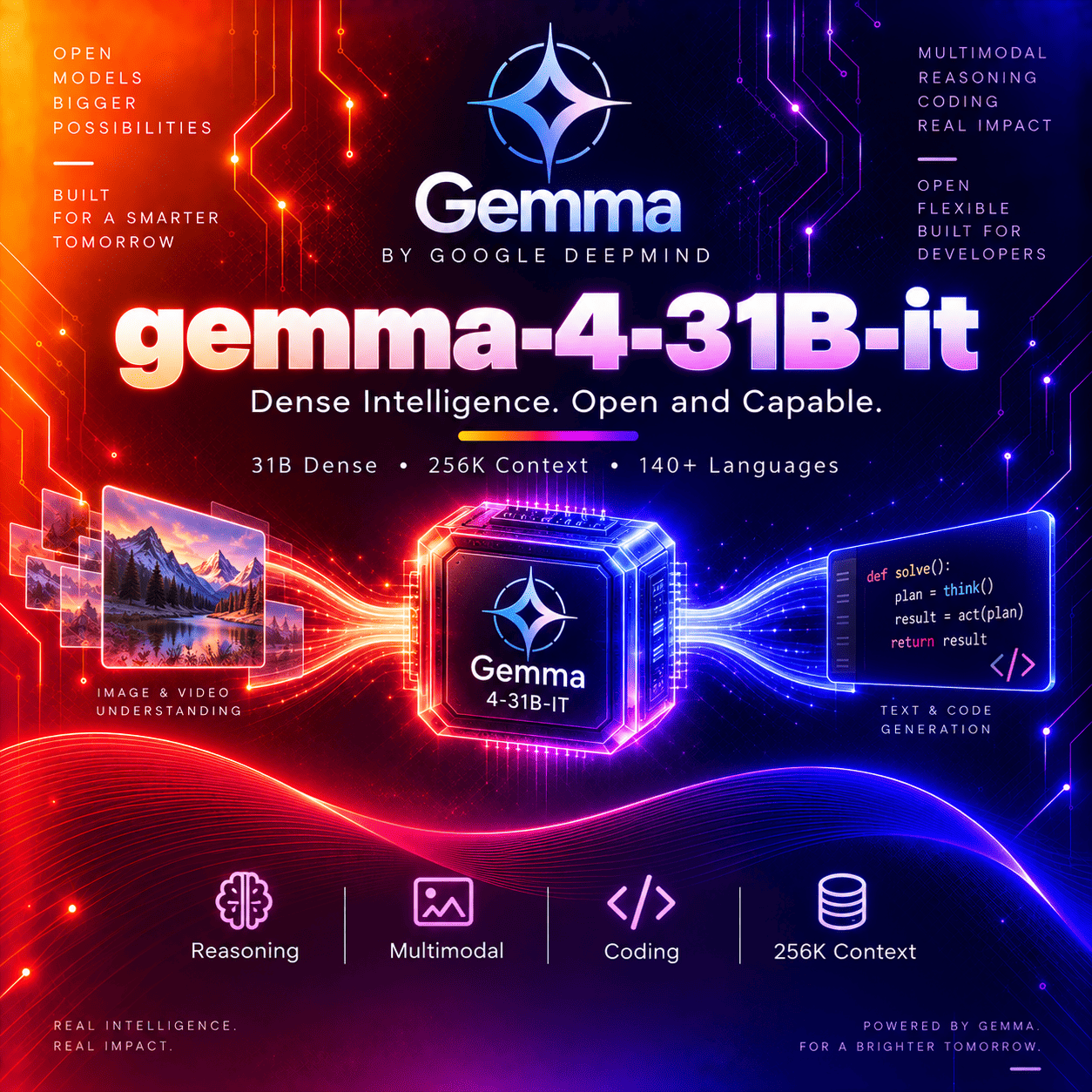
Gemma 4 31B is the largest dense model in Google DeepMind's open family, and it is built to read as much as it reasons. A 256,000-token context window takes entire codebases or large sets of images in one prompt, with a vision encoder that accepts variable aspect ratios rather than forcing everything into a square — which is why it handles UI screenshots, charts, and handwriting recognition rather than approximating them. Thinking is configurable rather than fixed, function calling is native, and the model was pre-trained on more than 140 languages with 35 supported out of the box. Apache 2.0, and it fits on a workstation.
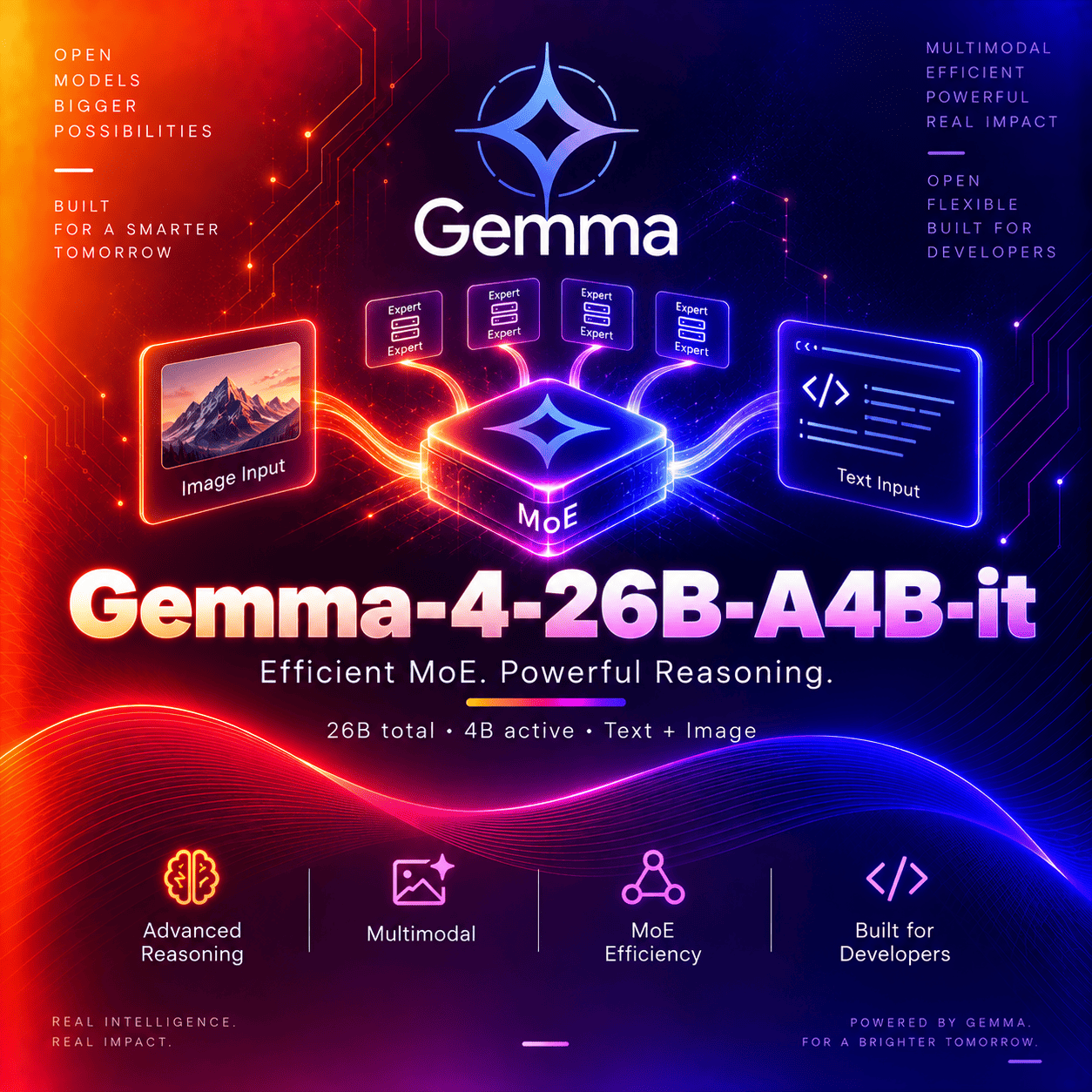
Gemma 4 26B A4B is the sparse member of Google DeepMind's open family: 26 billion parameters in total, roughly four active per token. That ratio is what lets it run on a workstation GPU while reasoning like a considerably larger model. Its attention alternates local sliding windows with full global passes — and always ends on a global layer, so the last thing the model does before answering is look at everything. Image input accepts variable aspect ratios and resolutions rather than a fixed square, and reasoning is a first-class channel in the chat template rather than a tag bolted onto the output. Released under Apache 2.0.

DeepSeek-V4.1-Flash-1017 is a multimodal reasoning model built for coding, agentic workflows, and visual understanding. This update improves published benchmark results over V4.1-Flash while reducing task completion time and output length in reported evaluations.
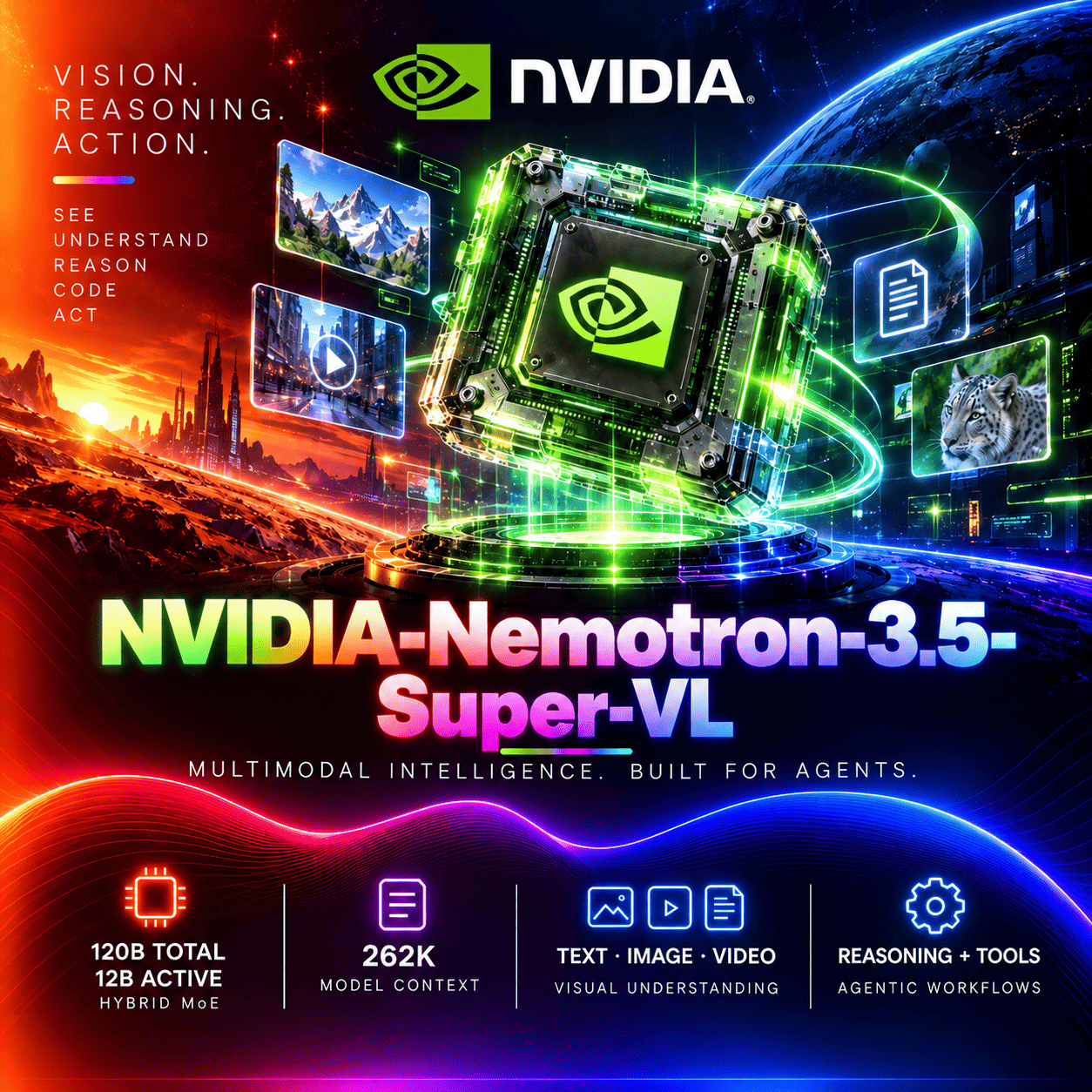
NVIDIA Nemotron 3.5 Super VL is an open multimodal model for agents that see, reason, and act. Its 120-billion-parameter hybrid design activates 12 billion per token, interleaving Mamba-2, attention, and mixture-of-experts layers with a C-RADIO vision encoder, and it reads text, images, document pages, interfaces, and video clips of up to two minutes. Reasoning can run in full, at medium effort, or not at all. Its language backbone was distilled from NVIDIA's largest Nemotron model over a trillion tokens, then trained on repositories, pull requests, and build logs, and it reports one of the lowest hallucination rates in its own comparison. Released openly under OpenMDW-1.1.

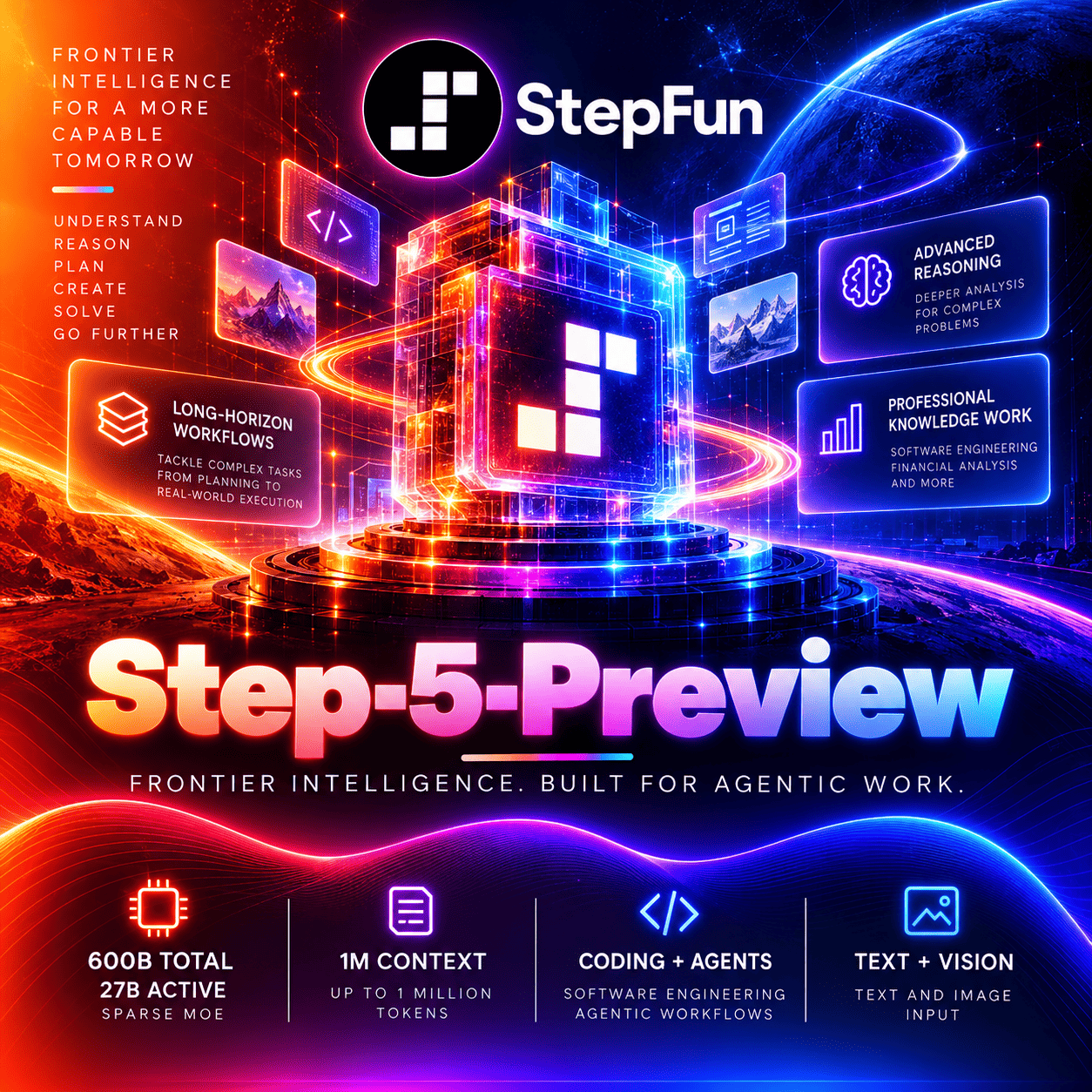
Step 5 Preview is StepFun's flagship for agentic work — 600 billion parameters with 27 billion active per token, a one-million-token window that output can fill as fully as input, and image understanding alongside text. It always reasons: deliberation runs on every request, controlled across three levels rather than switched off. StepFun position it for repository-scale software engineering, long-horizon execution with repeated tool calls, and professional knowledge work, with particular strength in finance. After launching through an API, its weights were released openly in three precisions, under a licence that carries attribution and commercial conditions of its own.
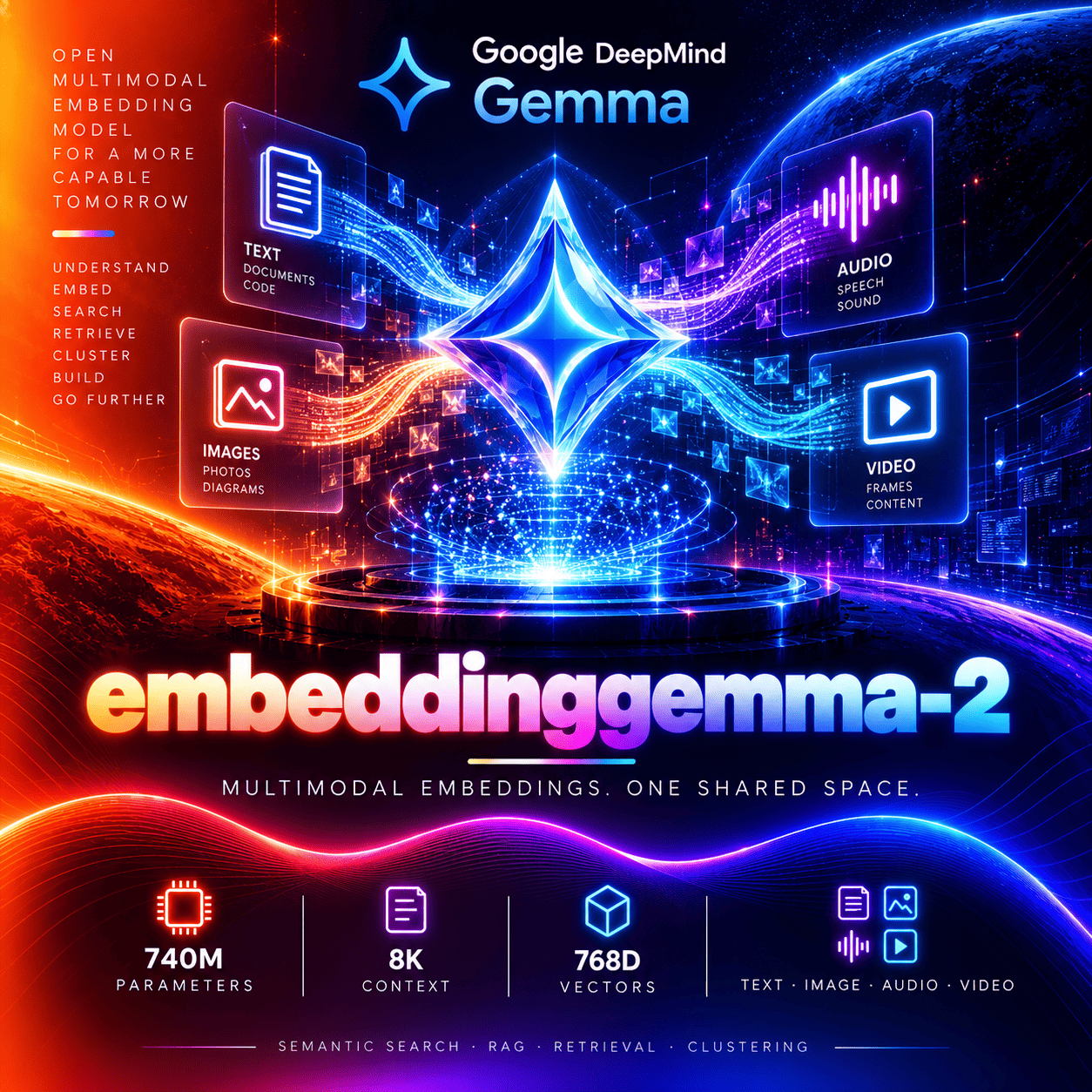
EmbeddingGemma 2 places text, code, images, video, and audio in one 768-dimensional vector space, so a text query can retrieve a photograph, a video clip, or a recording directly, with no separate model per modality. It carries 740 million parameters, but its vision and audio encoders load independently — a text-only deployment runs at 270 million. Against its predecessor, multilingual text quality is essentially unchanged while code retrieval rose by roughly fourteen percent, and every other modality is new. Vectors truncate from 768 down to 128 dimensions, though the cost of shrinking them depends heavily on what you are embedding.
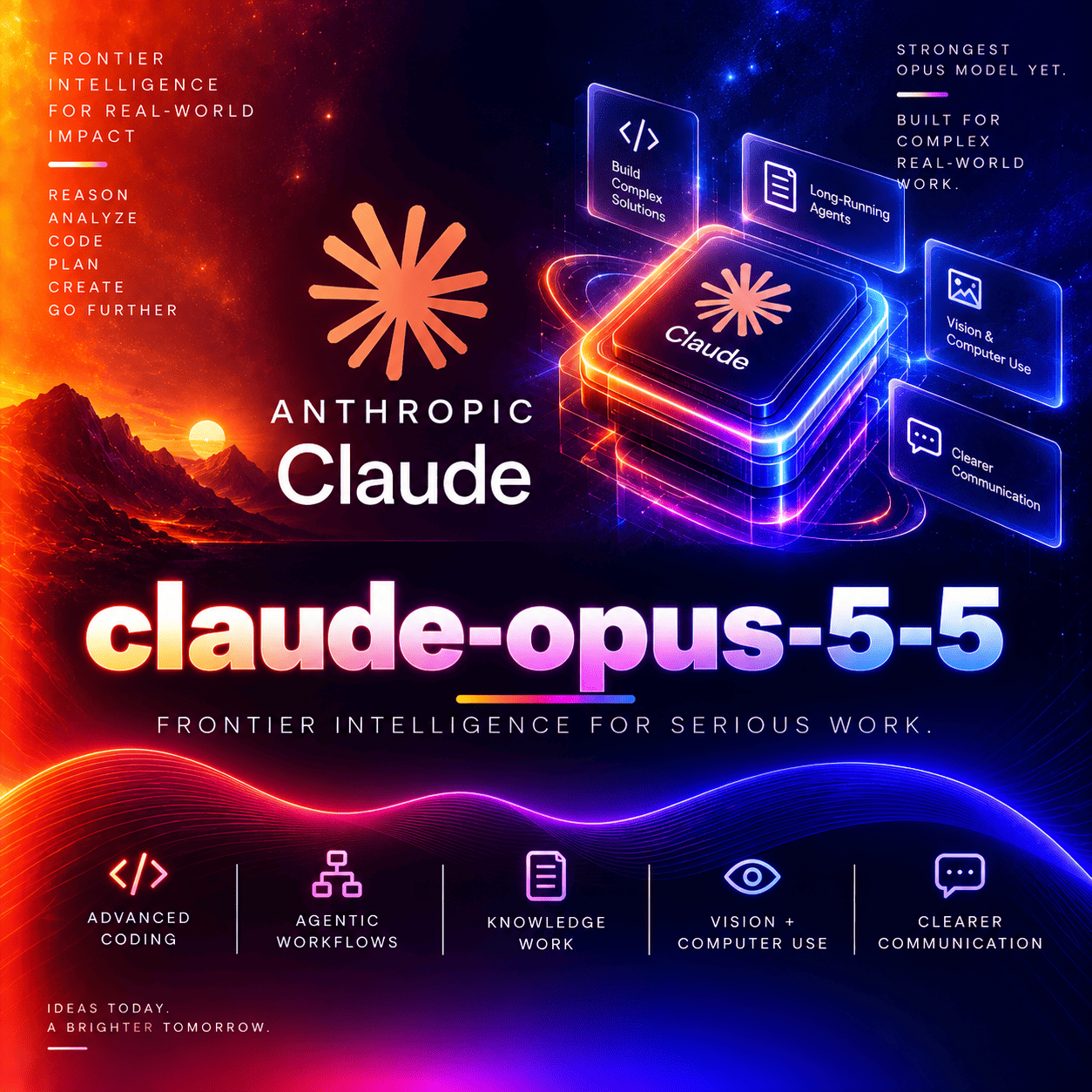
Claude Opus 5.5 is the first model in its family where the default reasoning effort went down rather than up — from high on the previous generation to medium here — because it reaches the same conclusions with fewer tokens. Customers evaluating it report its lowest effort setting matching or beating the previous model's highest. Thinking is adaptive and always on, across a one-million-token window with 128,000 tokens of output, and it reads images as well as text. Anthropic publish its benchmark results with production safeguards enabled, noting that this likely lowers the scores.
GPT-6 Luna is the tier OpenAI describe as handling clerical work — summarising, extracting, answering — and it carries the same 1.05-million-token window, the same reasoning range from none through max, and the same caching improvements as the model above it. Two things distinguish it. Its knowledge cutoff is more recent than the more expensive tier's, which inverts the usual assumption. And its output-token reduction over its predecessor exceeded the fifty percent headline, which matters most on exactly the high-volume work it was built for.
GPT-6 Sol brings the training methods of OpenAI's flagship to a tier meant to be used far more often. Its most consequential change is not in the model but around it: reasoning effort and tool availability can now be altered mid-conversation without invalidating the prompt cache, which makes starting cheap and escalating only on the hard step a workable pattern rather than a costly one. Reasoning runs from none through max, the context window holds 1.05 million tokens with 922,000 available for input, and OpenAI report roughly half the factual errors of its predecessor alongside lower rates of agents claiming work they did not do.

MiMo-V2.6-Pro is the flagship of Xiaomi's September 2026 release, and the only model in its series with an independent measurement behind it — a score of 46 that places it at the top of open-weight models. It carries 1.02 trillion parameters with 42 billion active across 384 experts, seventy layers of which sixty use a narrow sliding window and ten see the whole context. It shares its smaller sibling's three encoders for image, video, and audio, its seven-token speculative drafter, and the single reinforcement learning run spanning coding, agents, vision, and cybersecurity. Where the two diverge is sustained consistency across large, interconnected changes. MIT licensed.
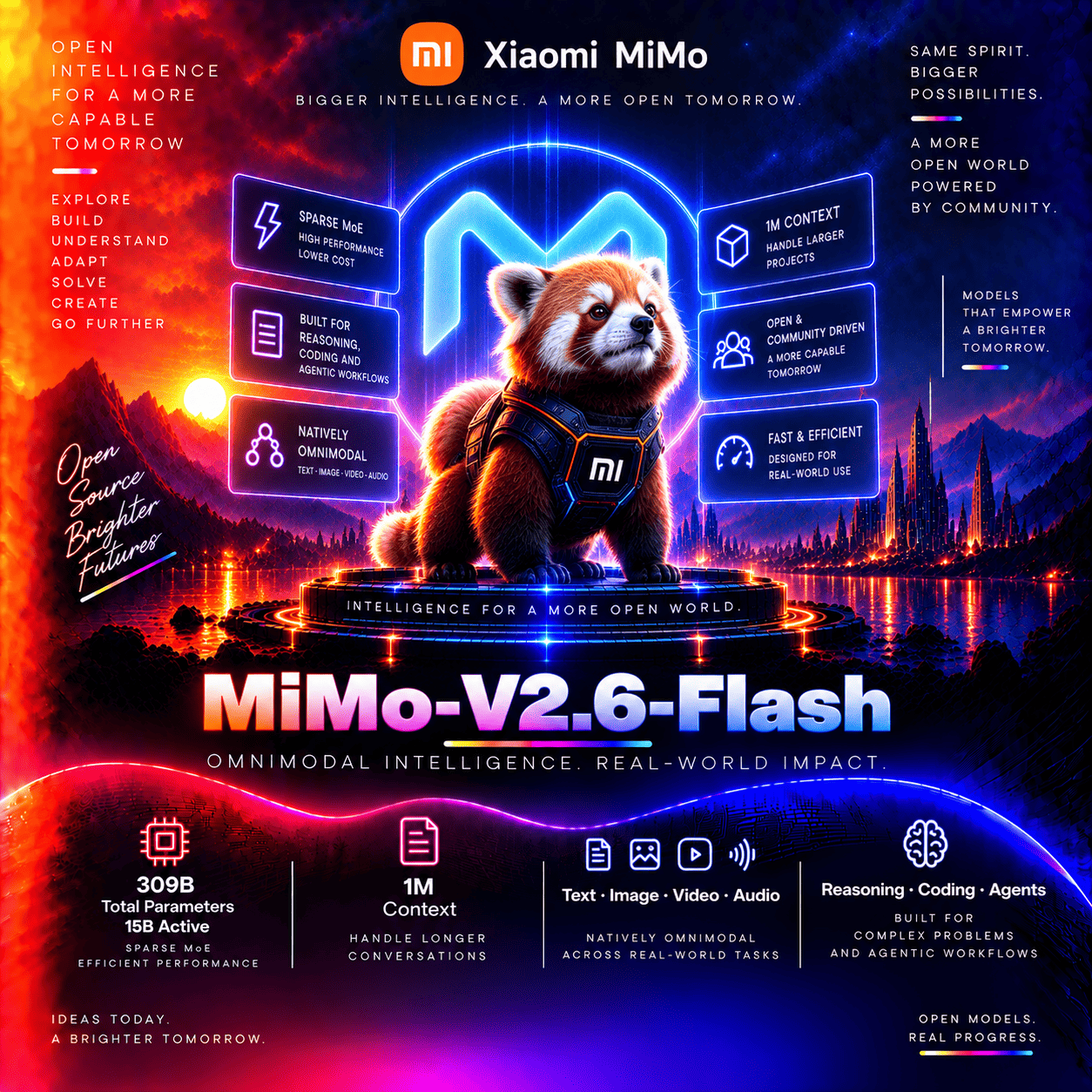
MiMo-V2.6-Flash was released on 21 September 2026 and trained through a single mixed reinforcement learning run that folded coding, general agents, visual tasks, and cybersecurity into one pass rather than separate domain-specific runs. It reads text, images, video, and audio through three dedicated encoders, across a million-token window with up to 131,072 tokens of output. Three hundred and nine billion parameters with fifteen active, two hundred and fifty-six experts with no shared expert, and a five-layer drafter predicting seven tokens per pass. MIT licensed. Its benchmark figures are, so far, Xiaomi's own.
Qwen3.8-Flash is a multimodal Mixture-of-Experts model and an early preview of the architecture behind Qwen4. It carries 125 billion main parameters plus a separate 51-billion-parameter N-gram embedding table, yet activates only 6 billion per token — under five percent — through a hybrid attention design where three of every four layers compress history and the fourth retrieves from it precisely. The result is a model that reads text, images, and video across a one-million-token context at a per-token cost closer to a small model than a large one. Thinking is on by default and switchable off, and the whole design targets agentic coding, long-document work, and video analysis.
GPT-4o mini is a fast, affordable small model for focused tasks — and its appeal is what it leaves out. There is no reasoning pass, no effort level, no deliberation budget to tune: it reads the prompt and answers, which makes its latency predictable and its behaviour easy to reason about. It accepts text and images against a 128,000-token context window, returns structured output against a JSON schema, calls functions, and supports predicted outputs for edit-style tasks. It is also built for fine-tuning: outputs from a larger model can be distilled into it to produce comparable results on a narrow task at lower cost and latency.
GPT-5.4 Pro is the deep-reasoning variant of GPT-5.4, and it asks two things of your integration before it asks anything of your prompt: it is reachable only through the responses endpoint, and its requests take minutes rather than seconds. Both are deliberate. It exists for problems that resist a quick answer — multi-step analysis, architectural judgment, questions where a confident wrong answer is more expensive than a slow right one. Three effort levels are available, starting at what other tiers treat as substantial deliberation, and OpenAI recommends submitting work in the background rather than holding a connection open for the duration.
GPT-5.5 Pro is the same underlying model as GPT-5.5 with one thing fixed rather than configurable: execution mode. Every request runs in pro mode, where the model does substantially more internal work before committing to a single final answer. That fixed choice is why it exists as its own model identifier instead of a parameter. It has no fast path — the shallowest effort level accepted is already what other tiers treat as a deliberate escalation — and requests routinely take minutes rather than seconds. It is the model for questions where a wrong answer is more expensive than a slow one.
GPT-5.3-Codex is OpenAI's most capable agentic coding model, and it is built for a narrower job than a general assistant: writing, debugging, and shipping software inside a coding agent. It merges the software-engineering strength of the previous Codex model with the broader professional reasoning of the general tier, and the result works autonomously for hours rather than turns. Compaction support lets a session run past what a context window would normally allow, and you can steer it mid-execution rather than waiting for it to finish and starting over. Reasoning is always on, across four depth levels, with the middle setting recommended for everyday interactive work.


