Model Library
Browse and deploy state-of-the-art AI models through the DEVUP Gateway.
Loading models...
Model Library
Browse and deploy state-of-the-art AI models through the DEVUP Gateway.
Browse and deploy state-of-the-art AI models through the DEVUP Gateway.

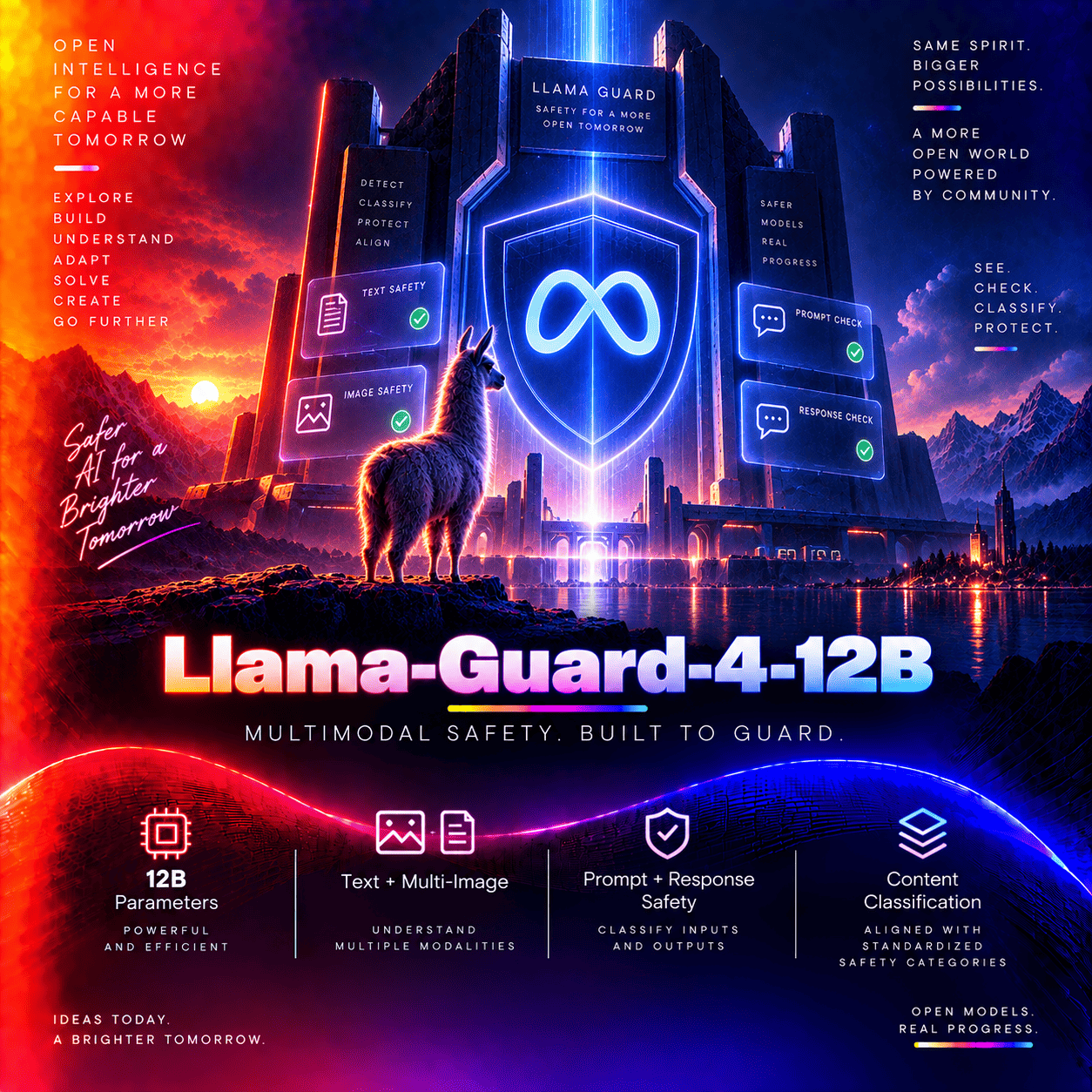
Llama Guard 4 is a safety classifier that happens to be a language model. Give it a prompt or a response — text, images, or both — and it answers in two lines: safe or unsafe, and if unsafe, which categories were violated. Nothing else. It was built by pruning Llama 4 Scout's mixture-of-experts architecture down to its shared expert alone, producing a dense twelve-billion-parameter model with no additional pre-training. It replaces two earlier models, one for text and one for vision, with a single classifier aligned to the MLCommons hazard taxonomy — and it runs on one 24 GB card.
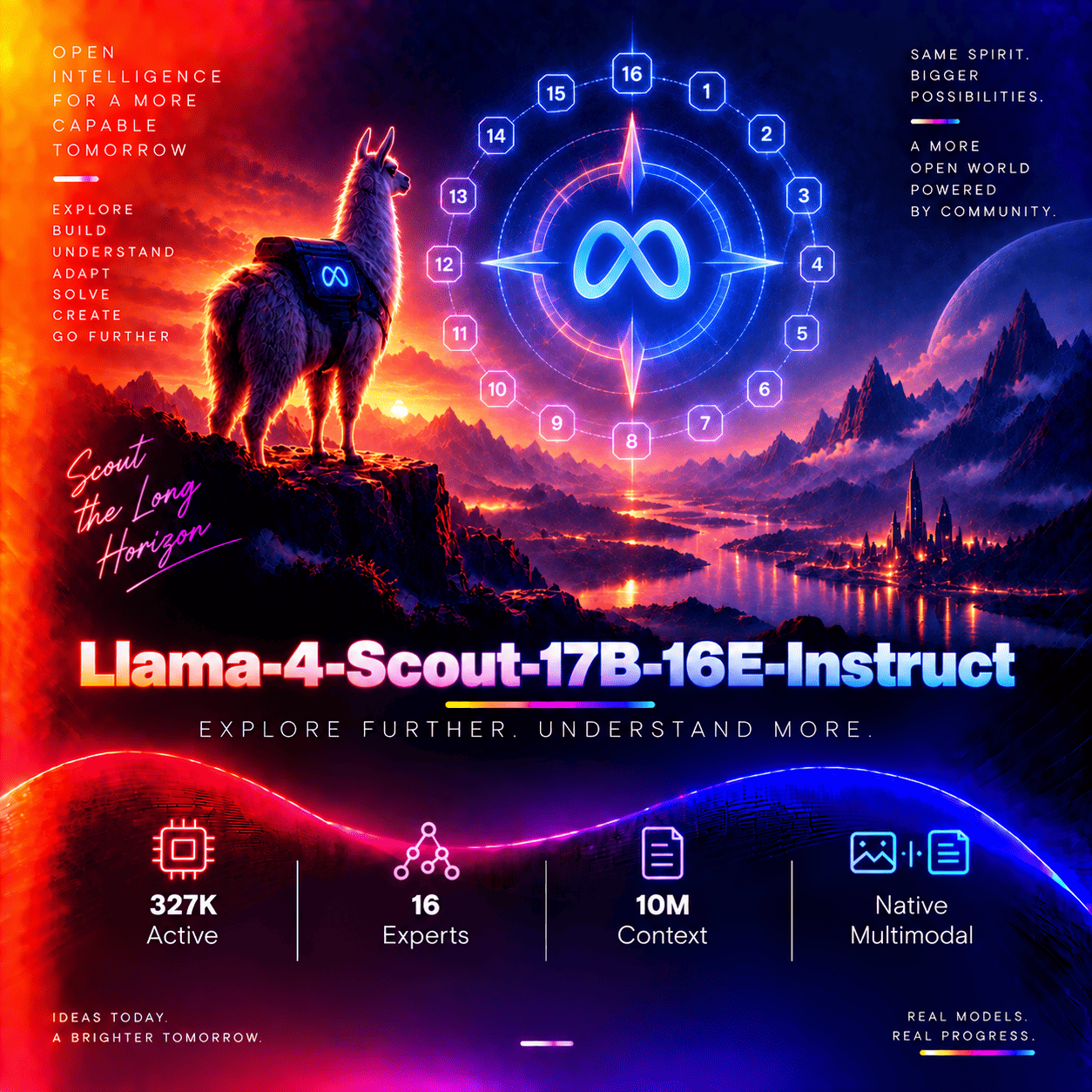
Llama 4 Scout activates the same seventeen billion parameters as its larger sibling from sixteen experts rather than a hundred and twenty-eight — and that difference reverses where you would expect. Lighter weights leave more memory for context, so Scout reaches a full million tokens on eight H100s where the larger model stops around 430,000, and a documented configuration pushes it past three and a half million. Its long-context design removes positional encoding from the global attention layers entirely, eliminating the distance decay that normally caps reach. Native multimodality through early fusion, twelve languages, and it fits on a single H100 quantised.
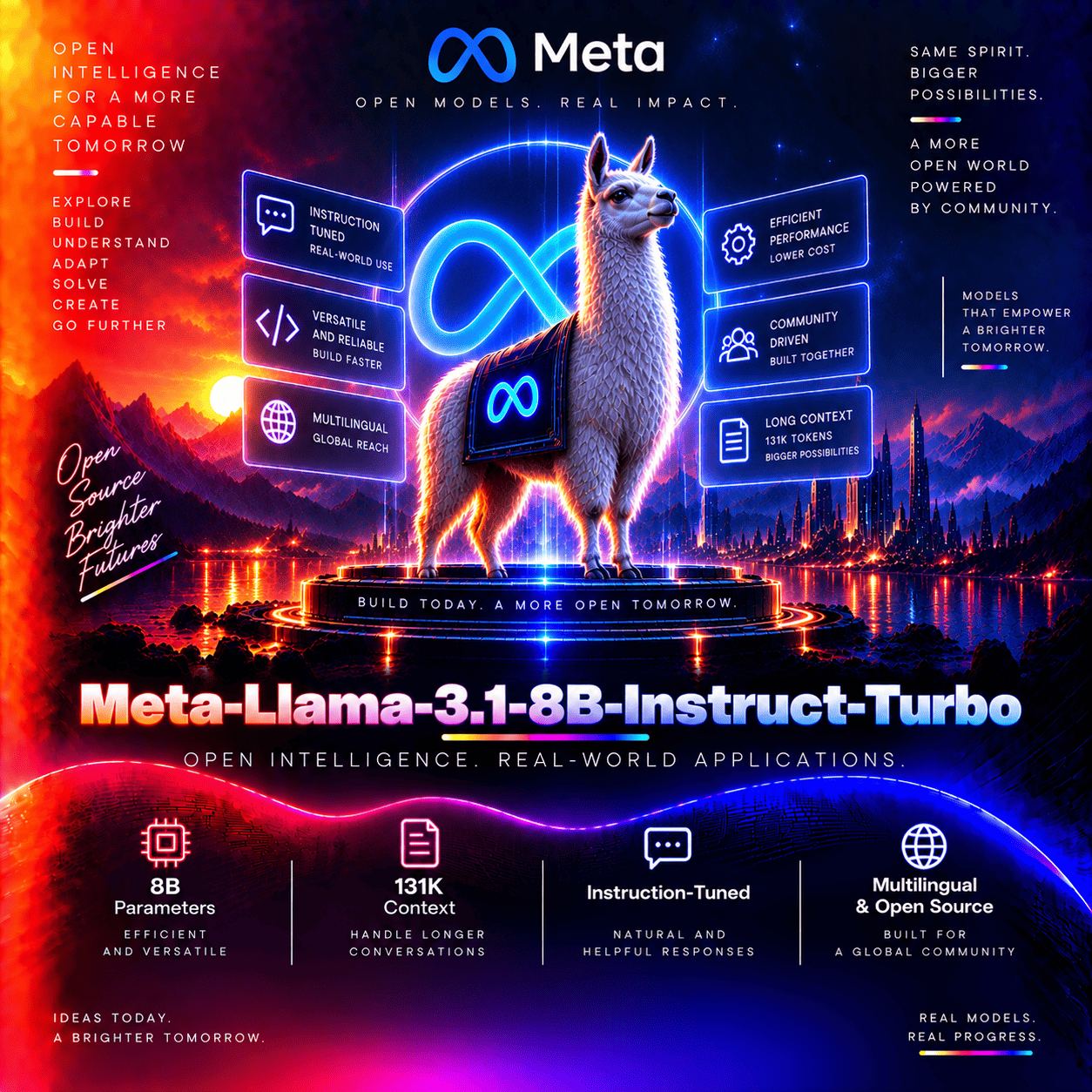
Llama 3.1 8B carries the same 131,072-token window as the seventy-billion-parameter model released beside it — Meta extended the context across every size at once rather than reserving it for the large ones. Eight billion parameters with a very long window is an unusual combination, and it is what made this model the default foundation for open fine-tunes: small enough to train on accessible hardware, long enough to be useful. Meta's own Llama Guard 3 safety classifier is built on these weights. Eight supported languages, and a knowledge cutoff of December 2023.

Gemini 2.5 Pro is Google's frontier-level multimodal model, engineered for highly complex reasoning, advanced coding, and massive-scale data analysis. Featuring an unprecedented 2M context window and hybrid thinking capabilities, it excels at solving the most demanding enterprise and scientific tasks.
Gemini 2.5 Flash is Google's latest thinking model, designed to tackle increasingly complex problems. It's capable of reasoning through their thoughts before responding, resulting in enhanced performance and improved accuracy. Gemini 2.5 Flash: best for balancing reasoning and speed.

Claude Haiku 4.5 is the fastest model in the Claude family and the first Haiku to support extended thinking. It reaches near-frontier quality at a fraction of the latency, which is what makes it the right engine for work measured in volume rather than difficulty — classification, extraction, routing, and the mechanical steps inside a larger agent. Its reasoning control is manual rather than automatic: you set an explicit token budget for thinking, on the requests that warrant one, and leave it off everywhere else. It reads text and images across a 200,000-token context window, tracks its own token consumption as that window fills, and returns up to 64,000 tokens per response.
Claude Sonnet 4.6 is the generation where the Sonnet line reached a million-token context window and started keeping its reasoning across turns rather than discarding it. Both changes matter in practice: the window holds a codebase or a document set whole, and preserved thinking makes long multi-turn sessions consistent instead of rebuilding their analysis from nothing each time. It supports adaptive thinking with five effort levels and remains strong with thinking switched off entirely, which is unusual — most reasoning models degrade sharply without it. Context compaction summarises older turns automatically as a conversation approaches its limit, extending how far a session can run.
Claude Opus 4.7 is the first Claude model to accept high-resolution images, raising the ceiling to 2576 pixels and 3.75 megapixels from a previous limit under a third that size. The practical effect goes beyond sharper reading: the model's coordinates now map one to one with actual pixels, so pointing at something in a screenshot no longer requires a scale-factor conversion. That makes it markedly better at computer use, document understanding, and any workflow where it must visually check its own output — redlining a document, editing slide layouts, transcribing figures from a chart. It carries a million-token context window with adaptive thinking and a 128,000-token output ceiling.

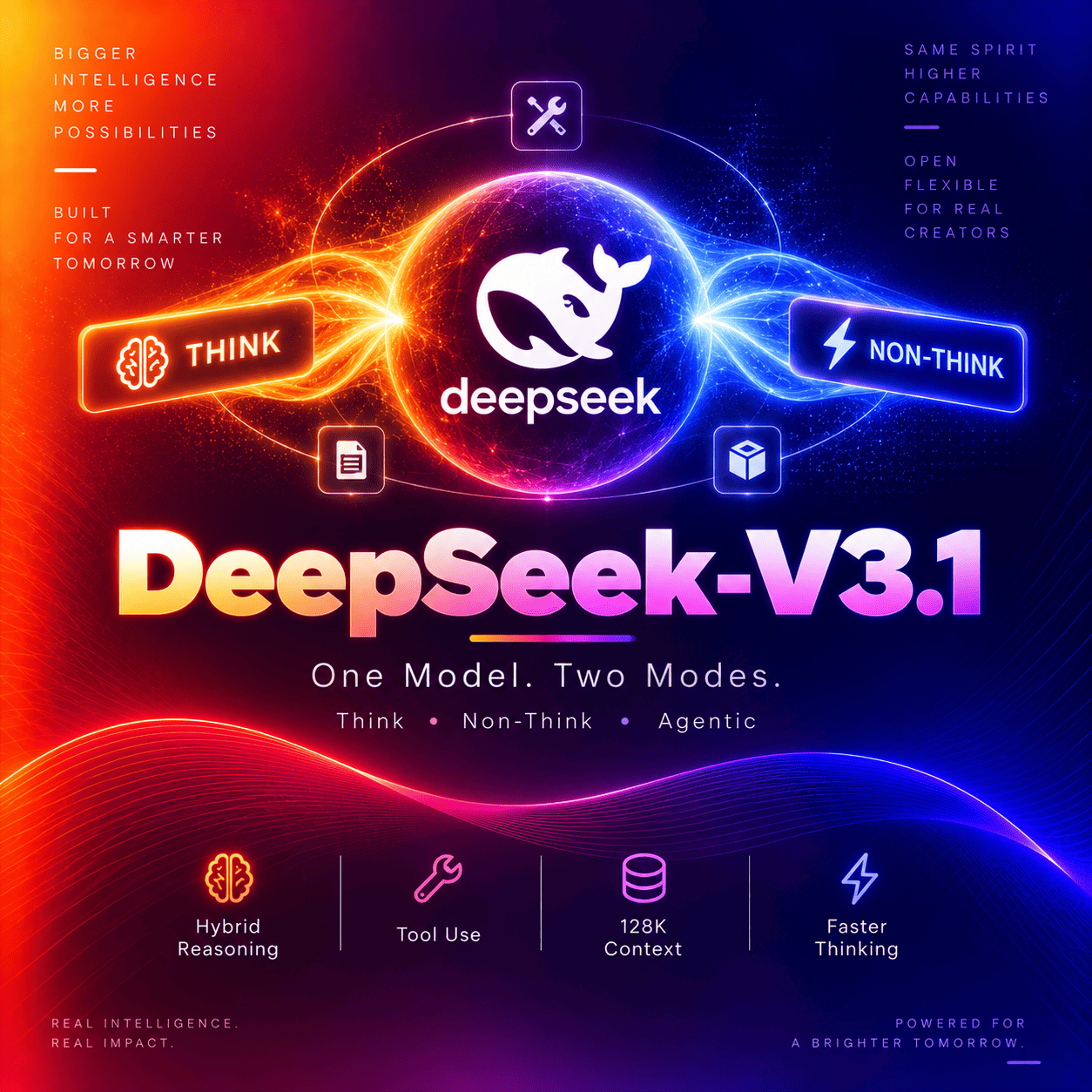
DeepSeek V3.1 collapsed two models into one. Before it, quick answers came from a chat model and hard reasoning came from a separate reasoning model — different weights, different endpoints, different integrations. This release put both behaviours in a single 671-billion-parameter checkpoint, switched by a single tag in the prompt rather than by a parameter or a model change. In thinking mode it reaches answer quality comparable to the dedicated reasoning model it replaced while responding faster. Its 128K context came from 840 billion tokens of additional long-context training, and tool calling was rebuilt in post-training specifically for agent work.
DeepSeek V3 is the model that made frontier-scale training look reproducible rather than exclusive. 671 billion parameters with 37 billion active per token, trained on 14.8 trillion tokens in 2.788 million H800 GPU hours — and completed without a single unrecoverable loss spike or rollback, which for a run of that size is the harder achievement. Three techniques carried it: an auxiliary-loss-free load balancing strategy that removed the quality penalty MoE models normally pay for balance, a multi-token prediction objective that also serves as a speculative decoding path, and the first validated FP8 mixed-precision training framework at this scale. It answers directly, with no reasoning trace to handle.


