Model Library
Browse and deploy state-of-the-art AI models through the DEVUP Gateway.
Loading models...
Model Library
Browse and deploy state-of-the-art AI models through the DEVUP Gateway.
Browse and deploy state-of-the-art AI models through the DEVUP Gateway.

Qwen3.8-27B is a dense vision-language model that thinks before it answers — and by default, it thinks a great deal. Reasoning runs at the deepest of three settings unless you change it, which on long-form work can consume an entire output budget before a single word of the answer appears. The three levels turn out to be three system prompts rather than three capability tiers: one asks the model to deliberate, one says nothing, one asks for brevity. Independent measurement across ninety-six runs found no quality difference on short verifiable tasks. Sixty-four layers, three quarters of them linear attention, with a 262,144-token window and hour-scale video understanding.

Muse Glimmer 30B is Meta Superintelligence Lab's first open-weight release, and it was designed around a single constraint: an agent that runs on the machine in front of you. Roughly 29.6 billion dense parameters including a dedicated vision encoder, distilled from a larger model, and quantized to fit under 20 GB — small enough to run on one consumer GPU while still holding a 131K context and reading screenshots, charts, and documents. What sets it apart is what it was trained for rather than what it knows: sustained tool use across long workflows, and diagnosing a failed tool call and retrying rather than stopping. It ships with published prompt-injection and privacy evaluations, which few models of any size do. Apache 2.0.

Kimi K3 is the first open model in the three-trillion-parameter class — 2.8 trillion total, 104 billion active, a million tokens of context, and native vision. Two architectural bets carry it: Kimi Delta Attention paired with Attention Residuals, and a sparsity framework that selects sixteen experts from eight hundred and ninety-six, together delivering roughly two and a half times the scaling efficiency of the previous generation. Thinking is permanently on with three effort levels, and the model was trained in preserved-thinking-history mode — meaning your client must send its reasoning back on every turn, not as an optimisation but as a requirement.
Qwen3.8-Max is Alibaba's flagship model and the complete form of the Qwen3.8 generation: a Mixture-of-Experts design with 2.4 trillion total parameters, 95 billion of which activate per token, running against a one-million-token context window with native text, image, and video input in a single endpoint. It reads PDFs of two hundred pages and more, and it uses vision throughout execution rather than only at the start — inspecting its own intermediate output, catching a misaligned interface or a wrong-facing object, and revising the plan. Thinking is hybrid: on by default, switchable off per request, and tunable across three depth levels, with reasoning traces that carry across turns so long agent loops keep their chain of thought.

The model prioritizes token efficiency and agentic inference at production scale, stretching what developers can achieve within limited token, latency, and serving-cost budgets.

Inkling-Small is a Mixture-of-Experts transformer with 276B total parameters, 12B active, trained on NVIDIA GB300 NVL72 systems. Like Inkling, it features native reasoning over audio and images, variable thinking effort


Gemma 4 31B is the largest dense model in Google DeepMind's open family, and its defining quality is how little it spends to think. Running a full intelligence evaluation consumed roughly 39 million output tokens — a fraction of what comparably-scoring reasoning models needed, because it reaches its conclusion rather than circling it. A 131,072-token context window takes entire codebases or large image sets in one prompt, with a vision encoder that accepts variable aspect ratios rather than forcing everything square. Thinking is configurable, function calling is native, and it runs on a workstation under Apache 2.0.

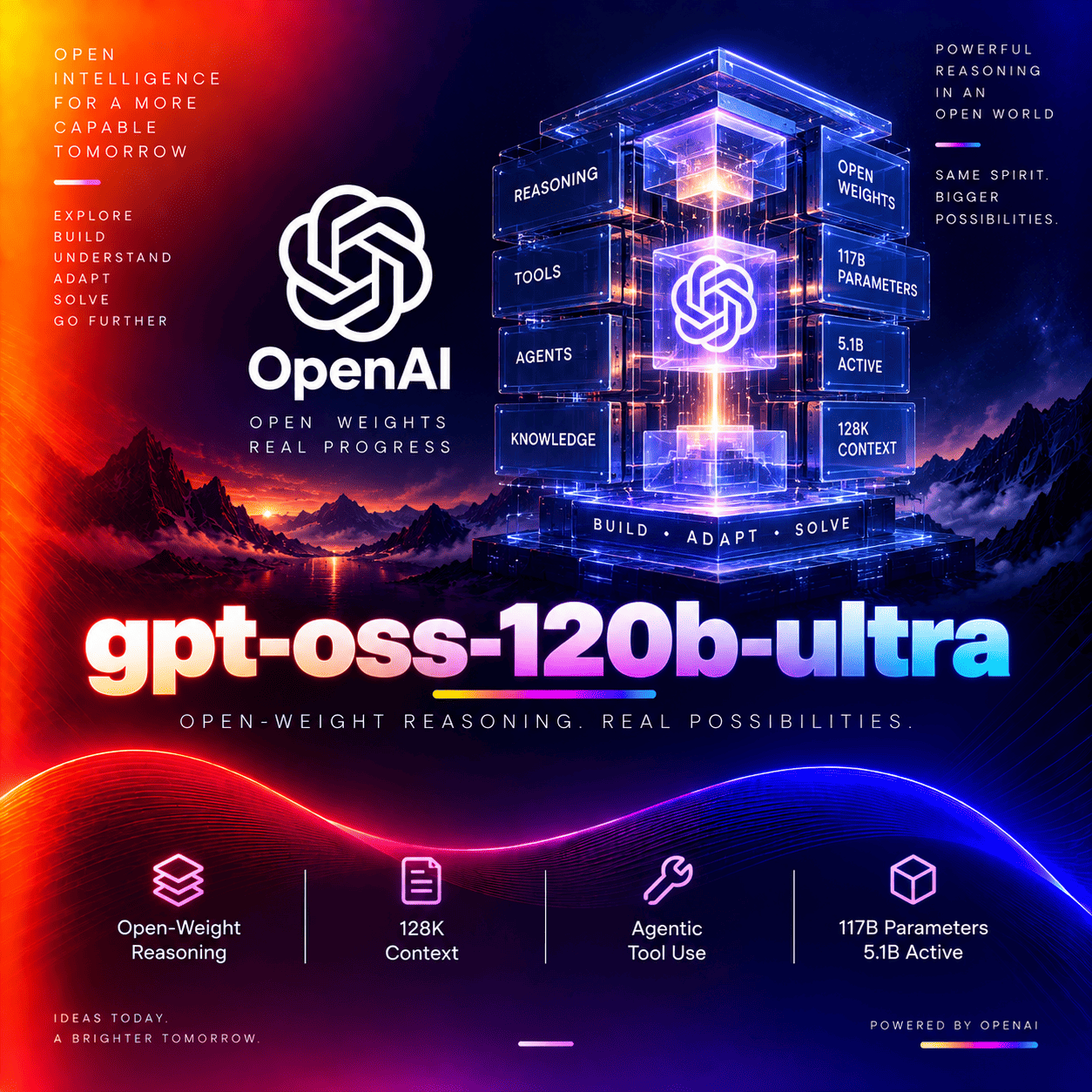
gpt-oss-120b is OpenAI's largest open-weight model and the first release of its kind since 2019. It carries roughly 117 billion parameters and activates about five per token, which is what lets a model of this capability run on a single 80GB card rather than a cluster. Reasoning effort is set as plain text in the system prompt across three levels, and the full chain of thought comes back unredacted — OpenAI published the accuracy-versus-length curve across all three settings, so the cost of deliberation is measured rather than implied. It ships under Apache 2.0 with no copyleft, no patent conditions, and no user ceiling.

Claude Opus 5 is Anthropic's model for complex agentic coding and enterprise work, and it thinks by default. Adaptive thinking means the model decides when and how much to reason on each turn rather than waiting to be told, with effort selectable across five levels. Its million-token context window is both the default and the maximum — there is no smaller variant and no long-context surcharge — and instruction following, tool calling, and reasoning stay consistent across the full window. The largest gains over the previous generation are in sustained multi-step analysis, long-horizon agentic work that completes features rather than leaving stubs, and converting additional effort into measurably better results.
Inkling is a general-purpose multimodal model that accepts text, image and audio inputs and generates text outputs.
Claude Fable 5 was Anthropic's most capable widely released model, built for demanding reasoning and long-horizon agentic work. Two things set it apart from everything else in this catalogue. Thinking is permanently on — there is no parameter that disables it, only an effort dial that sets how deep it goes. And it ships with safety classifiers that can decline a request, returning a successful response carrying a refusal rather than an error, which means any integration must inspect why a response ended rather than assuming a 200 means an answer. It holds a million-token context with a 128,000-token output ceiling, and reads text and images.
Claude Sonnet 5 pairs a million-token context window with the fastest comparative latency in its generation, which is what makes it the working default rather than an economy option. It matches the Opus tier on window size and output ceiling while answering noticeably quicker, and adaptive thinking is on by default with five effort levels controlling how deep it goes. One integration detail separates it from most models in this catalogue: sampling parameters are rejected outright. Send a temperature, a top-p, or a top-k at anything other than its default and the request returns an error rather than quietly ignoring it — so output variation is shaped through effort and prompting instead.

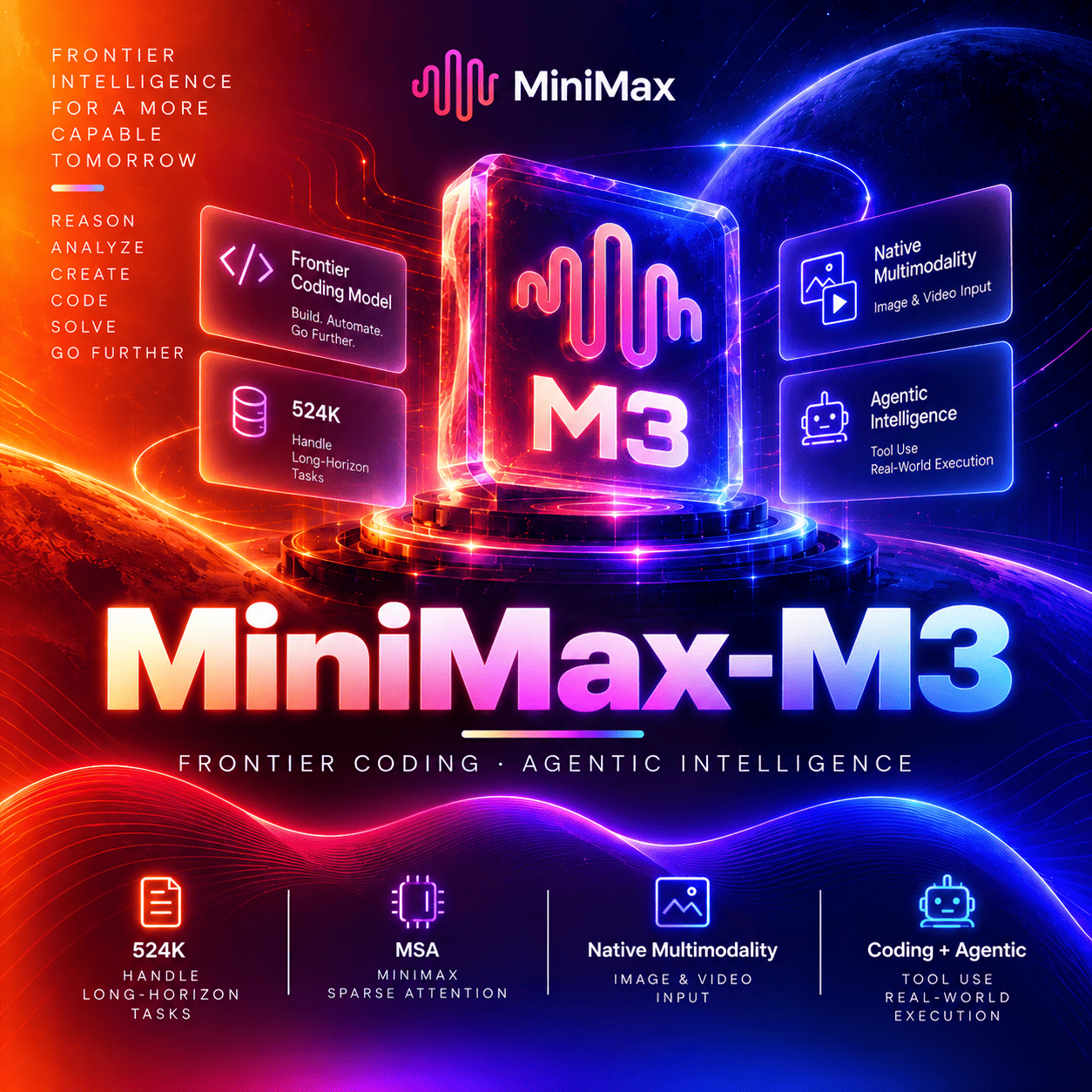
MiniMax-M3 is built around one component: a sparse attention operator that MiniMax published as a standalone project with its own technical report. The numbers it produces are measured against the previous generation at a million tokens — nine times faster prefill, fifteen times faster decode, and per-token compute cut to one twentieth. Multimodality was not added afterwards; mixed-modality training ran from the first step across text, image, and video. Four hundred and twenty-eight billion parameters with twenty-three active, sixty layers, a 524,288-token window, and a thinking parameter that can let the model decide for itself when deliberation is worth it.
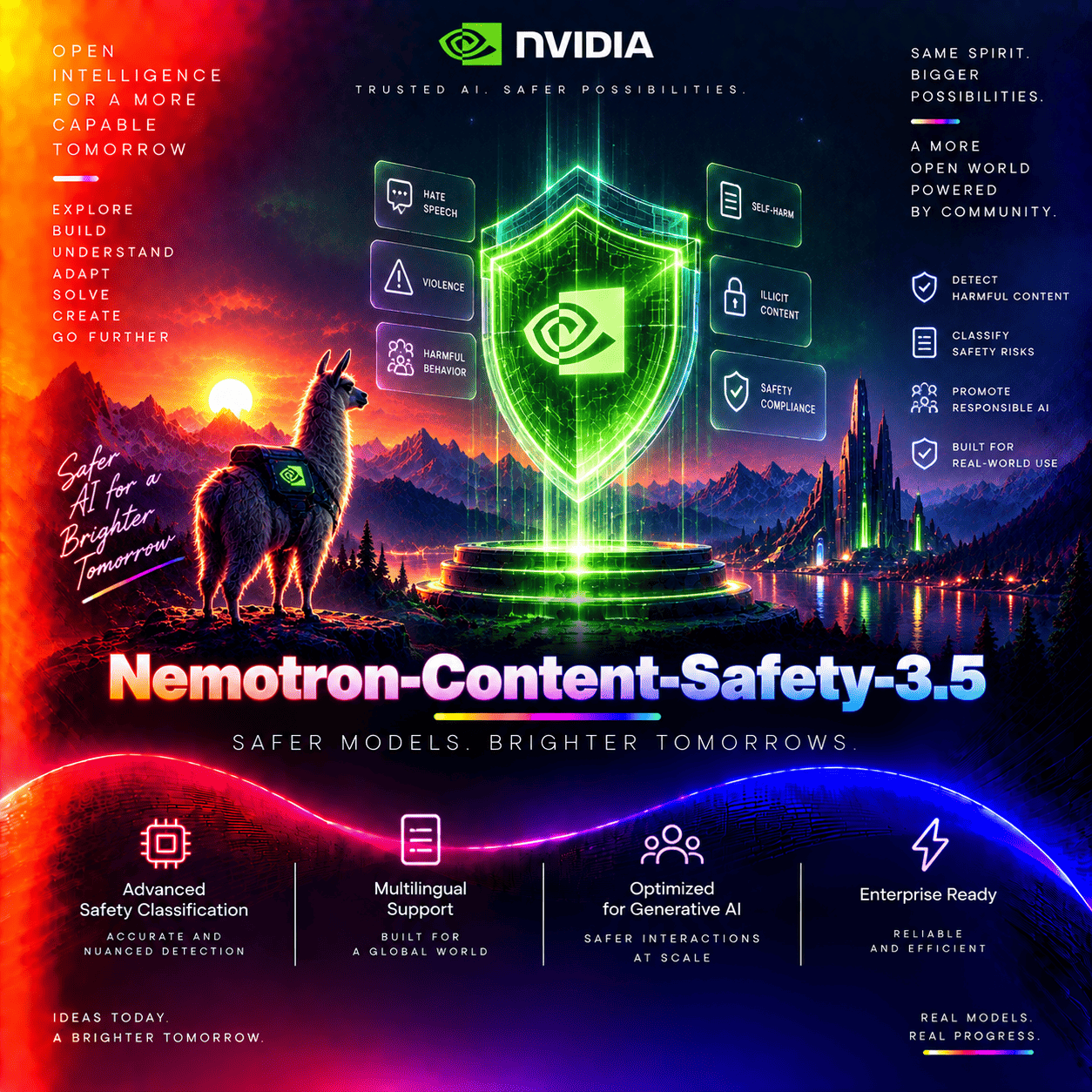
Nemotron 3.5 Content Safety is a four-billion-parameter moderator that can explain itself. It classifies a prompt, an optional image, and an optional response across a twenty-three-category taxonomy — and in think mode it emits an auditable reasoning trace before the verdict, which is what makes a blocked decision defensible rather than merely enforced. It also accepts your own safety policy in place of the default taxonomy. Its twelve languages were not translated but culturally adapted, addressing a measured problem: models produce more unsafe content in non-English languages because safety training data lacks cultural nuance. It runs on a single L4.

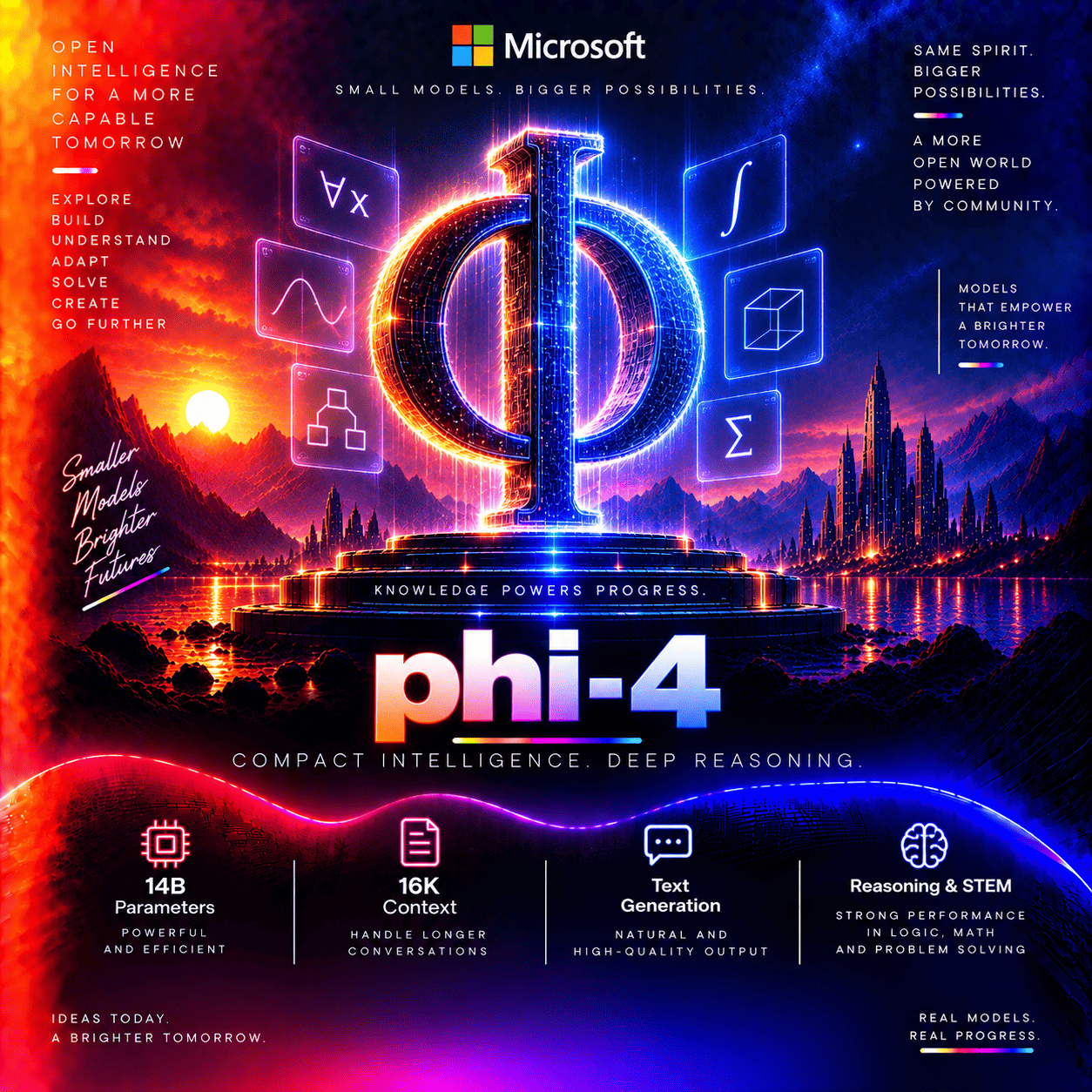
Phi-4 is the Microsoft Research thesis made concrete: fourteen billion parameters trained on 9.8 trillion tokens of heavily curated and synthetically generated data, reaching STEM reasoning performance that exceeds the larger models which generated that data. Its 16K context was not scaled at inference but trained — a dedicated midtraining stage of 250 billion tokens extended it from 4,096, with the rotary base frequency raised to 250,000 to support it. The technical report publishes findings from that work, including that naturally long documents outperform artificially padded ones for teaching long context. MIT licensed, with a June 2024 knowledge cutoff.
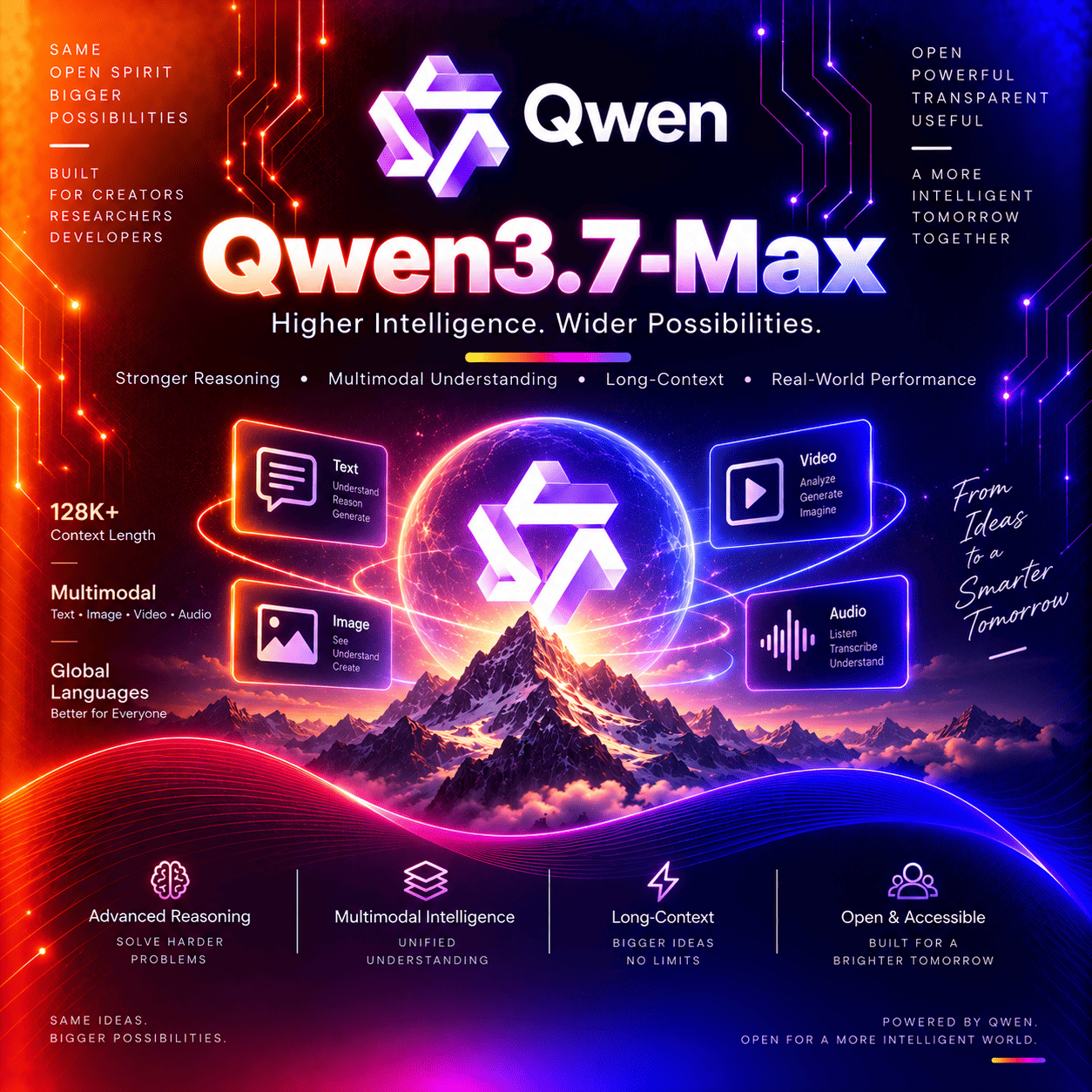
Qwen3.7-Max is measured in hours rather than tokens. Qwen reports a thirty-five-hour autonomous session holding coherent execution throughout, and over a thousand sequential tool calls spent optimising kernels for a hardware architecture the model had never seen — working from runtime feedback rather than memorised knowledge. It was trained with tasks, execution frameworks, and validators deliberately decoupled, using cross-framework reinforcement learning to avoid overfitting to any single agent scaffold. The result is a text-only model built as an agent foundation, with a million-token context, tunable thinking depth, and 80.4% on SWE-Bench Verified.

Built for the Agent era, it delivers stable performance in complex reasoning and long-horizon tasks, including multi-step planning, visual-text reasoning, video understanding, and advanced analysis.

Built for low-latency, high-concurrency, cost-sensitive use cases, with flexible deployment, four-tier thinking, and multimodal

A coding model optimized for real-world development environments, with reliable tool use in common IDEs such as Claude Code. It delivers strong front-end performance and supports Skills.

Optimized specifically for multimodal agent scenarios. It features enhanced agent capabilities, upgraded multimodal comprehension, and more flexible context management.

Bring any idea to life with state-of-the-art reasoning to help you learn, build, and plan anything. Best for complex tasks and bringing creative concepts to life.
Gemini 3.5 Flash delivers near-Pro intelligence at Flash-tier cost and speed: Pro-level coding proficiency, parallel agentic execution, all at a much lower price.
Bring any idea to life with state-of-the-art reasoning to help you learn, build, and plan anything. Best for high-volume tasks that need efficiency and intelligence.
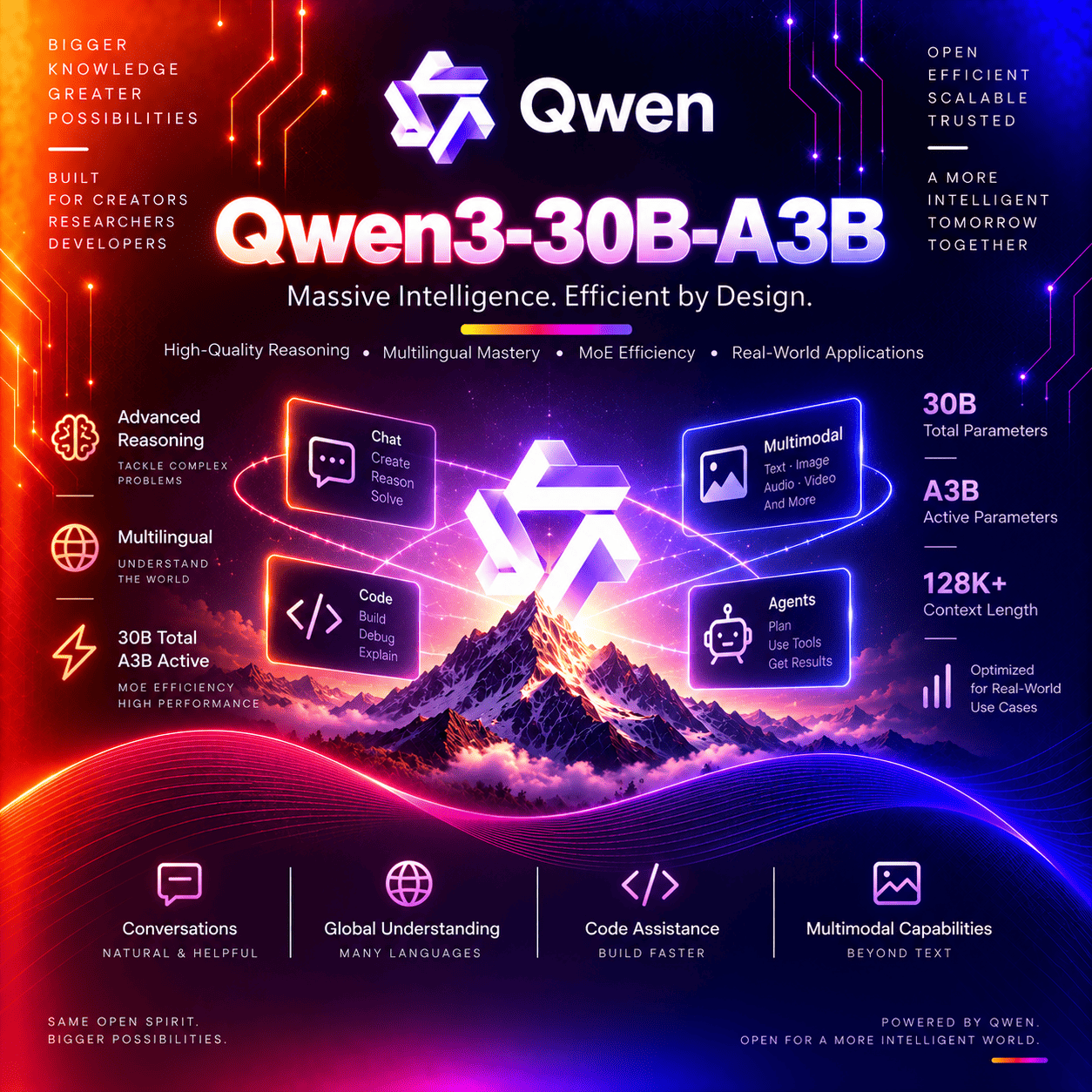
Qwen3-30B-A3B activates three billion parameters out of thirty, and switches between reasoning and direct answering inside a single conversation. The switch is unusual: alongside a request parameter, you can write /think or /no_think into a user message and the model changes mode on that turn. That makes it possible to reason through a hard step and answer the next one immediately, without routing between models. It runs 48 layers with 128 experts and eight active per token, uses four key-value heads against thirty-two query heads to keep cache small, and supports over a hundred languages under Apache 2.0.


