Model Library
Browse and deploy state-of-the-art AI models through the DEVUP Gateway.
Loading models...
Model Library
Browse and deploy state-of-the-art AI models through the DEVUP Gateway.
Browse and deploy state-of-the-art AI models through the DEVUP Gateway.

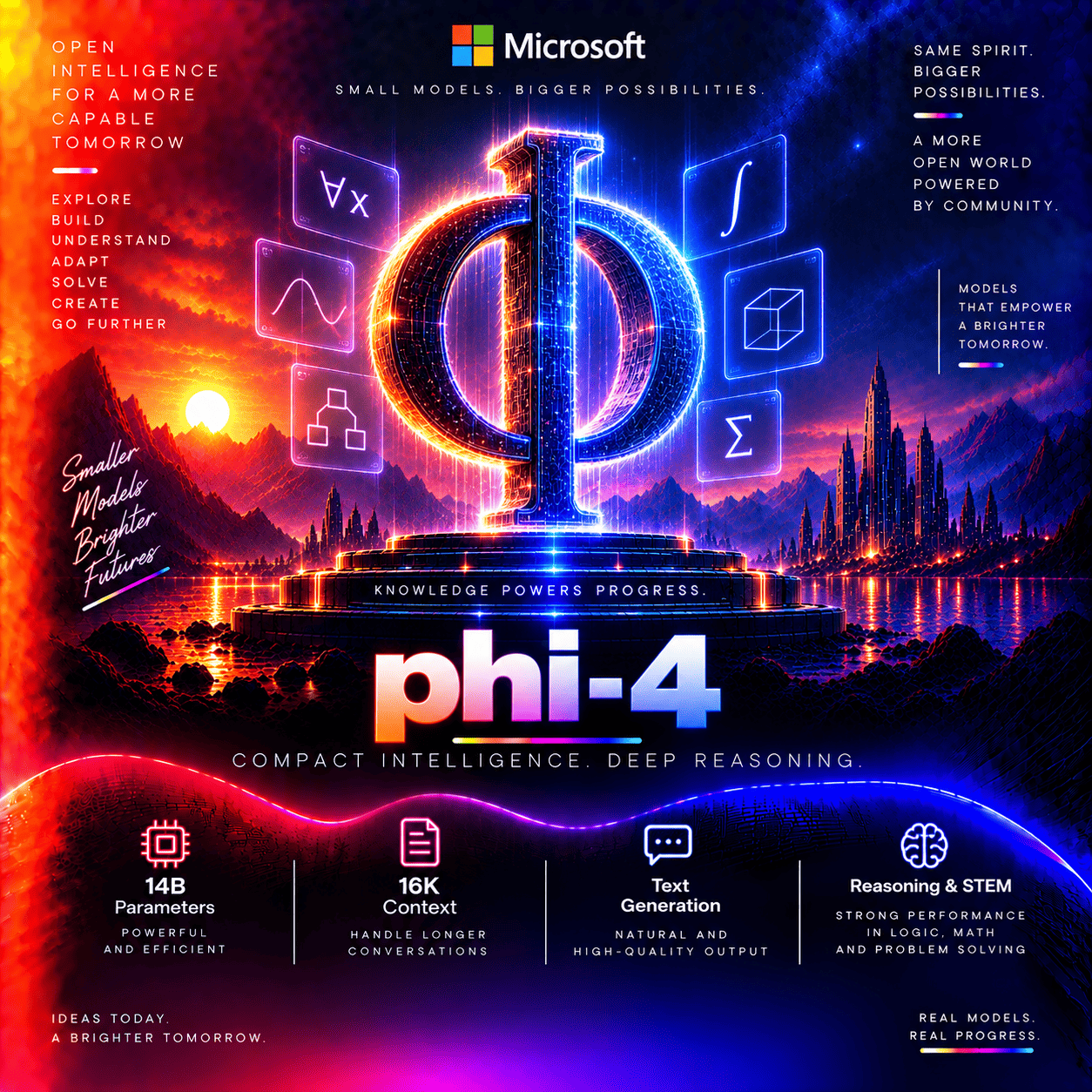
Phi-4 is the Microsoft Research thesis made concrete: fourteen billion parameters trained on 9.8 trillion tokens of heavily curated and synthetically generated data, reaching STEM reasoning performance that exceeds the larger models which generated that data. Its 16K context was not scaled at inference but trained — a dedicated midtraining stage of 250 billion tokens extended it from 4,096, with the rotary base frequency raised to 250,000 to support it. The technical report publishes findings from that work, including that naturally long documents outperform artificially padded ones for teaching long context. MIT licensed, with a June 2024 knowledge cutoff.

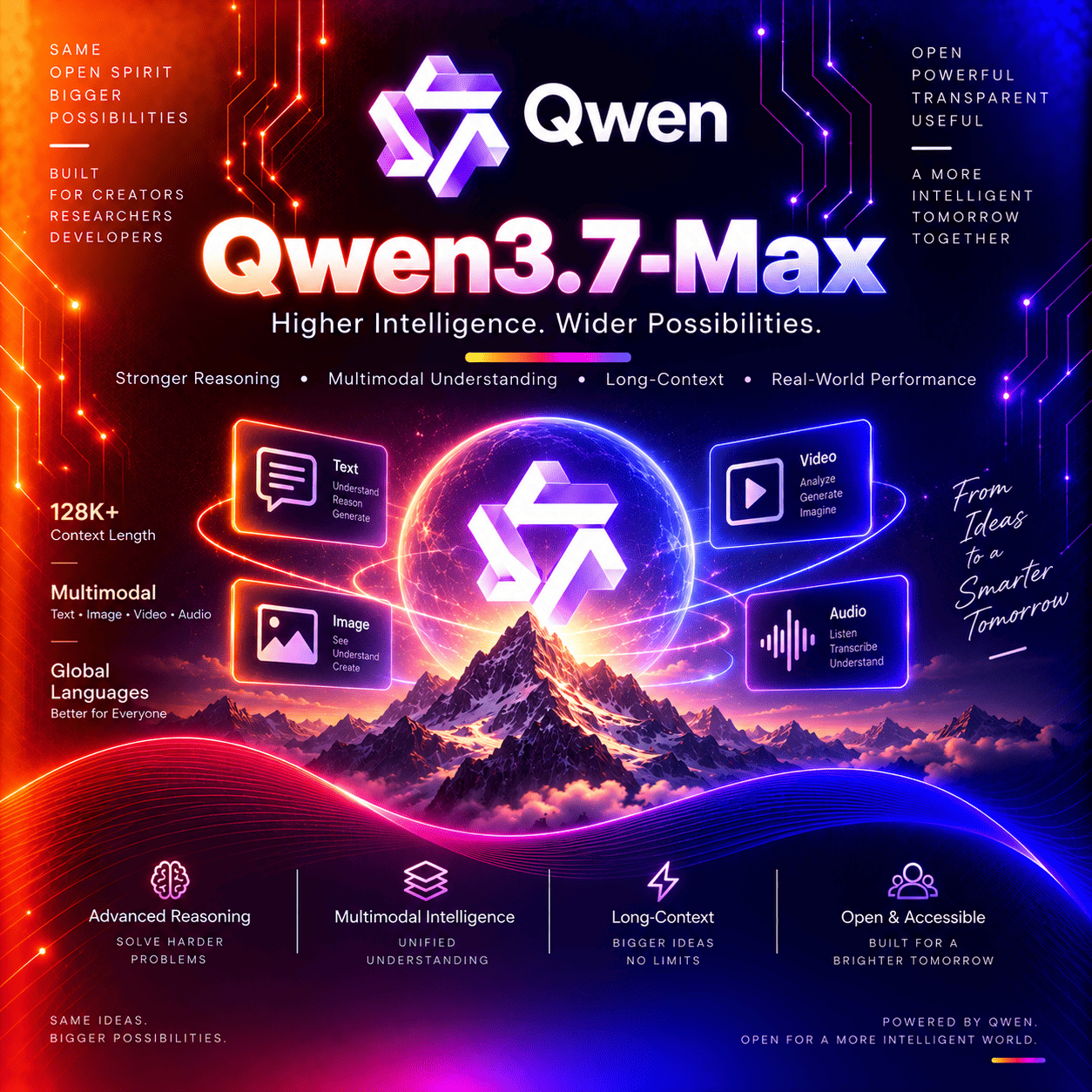
Qwen3.7-Max is measured in hours rather than tokens. Qwen reports a thirty-five-hour autonomous session holding coherent execution throughout, and over a thousand sequential tool calls spent optimising kernels for a hardware architecture the model had never seen — working from runtime feedback rather than memorised knowledge. It was trained with tasks, execution frameworks, and validators deliberately decoupled, using cross-framework reinforcement learning to avoid overfitting to any single agent scaffold. The result is a text-only model built as an agent foundation, with a million-token context, tunable thinking depth, and 80.4% on SWE-Bench Verified.

Built for the Agent era, it delivers stable performance in complex reasoning and long-horizon tasks, including multi-step planning, visual-text reasoning, video understanding, and advanced analysis.

Built for low-latency, high-concurrency, cost-sensitive use cases, with flexible deployment, four-tier thinking, and multimodal

A coding model optimized for real-world development environments, with reliable tool use in common IDEs such as Claude Code. It delivers strong front-end performance and supports Skills.

Optimized specifically for multimodal agent scenarios. It features enhanced agent capabilities, upgraded multimodal comprehension, and more flexible context management.

Bring any idea to life with state-of-the-art reasoning to help you learn, build, and plan anything. Best for complex tasks and bringing creative concepts to life.
Gemini 3.5 Flash delivers near-Pro intelligence at Flash-tier cost and speed: Pro-level coding proficiency, parallel agentic execution, all at a much lower price.
Bring any idea to life with state-of-the-art reasoning to help you learn, build, and plan anything. Best for high-volume tasks that need efficiency and intelligence.


Fast, affordable video generation from text or a first-frame image. Up to 1080p at 48 fps, 1 to 10 seconds per clip, in seven aspect ratios from vertical 9:16 to widescreen 16:9. Built by Pruna AI for rapid creative iteration and production at volume.

Chatterbox is a family of three state-of-the-art, open-source text-to-speech models by Resemble AI. We are excited to introduce Chatterbox-Turbo, our most efficient model yet. Built on a streamlined 350M parameter architecture, Turbo delivers high-quality speech with less compute and VRAM than our previous models. We have also distilled the speech-token-to-mel decoder, previously a bottleneck, reducing generation from 10 steps to just one, while retaining high-fidelity audio output. Paralinguistic tags are now native to the Turbo model, allowing you to use [cough], [laugh], [chuckle], and more to add distinct realism. While Turbo was built primarily for low-latency voice agents, it excels at narration and creative workflows. If you like the model but need to scale or tune it for higher accuracy, check out our competitively priced TTS service (link).

Nemotron 3.5 ASR Streaming Multilingual is an open 0.6B-parameter prompt-conditioned cache-aware FastConformer-RNNT model, engineered for low-latency streaming transcription across 40+ languages. It powers real-time captioning, voice agents, and multilingual transcription pipelines—replacing separate per-language Whisper deployments with a single inference pass.

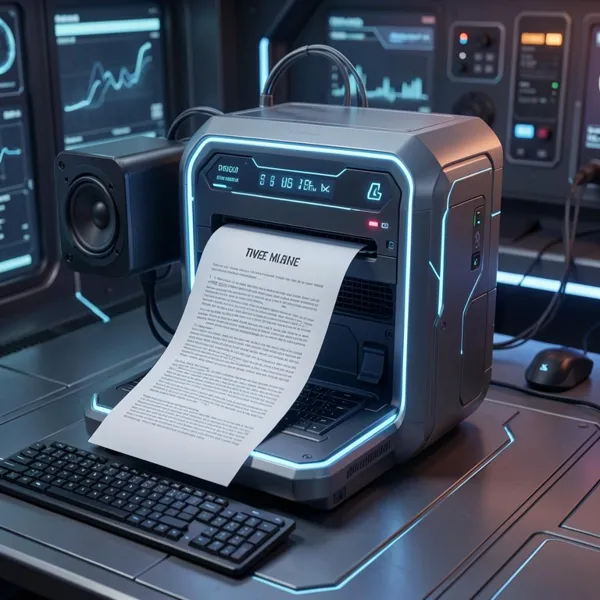
Automatically convert input text into natural and fluent speech output. You can generate natural and vivid speech content by configuring parameters such as speech style and voice. Use the high-quality voices from the built-in voices list.
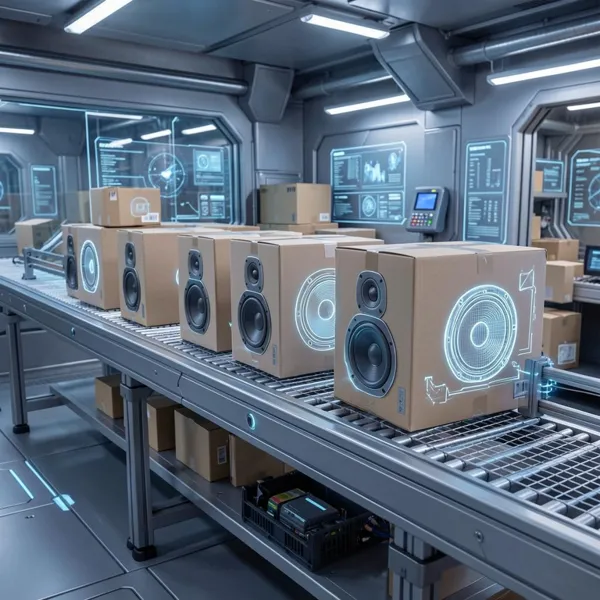
Automatically convert input text into natural and fluent speech output. You can generate natural and vivid speech content by configuring parameters such as speech. Precisely replicate voices from audio samples to enable speech synthesis of any voice. style and voice.
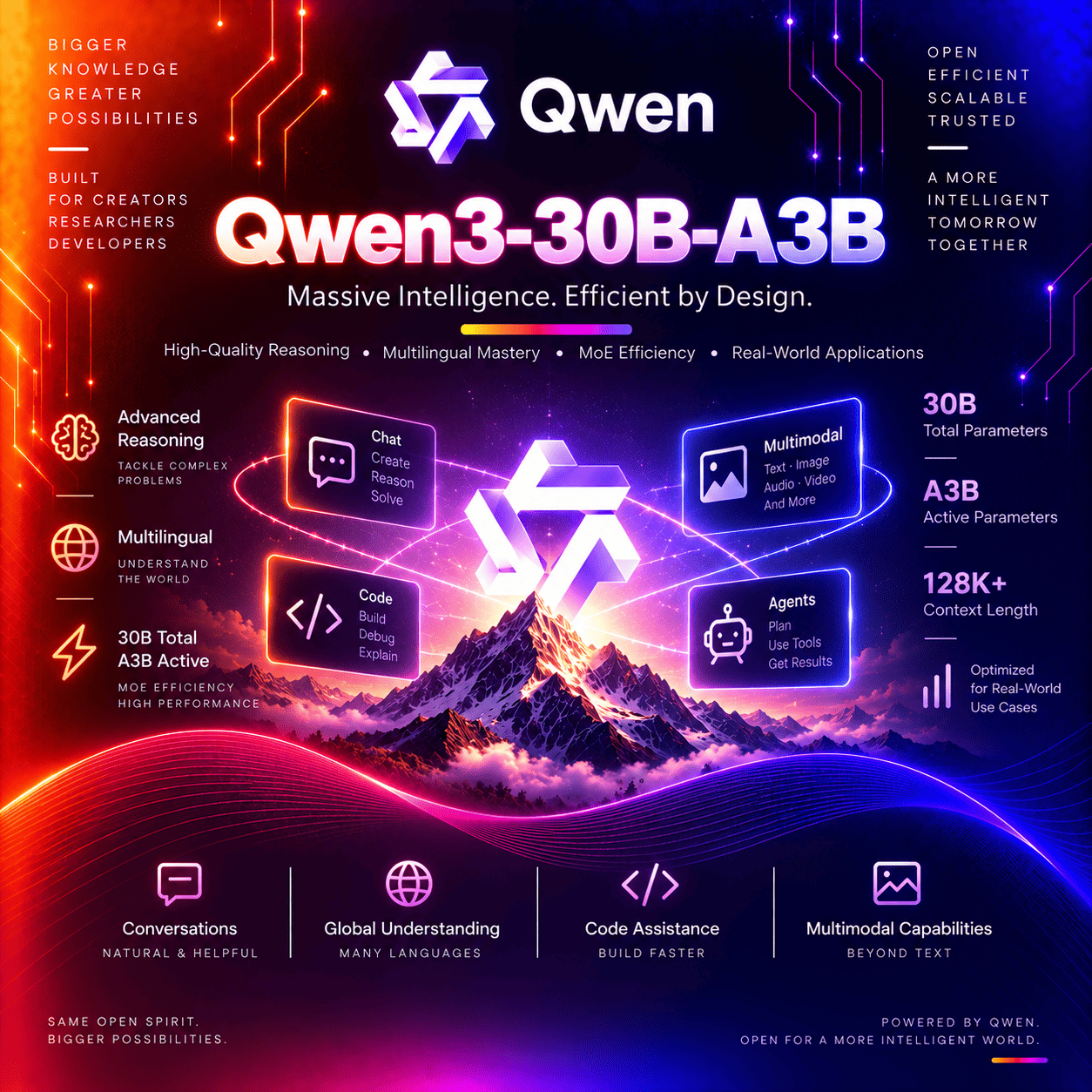
Qwen3-30B-A3B activates three billion parameters out of thirty, and switches between reasoning and direct answering inside a single conversation. The switch is unusual: alongside a request parameter, you can write /think or /no_think into a user message and the model changes mode on that turn. That makes it possible to reason through a hard step and answer the next one immediately, without routing between models. It runs 48 layers with 128 experts and eight active per token, uses four key-value heads against thirty-two query heads to keep cache small, and supports over a hundred languages under Apache 2.0.
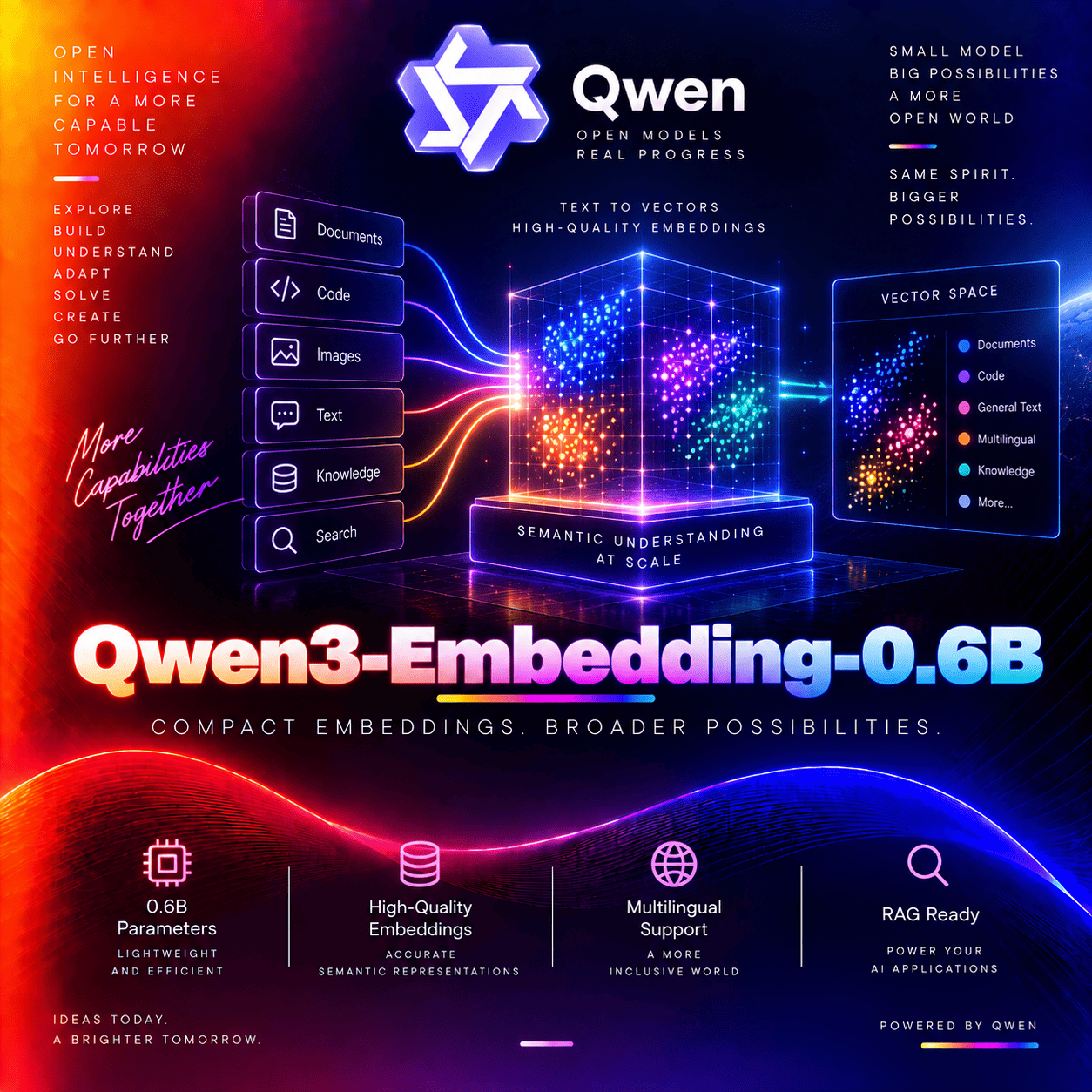
Qwen3-Embedding-0.6B is the entry point to a family where the entry point is not a compromise. It produces 1,024-dimension vectors from inputs as long as 32,768 tokens — the same window as the models four and thirteen times its size, which means it embeds whole documents rather than fragments. It supports Matryoshka truncation to shorten vectors without retraining, and task-specific instructions that Qwen measure as worth one to five percent. Six hundred million parameters puts it on modest hardware at high volume, which is exactly the shape embedding work takes: every document, once, then every query, forever.
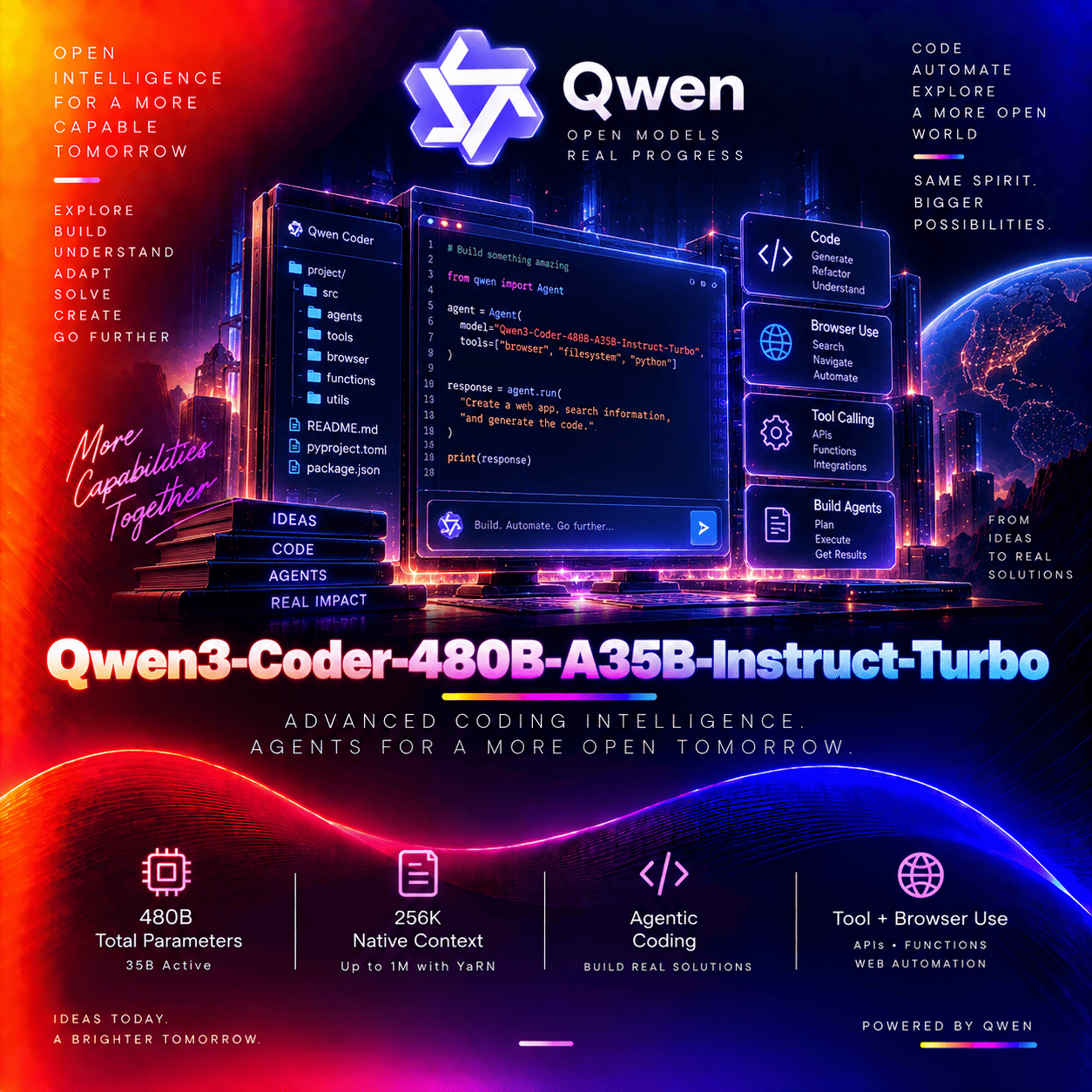
Qwen3-Coder-480B-A35B is a coding agent that does not think — deliberately. It supports only non-thinking mode and emits no reasoning blocks, which on a workload of hundreds of chained tool calls is a design decision rather than a limitation: every step is a direct action, and none of them pays for a deliberation pass. It carries 480 billion parameters across 62 layers with 35 billion active, a 262,144-token window extendable to a million, and a function-call format built specifically for it. Qwen shipped a command-line agent alongside the weights, adapted from an existing tool with prompts and calling protocols rewritten to match.
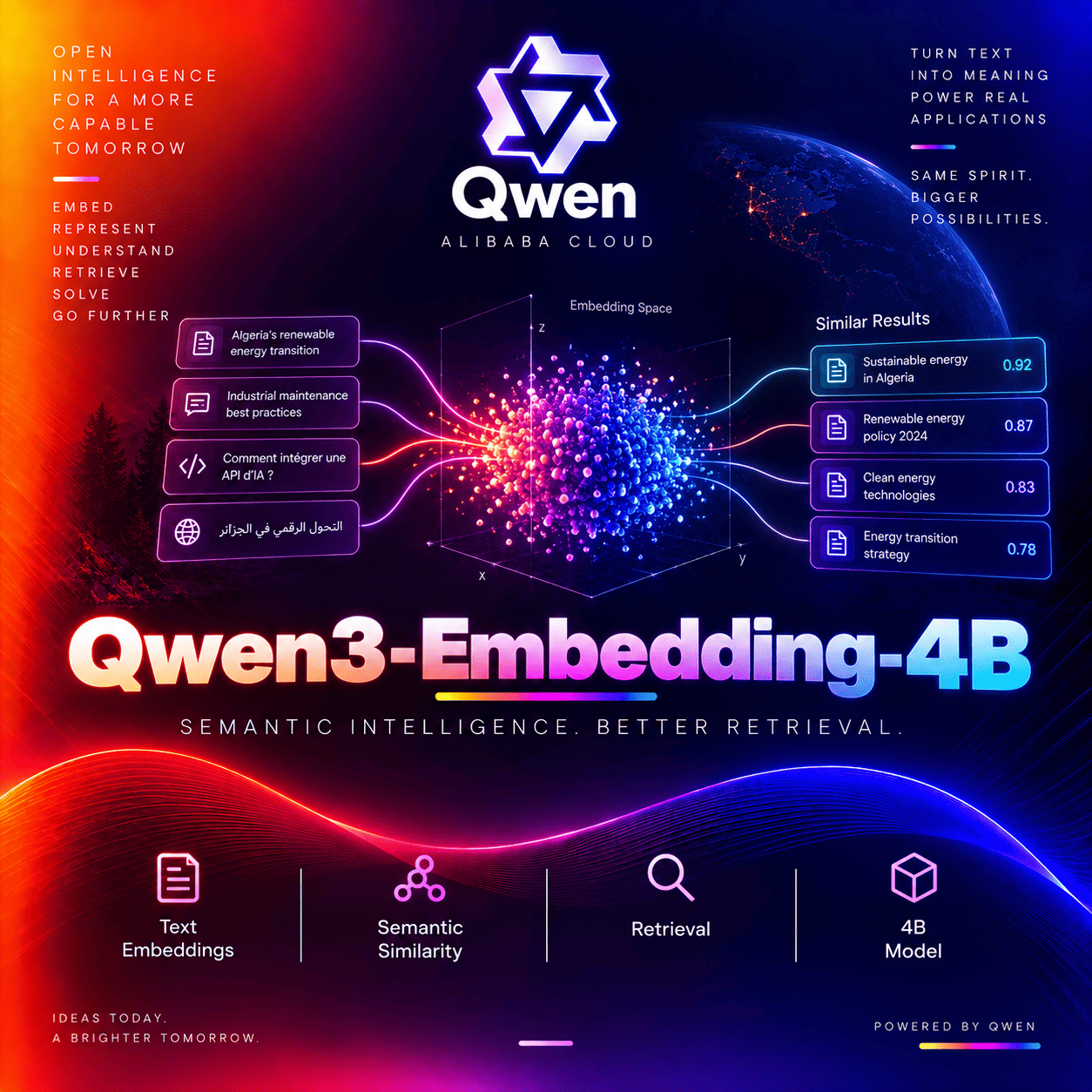
Qwen3-Embedding-4B produces vectors up to 2,560 dimensions from inputs as long as 32,768 tokens — a window most embedding models do not approach, and one that lets you embed a whole document rather than a fragment of one. It supports two forms of customisation that rarely appear together: Matryoshka representation learning, so the vector can be truncated to a smaller size without retraining, and task-specific instructions, which Qwen measure as worth one to five percent on most downstream work. Over a hundred languages, including programming languages, under Apache 2.0.
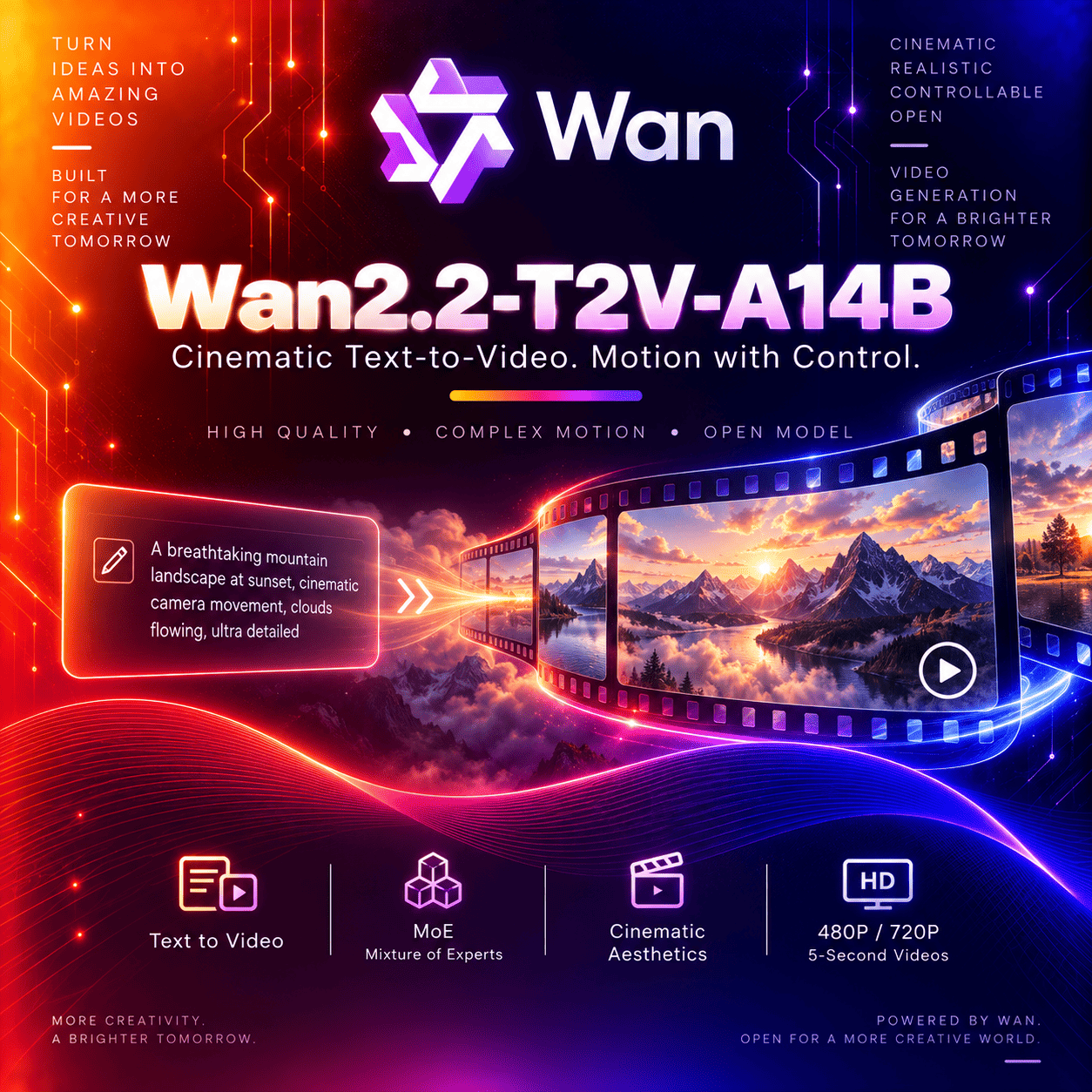
Wan 2.2 T2V brought Mixture-of-Experts into video diffusion, and it split the work along an axis language models cannot use: time. Two fourteen-billion-parameter experts divide the denoising process between them — one handling the early steps where overall layout is decided, the other the later steps where detail is refined. Twenty-seven billion parameters in total, fourteen active at any step, so inference cost and GPU memory stay close to a single-expert model. The handover point is computed from the signal-to-noise ratio rather than set by hand, and the team published the ablation that proves the design: four configurations tested, the full two-expert version reaching the lowest validation loss.
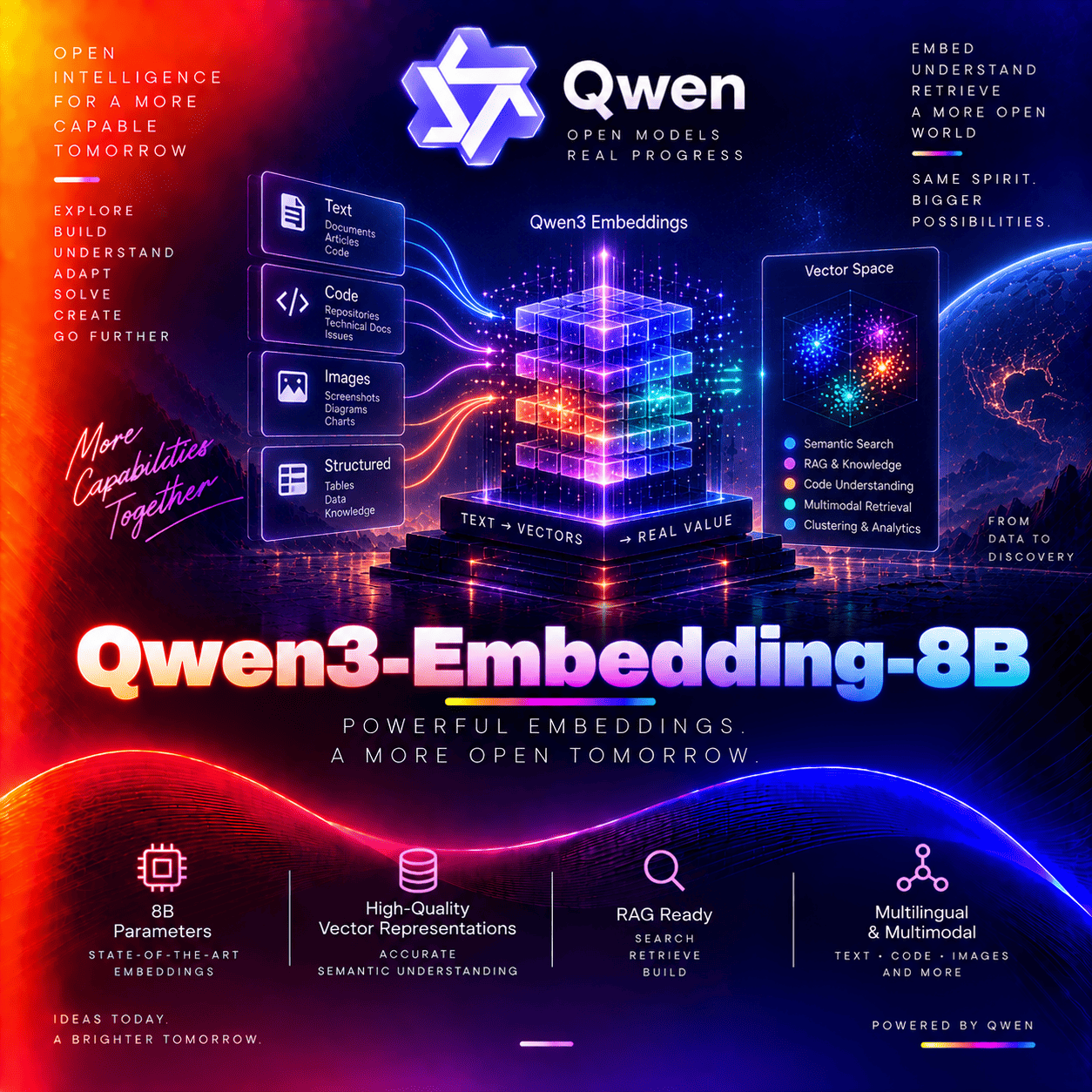
Qwen3-Embedding-8B took first place on the MTEB multilingual leaderboard at release, scoring 70.58 in June 2025. It produces vectors anywhere from 32 to 4,096 dimensions — a continuous range rather than a menu — from inputs as long as 32,768 tokens, across more than a hundred human and programming languages. Task-specific instructions are supported and measured as worth one to five percent. Its final training stage is unusual: rather than producing a single model, several candidates were merged, balancing generalisation against task adaptability. Apache 2.0.
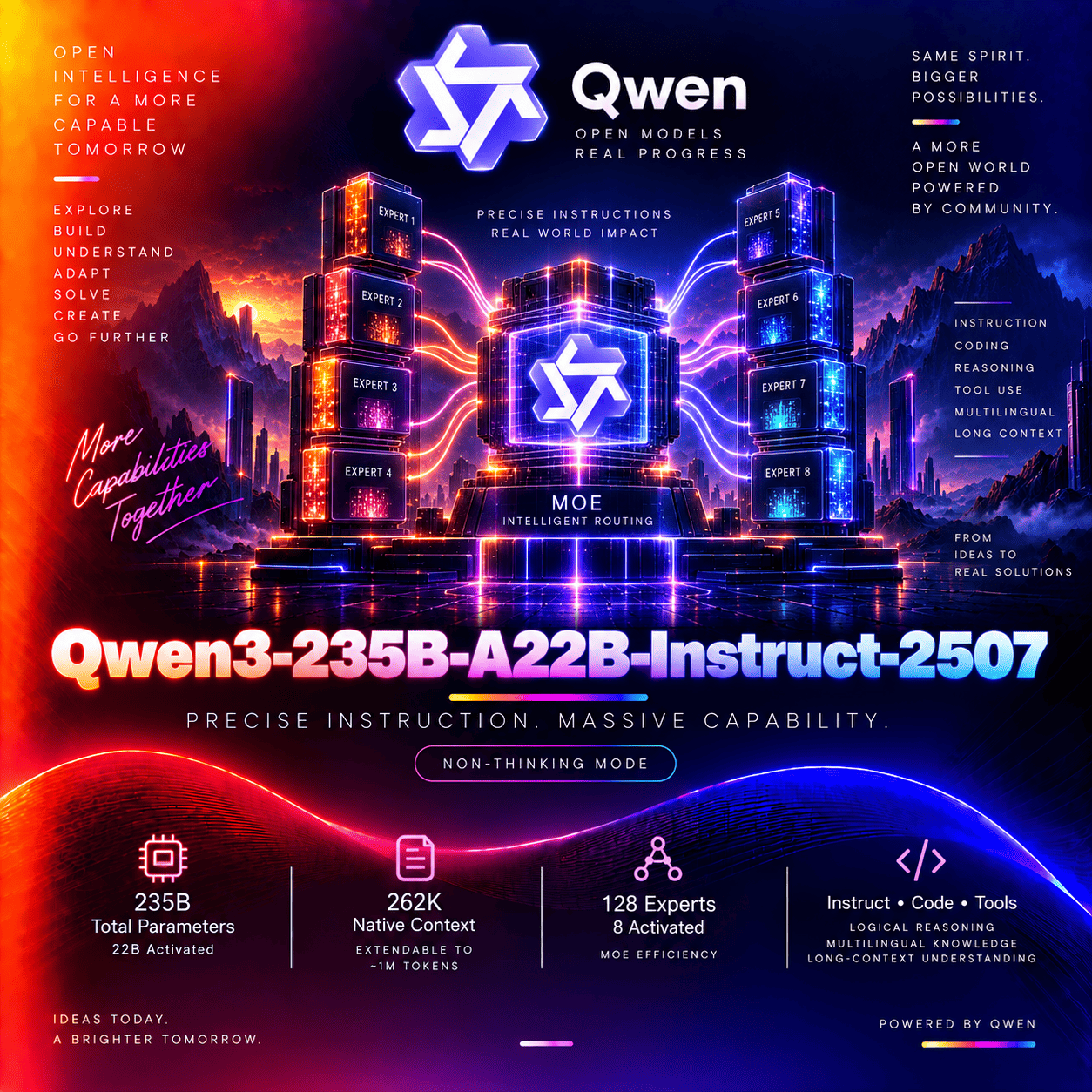
Qwen3-235B-A22B-Instruct-2507 is what happens when a dual-mode model is split in two. The original switched between thinking and non-thinking; this release took the non-thinking half and spent three months improving it alone, while a sibling did the same for the reasoning half. The result answers directly and emits no reasoning blocks — and the parameter that used to disable thinking is now accepted and ignored, so existing code upgrades without changes. It carries 235 billion parameters across 94 layers with 22 billion active, 128 experts with eight selected per token, and a 262,144-token context that is native rather than extended.
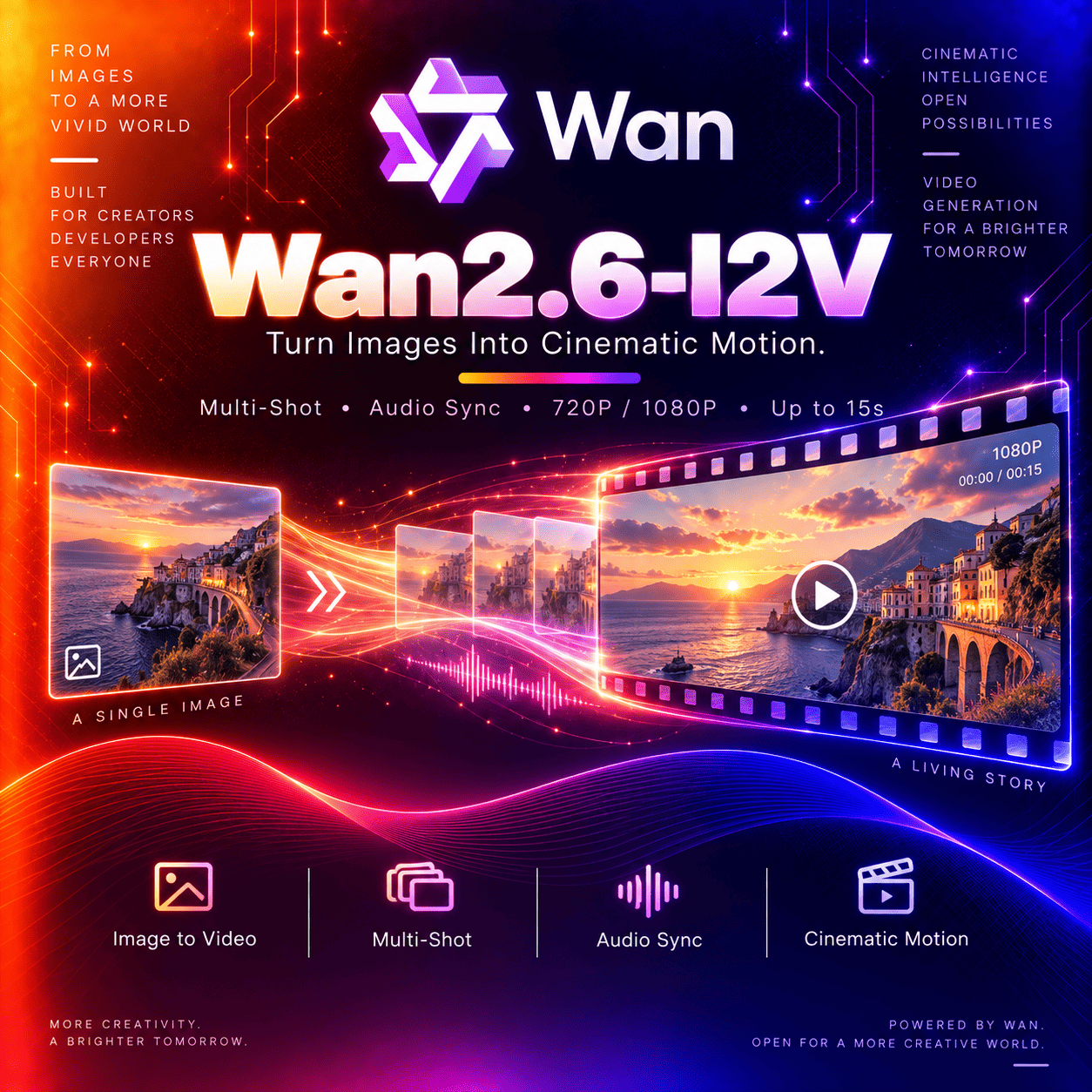
Alibaba's Wan 2.6 image-to-video model: your image becomes the first frame of a clip of 2 to 15 seconds in 720p or 1080p, with a soundtrack generated to match the scene. The video follows the shape of your image; negative prompts and seeds give you control, and prompt extension turns a short idea into a complete shot.
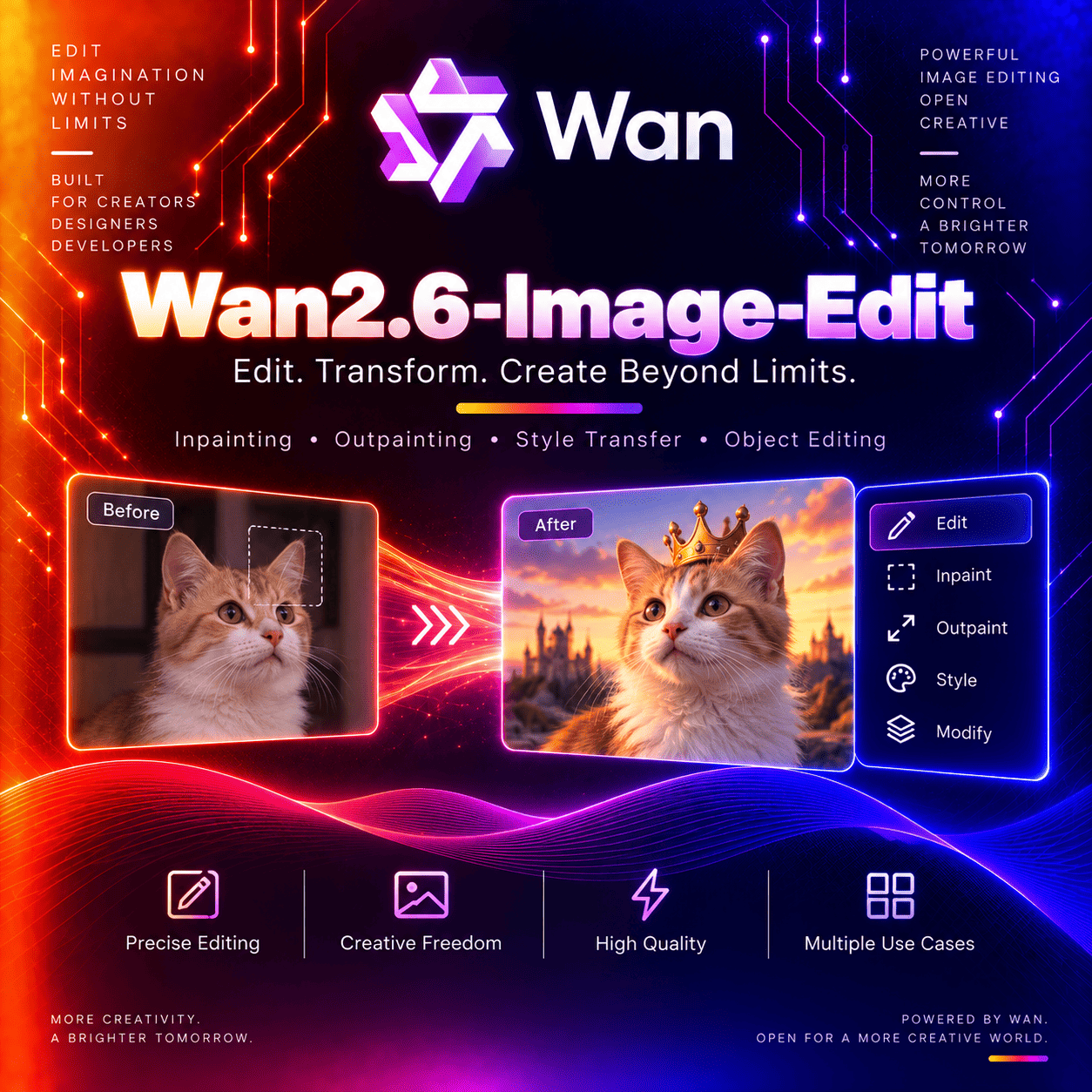
Wan2.6-Image-Edit is the image-editing model of Alibaba's Wan 2.6 line: edits from plain instructions on 1 to 4 reference images with consistent subjects, outputs up to about 4 megapixels at any aspect ratio from 1:4 to 4:1, up to 4 results per request.
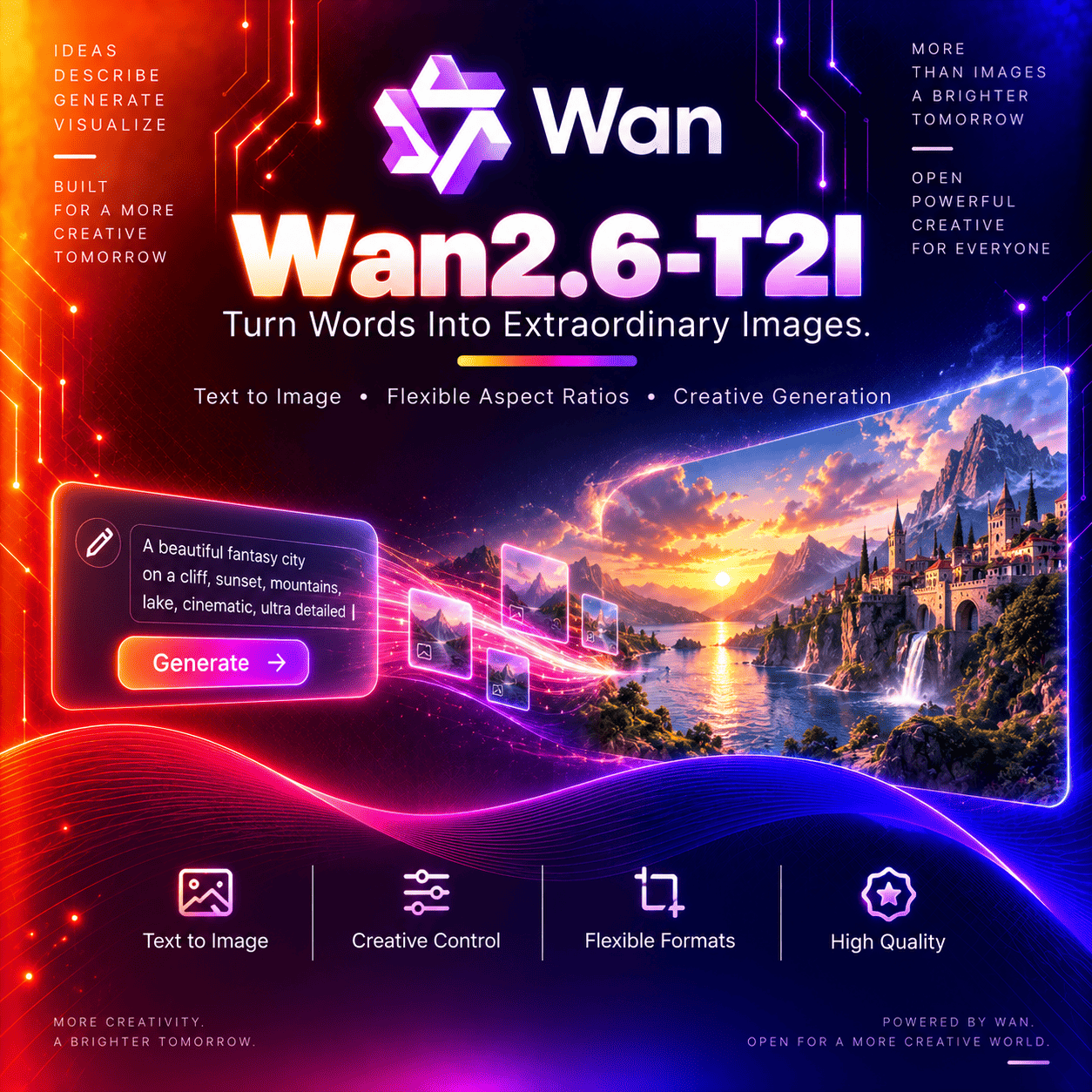
Wan2.6-T2I is the text-to-image model of Alibaba's Wan 2.6 line: images of about 2 megapixels at any aspect ratio from 1:4 to 4:1, up to 4 per request, with a negative prompt and an optional built-in prompt rewrite.


