Model Library
Browse and deploy state-of-the-art AI models through the DEVUP Gateway.
Loading models...
Model Library
Browse and deploy state-of-the-art AI models through the DEVUP Gateway.
Browse and deploy state-of-the-art AI models through the DEVUP Gateway.

The highest-fidelity LTX video, with sound. LTX-2.5 Pro is Lightricks' top LTX-2.5 tier: multi-shot scenes that keep characters, lighting and style consistent across cuts, finer detail in faces, textures and typography, and a fully synchronized audio track generated with the picture. Up to 4K.
Multi-shot cinematic video with sound, from a single prompt. LTX-2.5 Fast is Lightricks' speed-optimized LTX-2.5: it can cut between connected shots in one clip while keeping characters, lighting and style consistent, and it generates a fully synchronized audio track with the picture. Up to 4K.
Cinematic 4K video with sound, from a single prompt. LTX-2.3 Fast is Lightricks' speed-optimized LTX-2.3: it generates the picture and a fully synchronized audio track together, in one pass, so every wave, footstep and engine lands on the right frame. Draft fast in 720p, deliver in 1080p, 1440p or 4K.

Kimi K3.1 Pro is an open-weight multimodal model designed for advanced coding, complex reasoning, and long-running agentic workflows. Its mixture-of-experts architecture combines 2.8 trillion total parameters with 104 billion active parameters. With a native 1-million-token context window, it is built for working across large codebases, extensive documents, and visually rich tasks, including financial research and code-driven 3D creation.

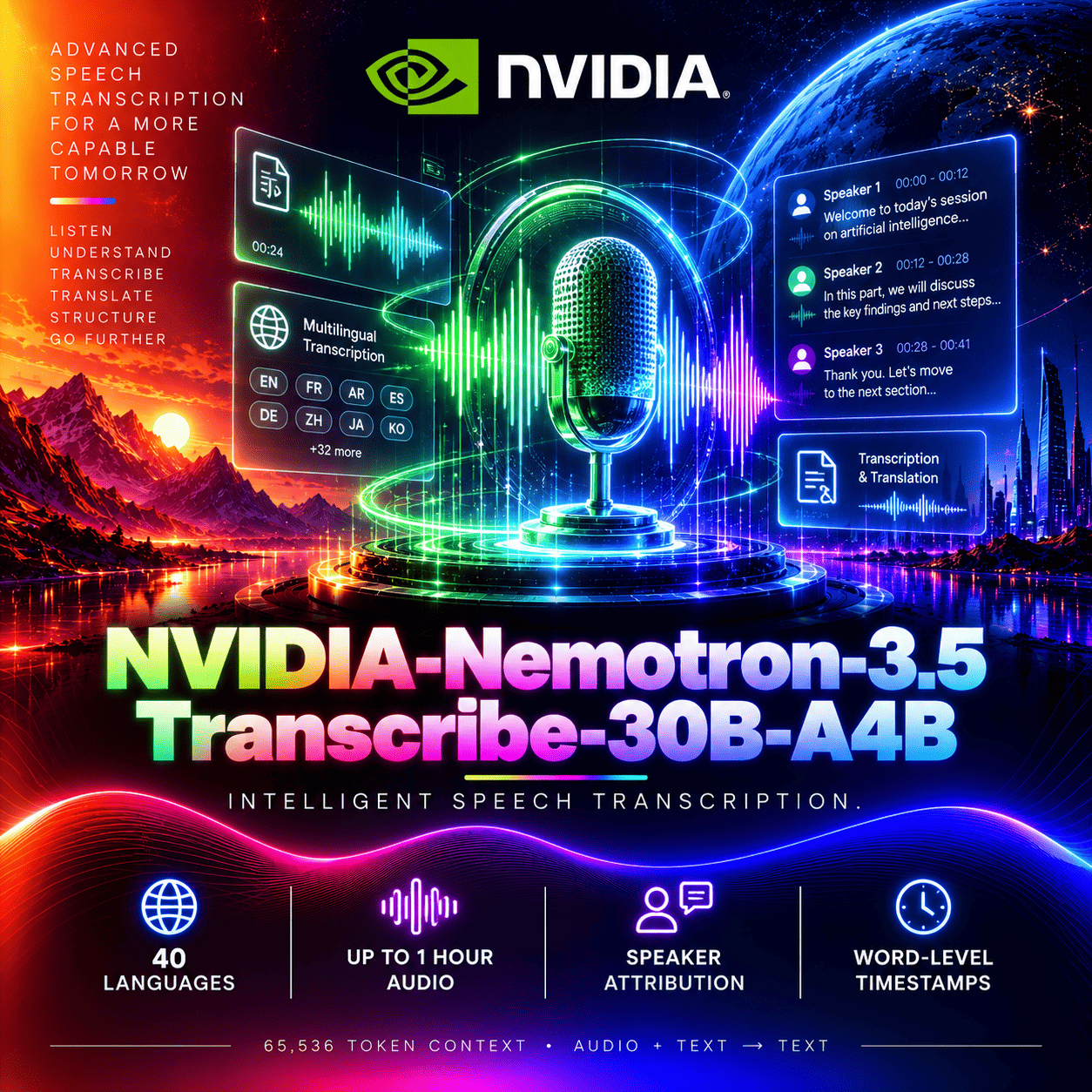
NVIDIA Nemotron 3.5 Transcribe is an open-weight speech recognition model for recorded audio, transcribing 40 languages from recordings up to an hour long, with word-level timestamps. It pairs a Transformer speech encoder with the Nemotron 3.5 Lightning hybrid Mamba-Transformer mixture-of-experts language model, activating about 4.3 billion of its 34 billion parameters — which is what lets a short text prompt steer vocabulary and formatting, such as product names or numbers written as digits. It ranks first among open-weight models on the Hugging Face Open ASR Leaderboard for English, posts the lowest published open-weight error rates on long-form and multilingual transcription, and is placed joint first among open-weight models by Artificial Analysis at about a sixth of the active parameters of the model it ties. Released 28 October 2026 under OpenMDW-1.1.

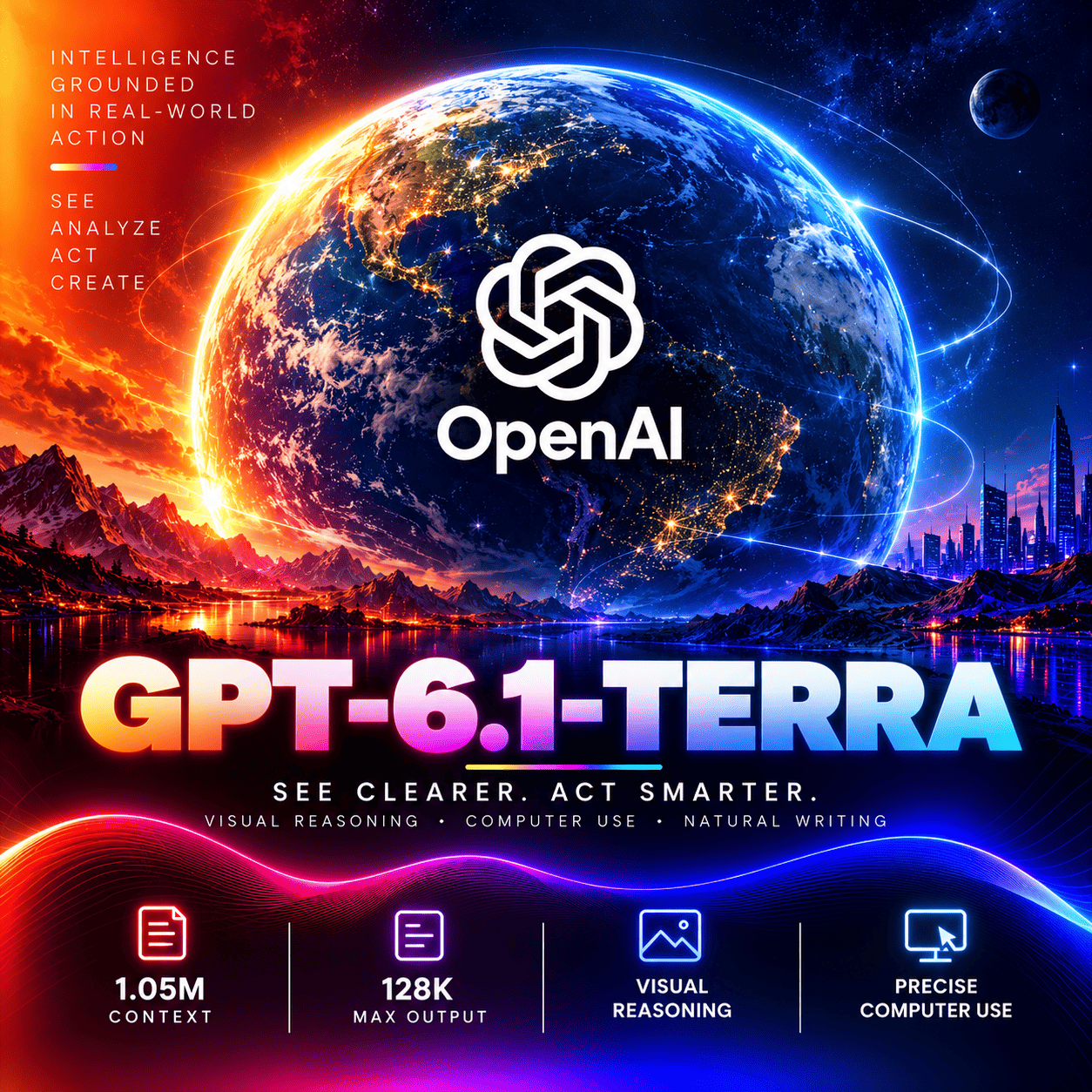
GPT-6.1 Terra is OpenAI's fast, efficient model for visual reasoning, precise computer use, and clear, natural writing — built for the routine professional work that makes up most of a day, while OpenAI keep the hardest problems for the tiers above it. It reads text and images, reasons across five effort levels from none to xhigh, and returns up to 128,000 tokens of output. Against the previous Terra, OpenAI report its error rate falling from 53.6 percent to 16.7 percent at low effort, and its Terminal-Bench 4.0 score more than doubling. Its knowledge runs to June 2026 — later than the tier above it.

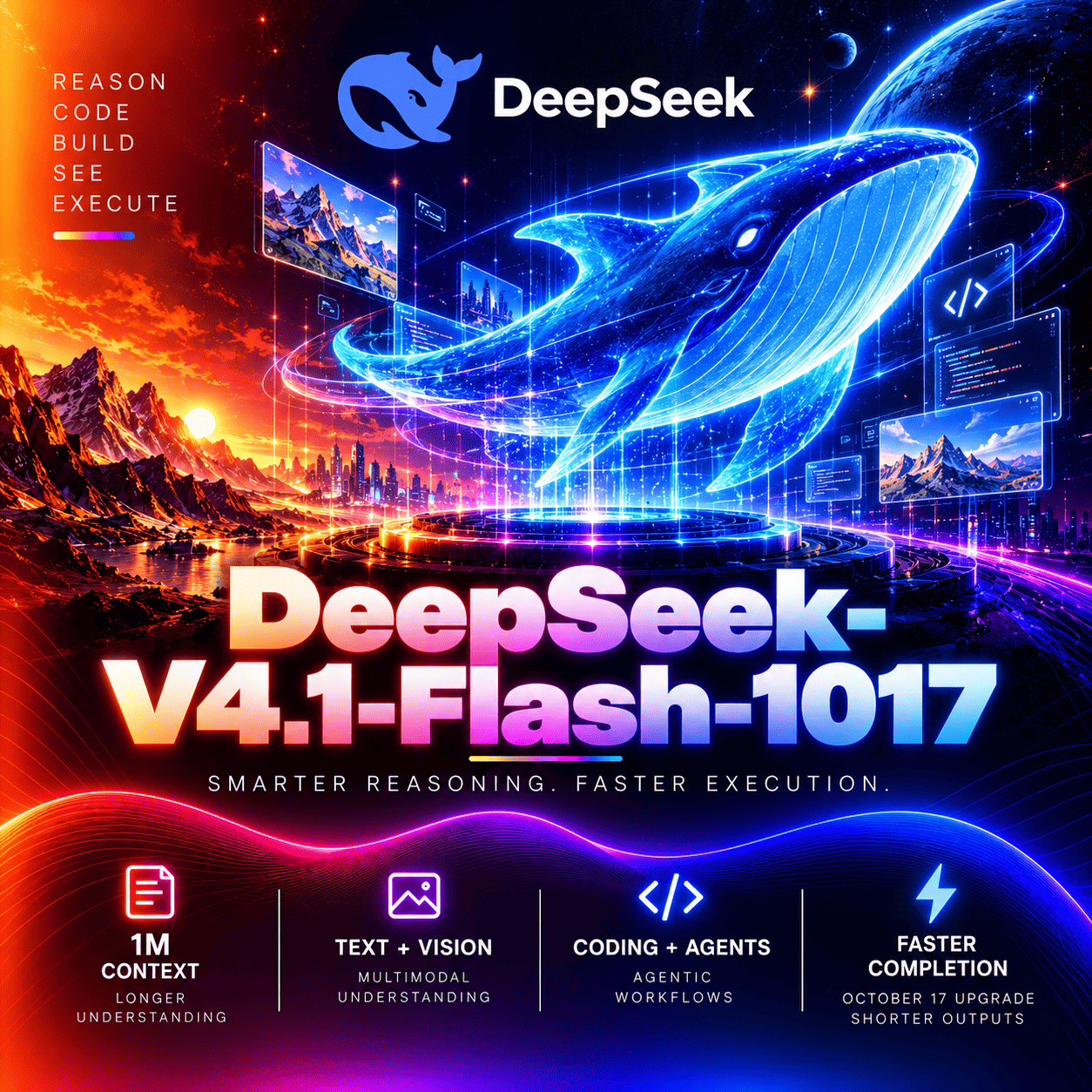
DeepSeek-V4.1-Flash-1017 is a multimodal reasoning model built for coding, agentic workflows, and visual understanding. This update improves published benchmark results over V4.1-Flash while reducing task completion time and output length in reported evaluations.
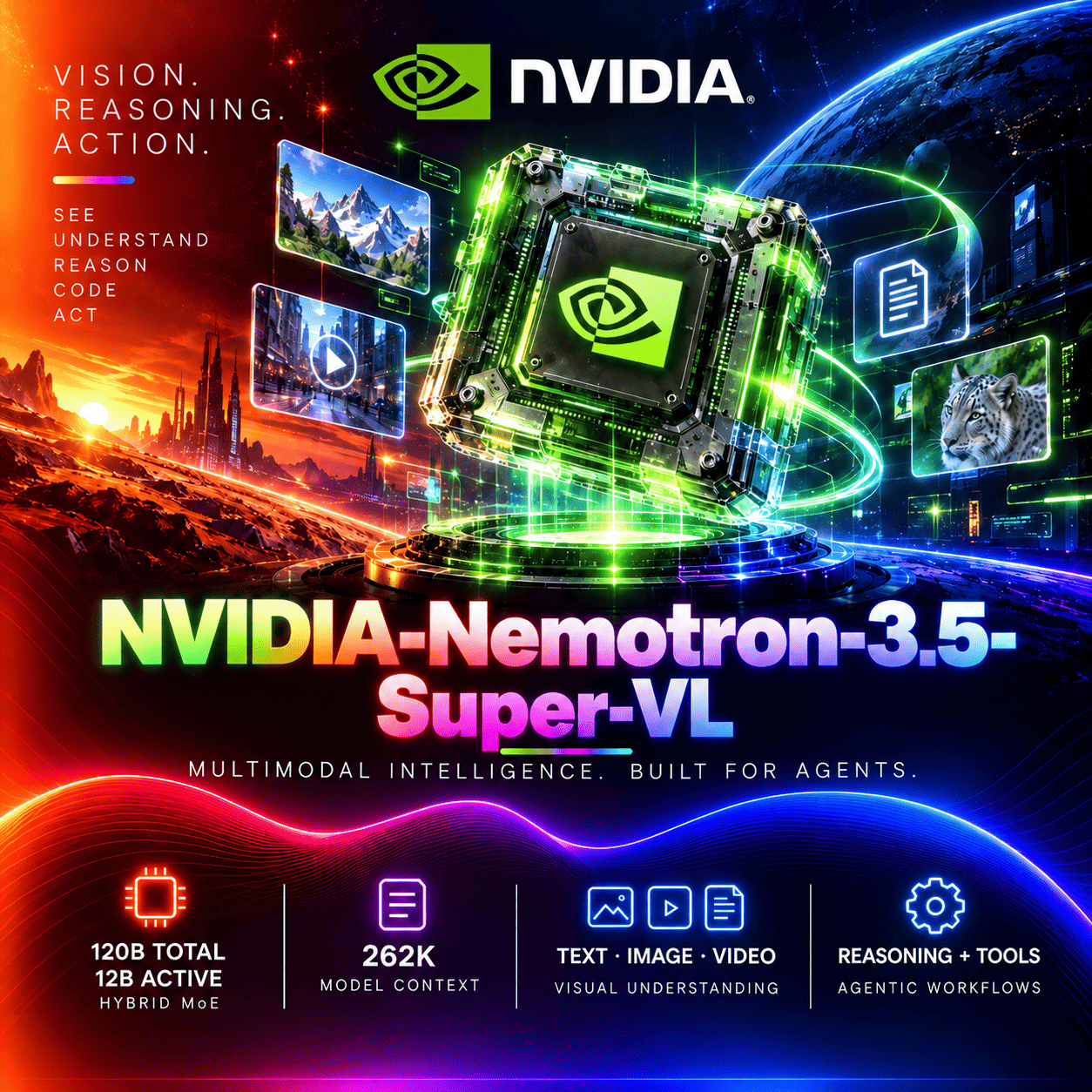
NVIDIA Nemotron 3.5 Super VL is an open multimodal model for agents that see, reason, and act. Its 120-billion-parameter hybrid design activates 12 billion per token, interleaving Mamba-2, attention, and mixture-of-experts layers with a C-RADIO vision encoder, and it reads text, images, document pages, interfaces, and video clips of up to two minutes. Reasoning can run in full, at medium effort, or not at all. Its language backbone was distilled from NVIDIA's largest Nemotron model over a trillion tokens, then trained on repositories, pull requests, and build logs, and it reports one of the lowest hallucination rates in its own comparison. Released openly under OpenMDW-1.1.

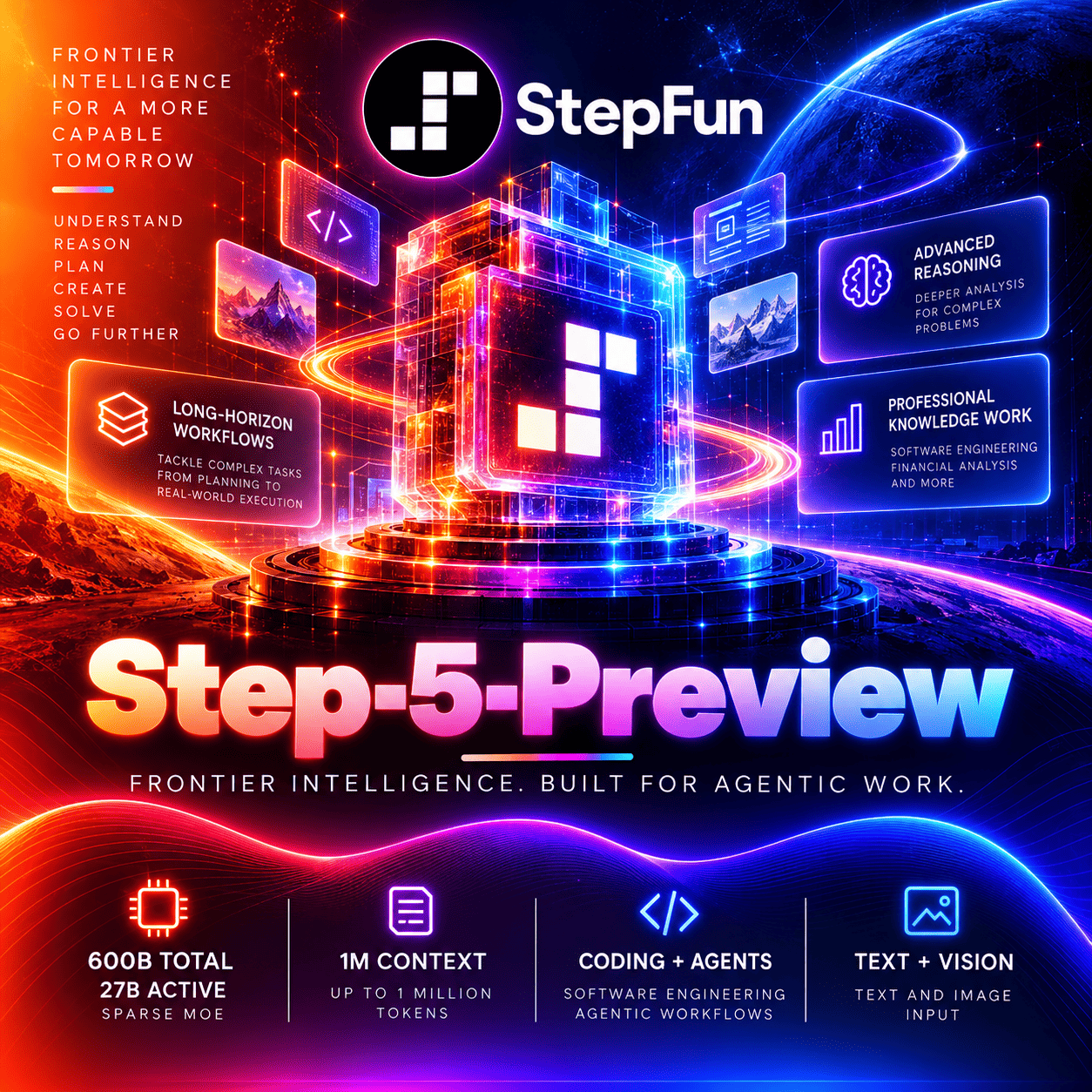
Step 5 Preview is StepFun's flagship for agentic work — 600 billion parameters with 27 billion active per token, a one-million-token window that output can fill as fully as input, and image understanding alongside text. It always reasons: deliberation runs on every request, controlled across three levels rather than switched off. StepFun position it for repository-scale software engineering, long-horizon execution with repeated tool calls, and professional knowledge work, with particular strength in finance. After launching through an API, its weights were released openly in three precisions, under a licence that carries attribution and commercial conditions of its own.

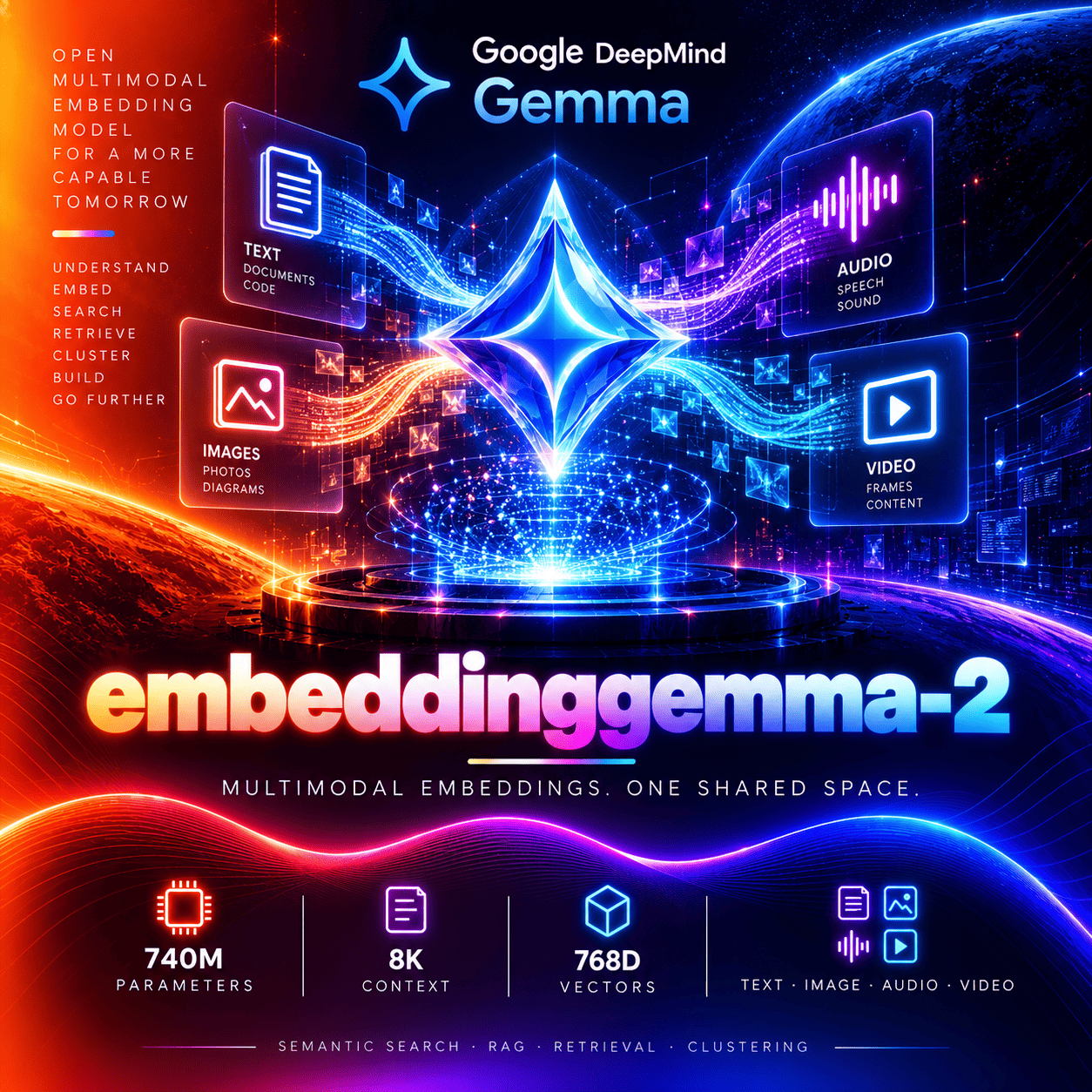
EmbeddingGemma 2 places text, code, images, video, and audio in one 768-dimensional vector space, so a text query can retrieve a photograph, a video clip, or a recording directly, with no separate model per modality. It carries 740 million parameters, but its vision and audio encoders load independently — a text-only deployment runs at 270 million. Against its predecessor, multilingual text quality is essentially unchanged while code retrieval rose by roughly fourteen percent, and every other modality is new. Vectors truncate from 768 down to 128 dimensions, though the cost of shrinking them depends heavily on what you are embedding.

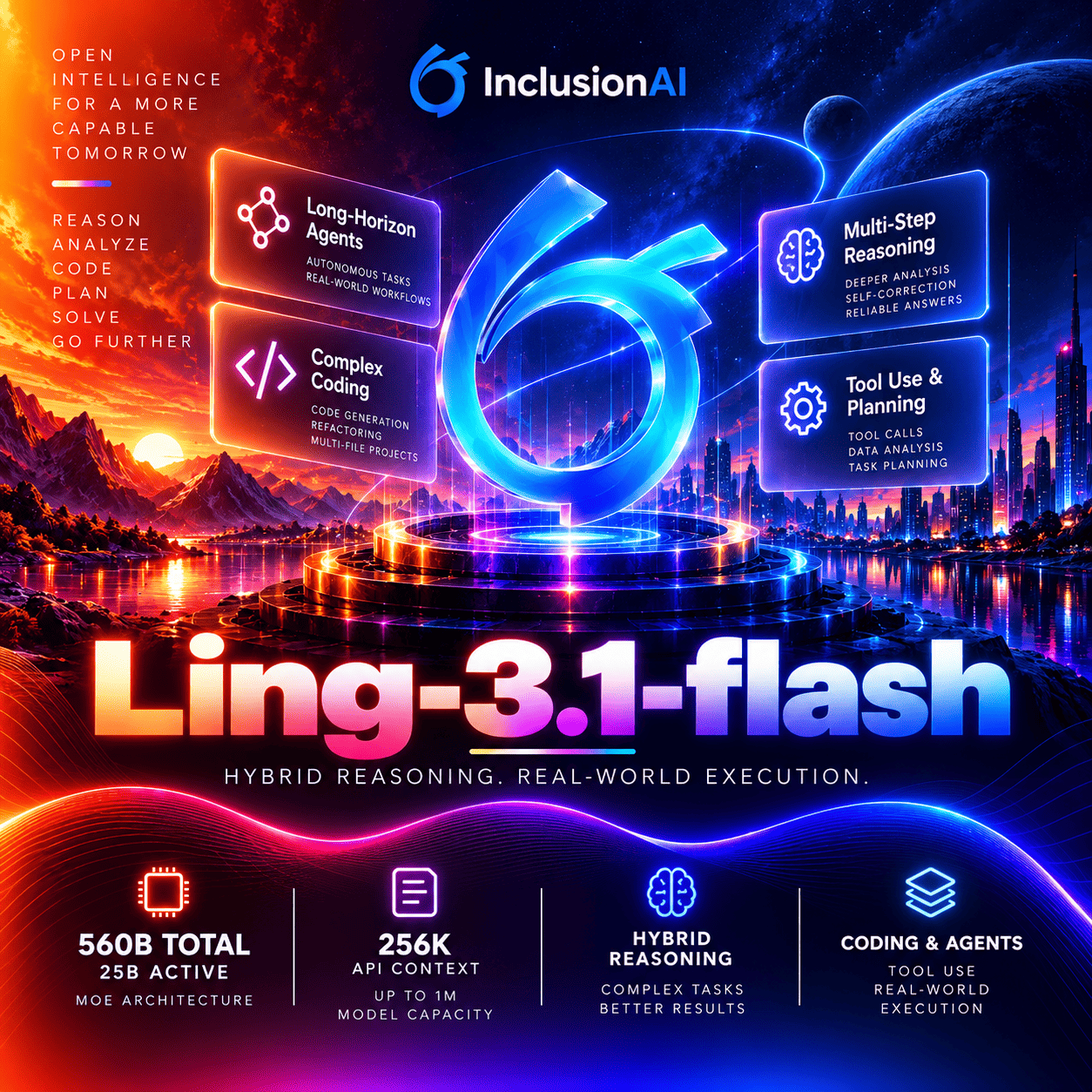
Ling-3.1-flash carries a minor version number and a major change in scale: 560 billion total parameters and 25 billion active, roughly four and a half times the total and five times the active compute of the release it follows. Sixty-three of its seventy-two layers use linear attention, up from a five-to-one ratio to seven-to-one, which keeps its 262,144-token window cheap — measured at about half a gigabyte per conversation plus ten kilobytes per token. It targets real-world work across agents, search, office productivity, software engineering, healthcare, and finance, and was evaluated in an internal harness built for coding sessions lasting hours. MIT licensed.

Hy4 preview is Tencent's 770-billion-parameter mixture-of-experts flagship, activating 49 billion per token, with a separately-counted multi-token-prediction layer built in for speculative decoding. Its training data came from people who ship — software engineers, game developers, finance analysts, and security experts inside Tencent, with material built around the work they actually deliver. And the evaluation matches: 163 internal experts rated outputs on 203 engineering tasks in a blind comparison, with the full win, tie, and loss breakdown published rather than only the margin. It is explicitly an early release, and Tencent say why.

Claude Opus 5.5 is the first model in its family where the default reasoning effort went down rather than up — from high on the previous generation to medium here — because it reaches the same conclusions with fewer tokens. Customers evaluating it report its lowest effort setting matching or beating the previous model's highest. Thinking is adaptive and always on, across a one-million-token window with 128,000 tokens of output, and it reads images as well as text. Anthropic publish its benchmark results with production safeguards enabled, noting that this likely lowers the scores.
GPT-6 Luna is the tier OpenAI describe as handling clerical work — summarising, extracting, answering — and it carries the same 1.05-million-token window, the same reasoning range from none through max, and the same caching improvements as the model above it. Two things distinguish it. Its knowledge cutoff is more recent than the more expensive tier's, which inverts the usual assumption. And its output-token reduction over its predecessor exceeded the fifty percent headline, which matters most on exactly the high-volume work it was built for.
GPT-6 Sol brings the training methods of OpenAI's flagship to a tier meant to be used far more often. Its most consequential change is not in the model but around it: reasoning effort and tool availability can now be altered mid-conversation without invalidating the prompt cache, which makes starting cheap and escalating only on the hard step a workable pattern rather than a costly one. Reasoning runs from none through max, the context window holds 1.05 million tokens with 922,000 available for input, and OpenAI report roughly half the factual errors of its predecessor alongside lower rates of agents claiming work they did not do.

MiMo-V2.6-Pro is the flagship of Xiaomi's September 2026 release, and the only model in its series with an independent measurement behind it — a score of 46 that places it at the top of open-weight models. It carries 1.02 trillion parameters with 42 billion active across 384 experts, seventy layers of which sixty use a narrow sliding window and ten see the whole context. It shares its smaller sibling's three encoders for image, video, and audio, its seven-token speculative drafter, and the single reinforcement learning run spanning coding, agents, vision, and cybersecurity. Where the two diverge is sustained consistency across large, interconnected changes. MIT licensed.
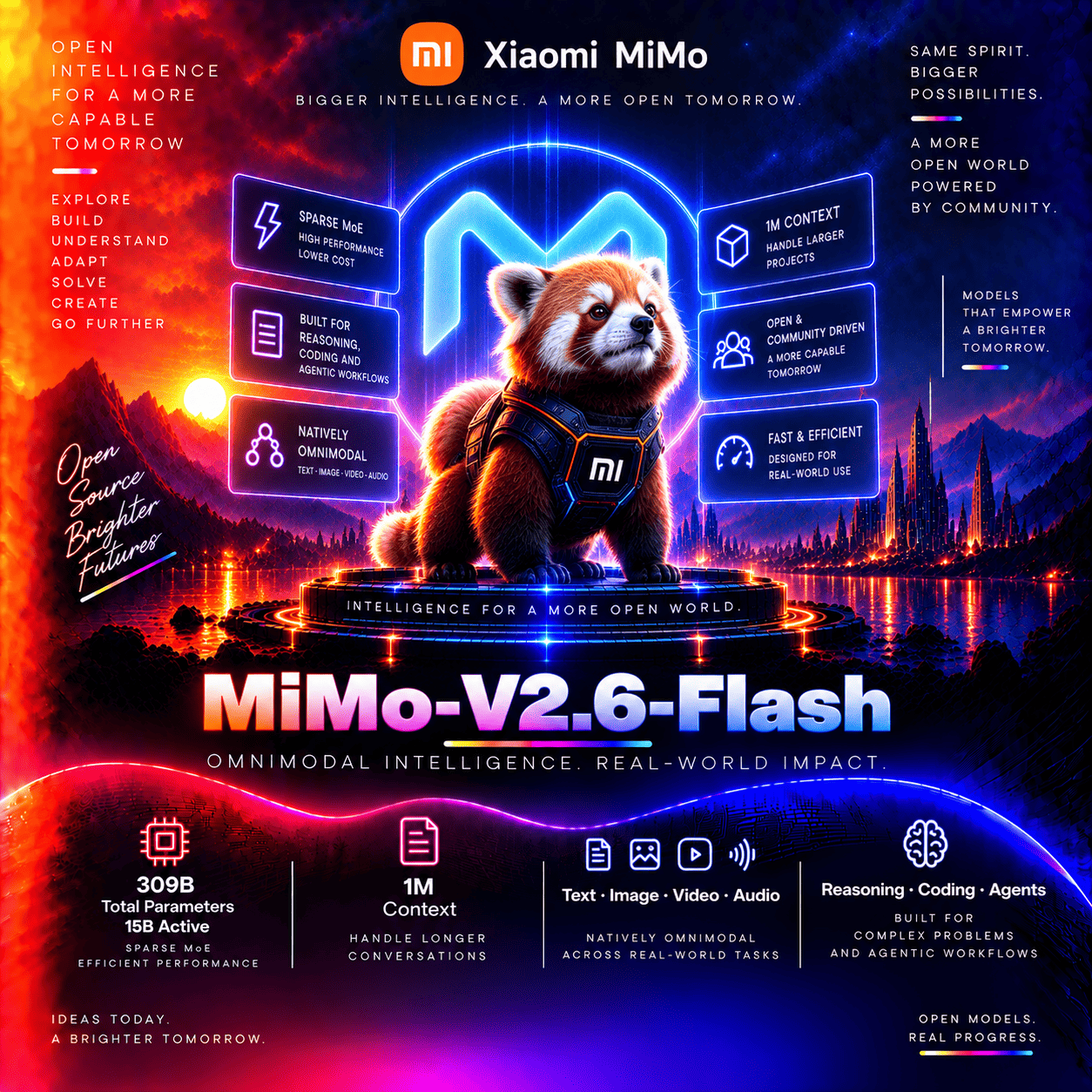
MiMo-V2.6-Flash was released on 21 September 2026 and trained through a single mixed reinforcement learning run that folded coding, general agents, visual tasks, and cybersecurity into one pass rather than separate domain-specific runs. It reads text, images, video, and audio through three dedicated encoders, across a million-token window with up to 131,072 tokens of output. Three hundred and nine billion parameters with fifteen active, two hundred and fifty-six experts with no shared expert, and a five-layer drafter predicting seven tokens per pass. MIT licensed. Its benchmark figures are, so far, Xiaomi's own.

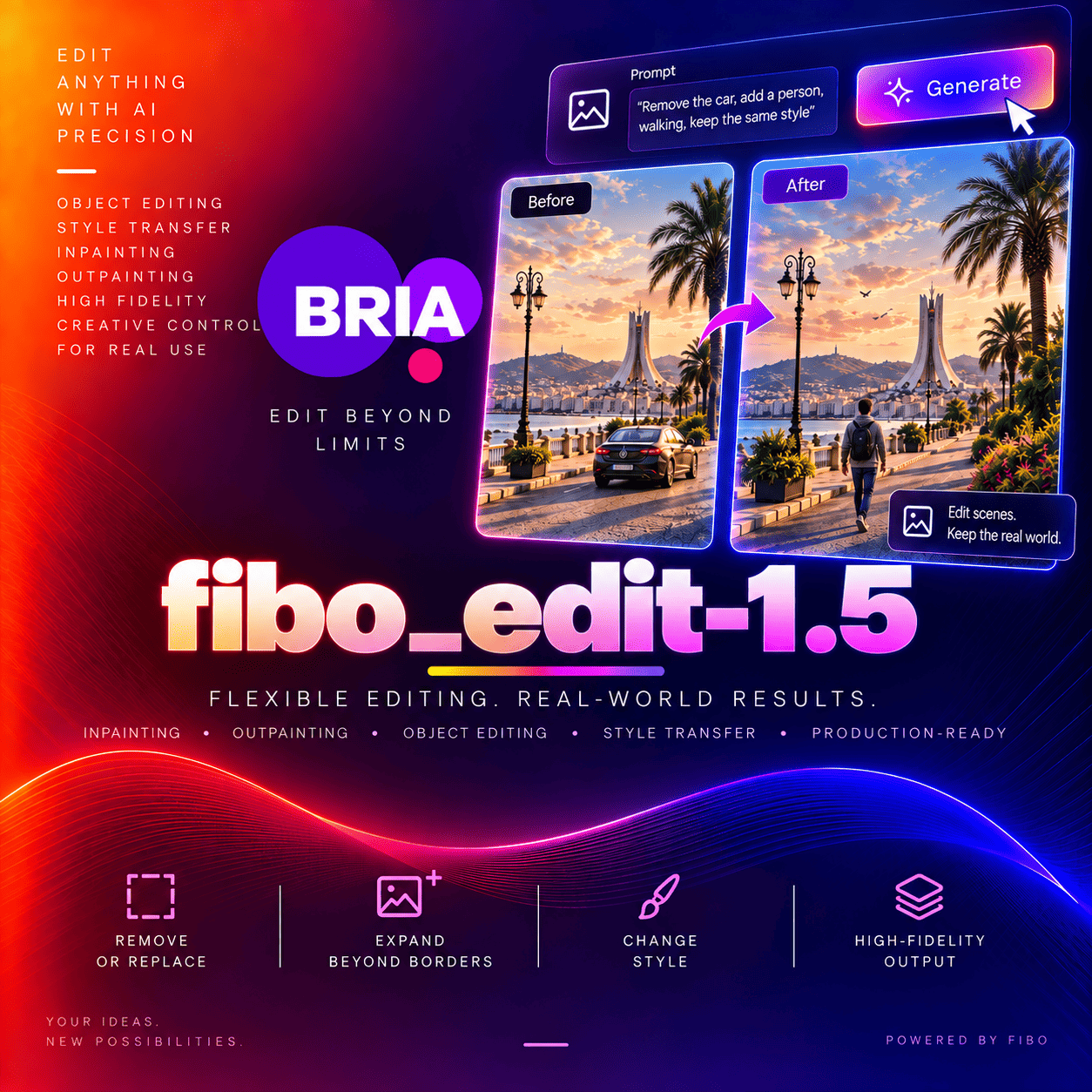
FIBO Edit 1.5 is Bria AI's 8 billion parameter structured image editing model: everything FIBO Edit does, plus multi-reference composition of up to 4 images, nine output aspect ratios and PNG or JPEG output, trained on licensed data only.

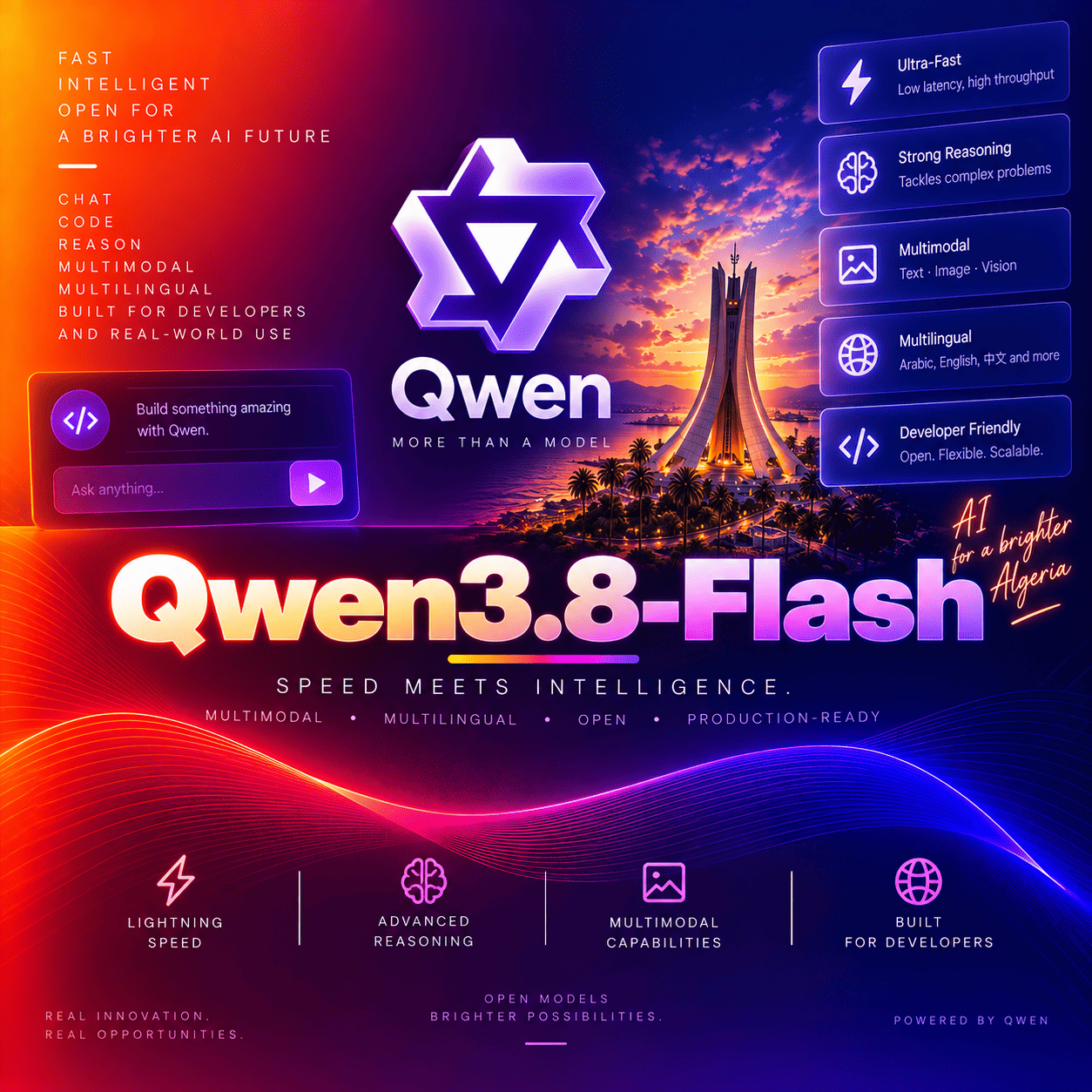
Qwen3.8-Flash is a multimodal Mixture-of-Experts model and an early preview of the architecture behind Qwen4. It carries 125 billion main parameters plus a separate 51-billion-parameter N-gram embedding table, yet activates only 6 billion per token — under five percent — through a hybrid attention design where three of every four layers compress history and the fourth retrieves from it precisely. The result is a model that reads text, images, and video across a one-million-token context at a per-token cost closer to a small model than a large one. Thinking is on by default and switchable off, and the whole design targets agentic coding, long-document work, and video analysis.
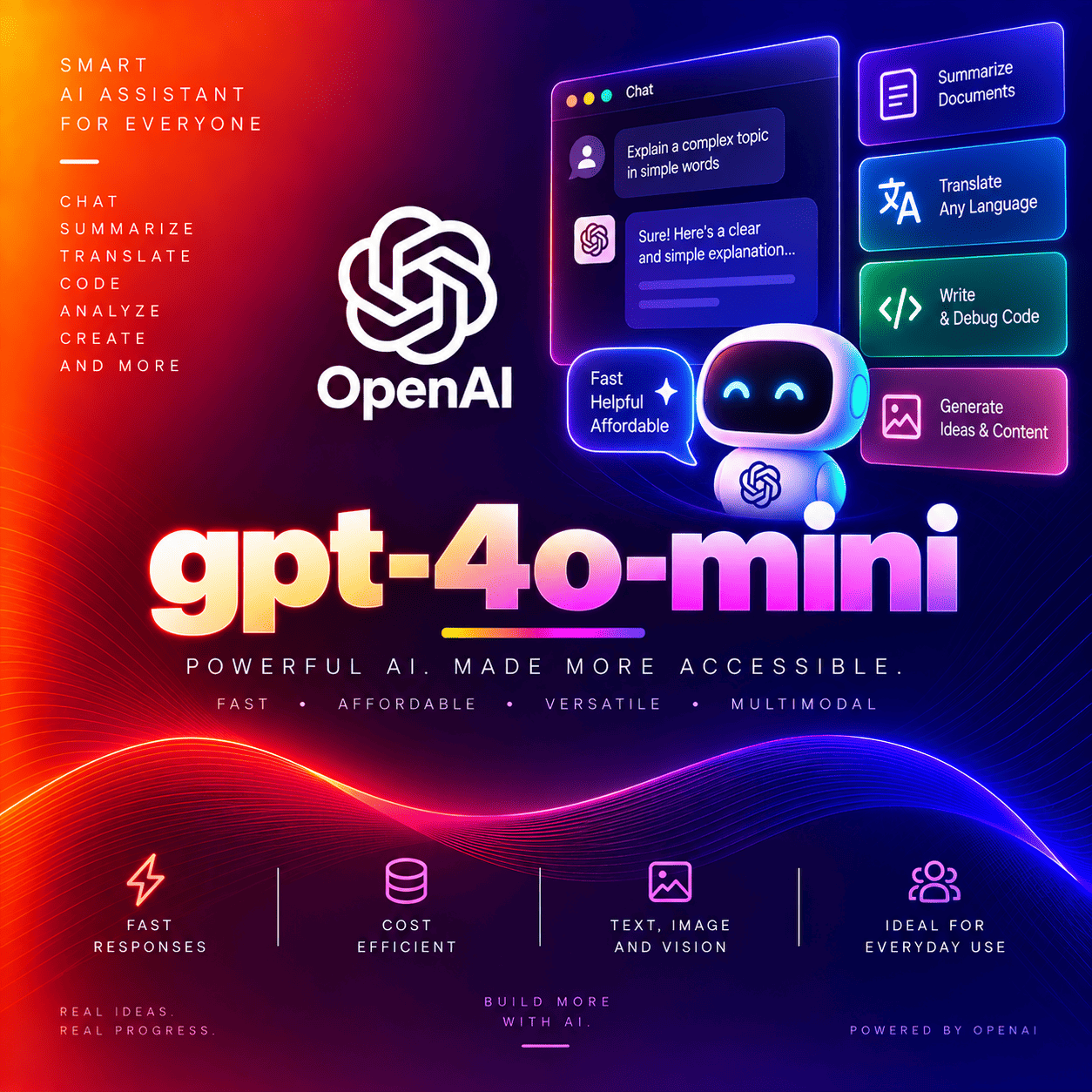
GPT-4o mini is a fast, affordable small model for focused tasks — and its appeal is what it leaves out. There is no reasoning pass, no effort level, no deliberation budget to tune: it reads the prompt and answers, which makes its latency predictable and its behaviour easy to reason about. It accepts text and images against a 128,000-token context window, returns structured output against a JSON schema, calls functions, and supports predicted outputs for edit-style tasks. It is also built for fine-tuning: outputs from a larger model can be distilled into it to produce comparable results on a narrow task at lower cost and latency.
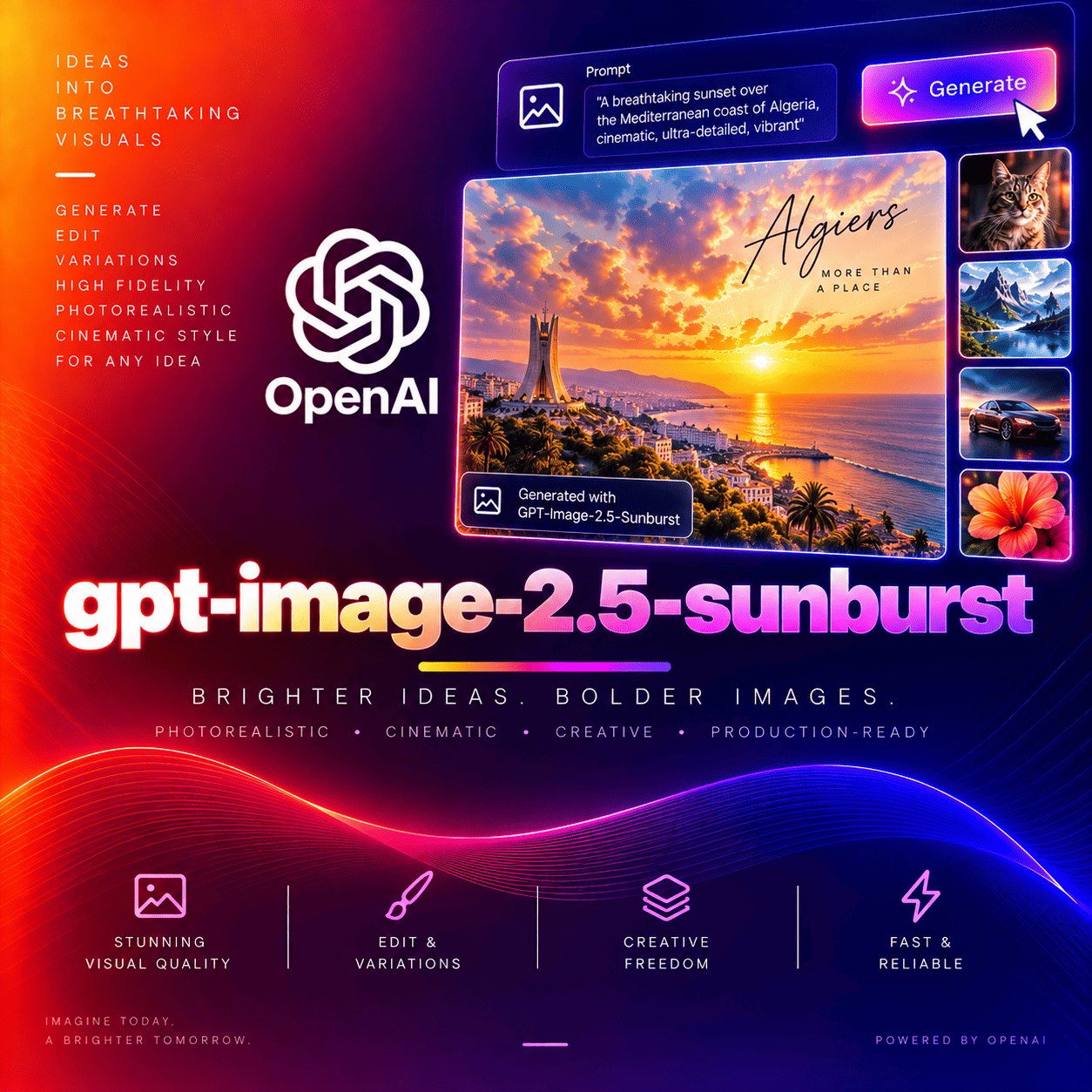
GPT Image 2.5 Sunburst is OpenAI's most capable GPT Image 2.5 model for image generation and editing, built for workflows where editing precision matters most. It changes what you name and keeps the subject, layout and light across multi-step edits. Request any WIDTHxHEIGHT up to 3840x2160, choose from five quality levels up to max, cut subjects out on transparent backgrounds, and edit with up to 16 reference images, a mask or a markup layer.
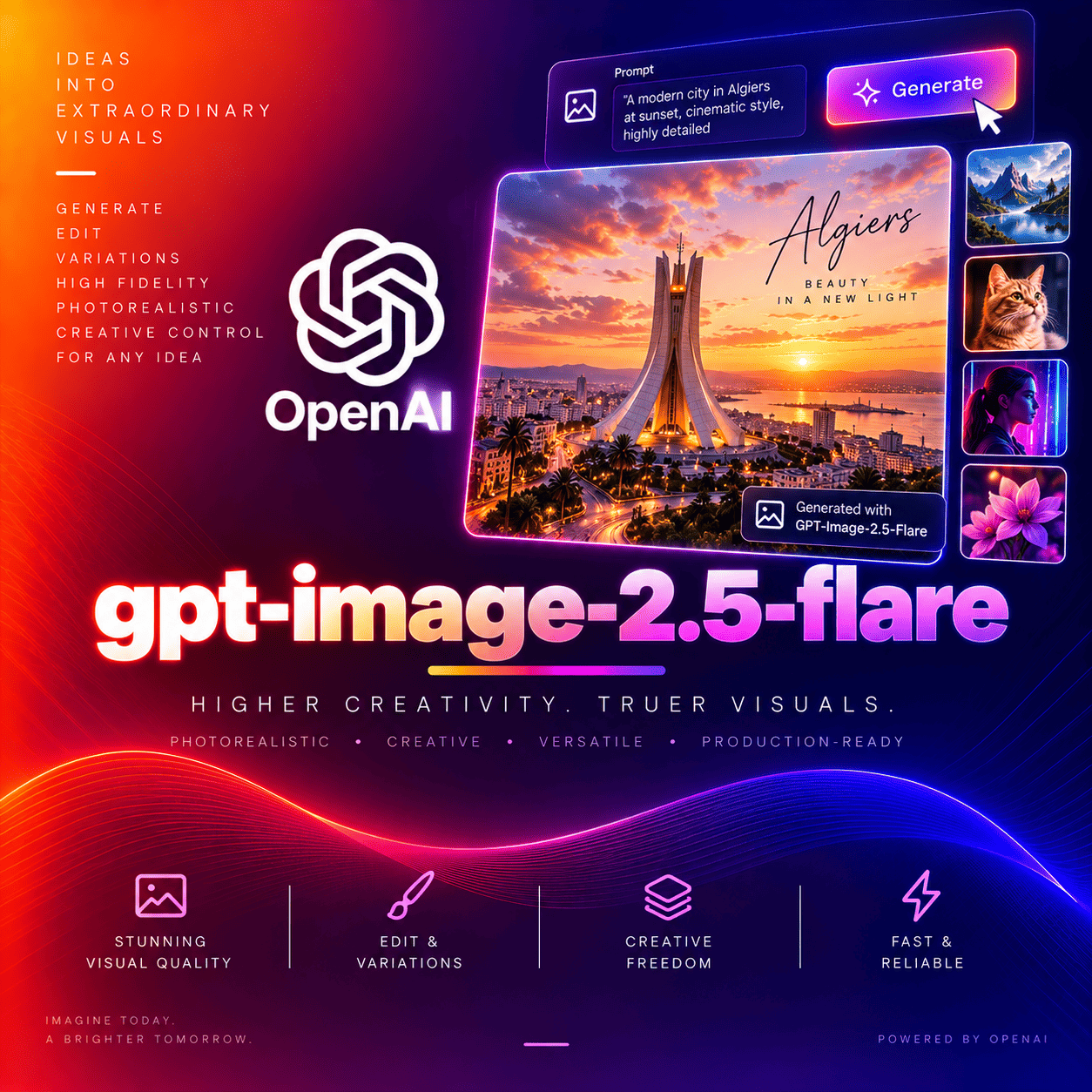
GPT Image 2.5 Flare is OpenAI's fastest model for high-quality everyday image generation and editing, and the default choice in the GPT Image 2.5 family. OpenAI reports higher-quality images than GPT Image 2 at lower latency. Request any WIDTHxHEIGHT up to 3840x2160, choose from five quality levels up to max, cut subjects out on transparent backgrounds, and edit with up to 16 reference images, a mask or a markup layer.
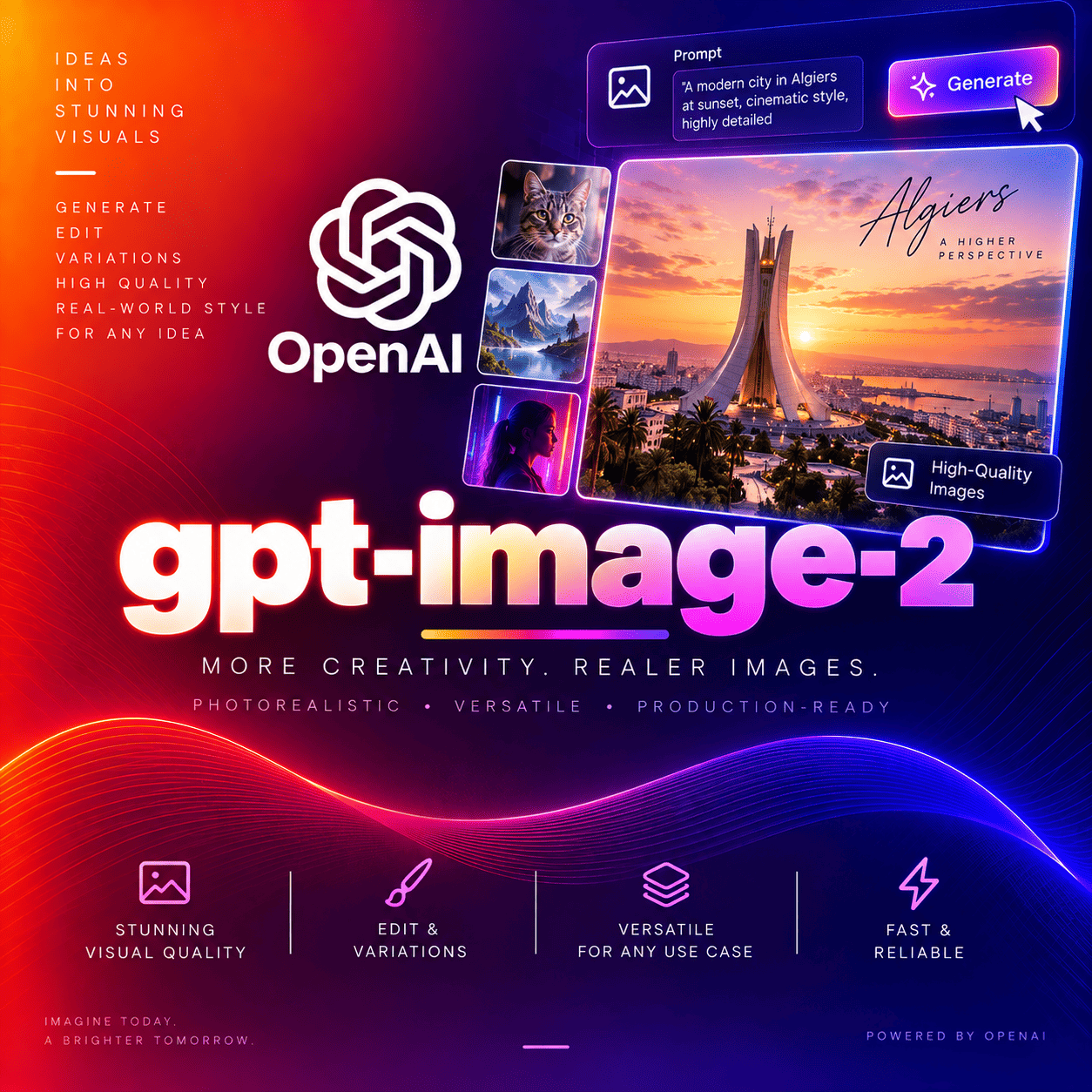
GPT Image 2 is OpenAI's image model for generation and editing at the size you need. Instead of three fixed presets, you request WIDTHxHEIGHT directly, from 1024x640 up to 3840x2160, with both edges divisible by 16. It renders legible text inside images, photorealistic detail and long multi-part briefs, and edits your own photos with reference images or a mask. OpenAI will retire this model on 10 February 2027.
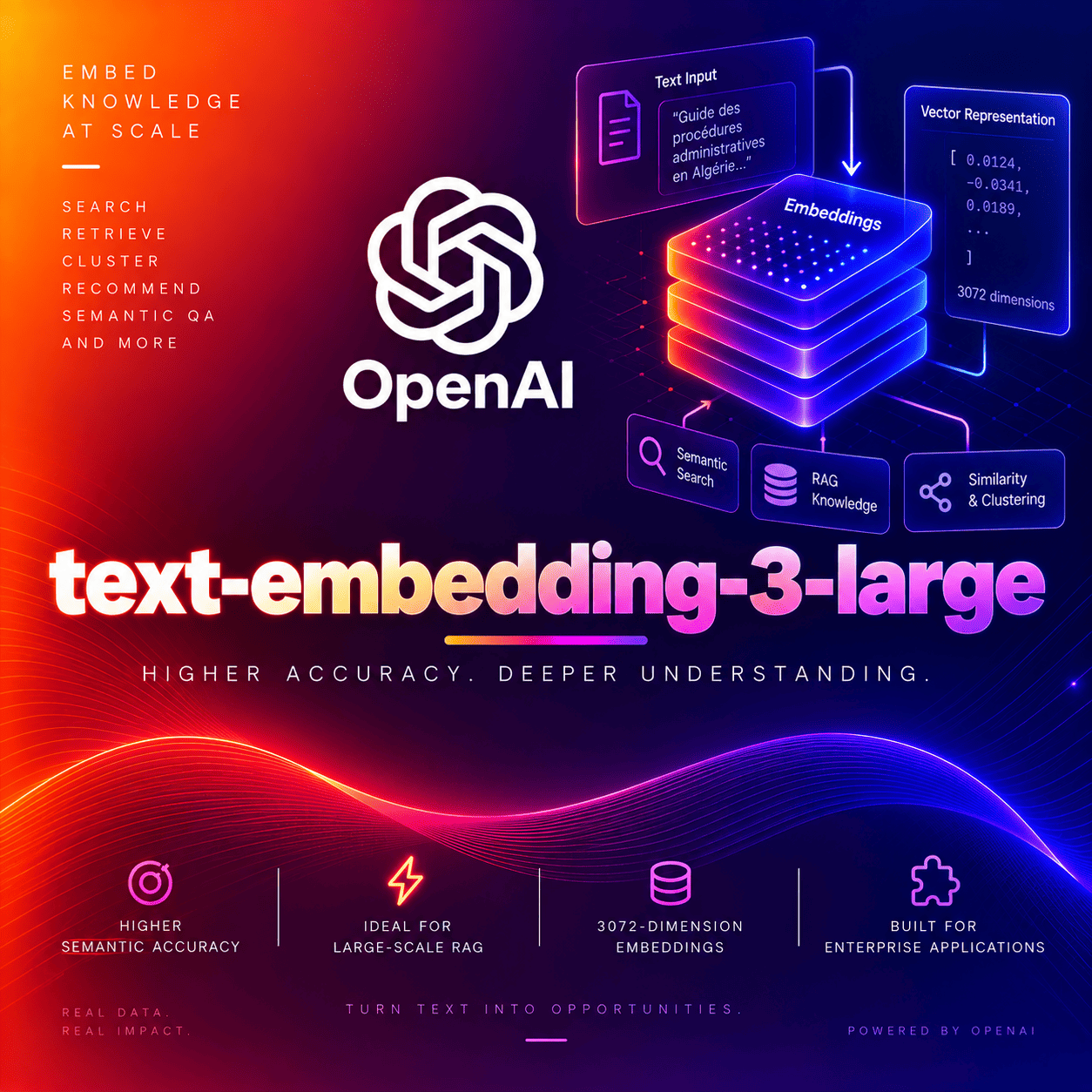
Text Embedding 3 Large is the higher-quality tier of OpenAI's current embedding generation, producing vectors of up to 3,072 dimensions against the smaller model's 1,536. The extra capacity shows most clearly on multilingual retrieval and on corpora where passages are semantically close and need to be told apart. Like its smaller sibling, the vector length is adjustable: a single parameter shortens the output without retraining, and shortening it is often the right call — a 1,536-dimension vector from this model generally retrieves better than a full-length vector from the smaller one, at identical storage cost. It handles inputs up to 8,191 tokens and produces deterministic, normalised output.


